Your Cart is Empty


Professional singers and actors often struggle with sudden throat tightness, persistent cough, and unpredictable voice changes that threaten their performance. These symptoms of vocal cord dysfunction, frequently misdiagnosed as asthma, present unique challenges for vocal artists. Understanding the difference and recognizing key signs empowers performers to find natural remedies and tailored solutions, protecting their craft from vocal fatigue and maintaining consistent excellence on stage.
| Point | Details |
|---|---|
| Understanding Vocal Cord Dysfunction | VCD involves abnormal vocal cord movement, often misdiagnosed as asthma, and affects mainly females aged 30-40. |
| Importance of Accurate Diagnosis | Misdiagnosis is common due to symptom overlap; comprehensive medical evaluation is essential for proper management. |
| Management Strategies | Effective treatment includes respiratory retraining, speech therapy, and psychological support to mitigate performance impacts. |
| Recognizing Triggers | Identifying and documenting triggers can help vocal professionals manage symptoms and improve vocal health. |
Vocal Cord Dysfunction (VCD) represents a complex respiratory condition characterized by paradoxical vocal cord movement during breathing. Unlike typical respiratory patterns, VCD involves abnormal vocal cord closure, creating significant challenges for vocal professionals.
The condition is often misunderstood and frequently misdiagnosed as asthma. Predominantly affecting females between ages 30-40, VCD creates unique physiological complications where vocal cords inappropriately adduct during inspiration, potentially restricting airflow and causing respiratory distress.
Key characteristics of Vocal Cord Dysfunction include:
Diagnosing VCD requires comprehensive medical evaluation, including:
Misconceptions surrounding VCD often lead to inappropriate treatment strategies. Many healthcare providers initially mistake these symptoms for asthma, potentially delaying targeted interventions. Professional vocalists experiencing recurring respiratory challenges should seek specialized medical consultation to accurately diagnose and manage their condition.
Pro tip: Maintain a detailed symptom journal documenting respiratory experiences to help medical professionals accurately diagnose potential Vocal Cord Dysfunction.
Here is a summary of how Vocal Cord Dysfunction (VCD) compares to asthma across key characteristics:
| Aspect | Vocal Cord Dysfunction (VCD) | Asthma |
|---|---|---|
| Triggering Events | Stress, irritants, vocal use | Allergens, exercise, cold air |
| Onset of Symptoms | Sudden and episodic | Gradual or sudden |
| Primary Treatment | Breathing retraining, speech therapy | Inhaled bronchodilators |
| Response to Asthma Meds | Often little to no improvement | Marked improvement |
| Common in Vocalists | Very common | Less common |
Vocal Cord Dysfunction (VCD) presents a complex array of respiratory symptoms that can profoundly impact vocal professionals’ performance and daily functioning. Sudden onset respiratory challenges are hallmark indicators of this condition, creating significant challenges for those who rely on their voice as a primary professional tool.
The primary symptoms of VCD include several distinctive respiratory and vocal manifestations:
Unlike standard respiratory conditions, VCD symptoms emerge through unique physiological mechanisms. Vocal professionals might experience these symptoms most acutely during high-stress performance situations, exercise, or when exposed to specific environmental triggers.
Symptomatic episodes often involve multiple interrelated factors, including:
Professional vocalists must recognize that VCD symptoms can mimic asthma but require distinctly different treatment approaches.
For vocal professionals, understanding these manifestations is crucial. The unpredictable nature of VCD symptoms can significantly disrupt performance capabilities, potentially causing unexpected vocal strain or respiratory limitations during critical moments.

Pro tip: Record and track your specific symptom triggers to help medical professionals develop a more targeted management strategy.
Vocal Cord Dysfunction (VCD) represents a complex medical condition with multiple underlying causes that can significantly impact vocal professionals. Inducible laryngeal obstruction encompasses various physiological mechanisms that trigger unexpected respiratory challenges.
The primary types and causes of VCD include several interconnected factors:
Understanding the nuanced origins of VCD is crucial for vocal professionals. The condition most frequently affects females between 30-40 years old, with symptoms often mimicking traditional respiratory disorders like asthma.
Medical classification reveals multiple potential mechanisms for vocal cord dysfunction:
Professional vocalists must recognize that VCD requires individualized diagnostic and management approaches.
For performers, comprehending these intricate causal relationships becomes paramount in developing effective treatment strategies and maintaining optimal vocal health.
Pro tip: Consult with specialized voice medicine professionals who understand the multifaceted nature of vocal cord dysfunction for comprehensive evaluation.
Vocal Cord Dysfunction (VCD) presents a diagnostic challenge that significantly impacts vocal professionals, with symptoms remarkably similar to other respiratory conditions. Misdiagnosis rates remain alarmingly high due to the complex nature of its clinical presentation.
The primary reasons for misdiagnosis include several critical factors:
Statistically, VCD shares remarkable similarities with asthma, creating significant diagnostic confusion. Approximately 25-30% of patients experiencing respiratory symptoms exhibit characteristics of both conditions, further complicating accurate identification.
Key diagnostic challenges emerge through multiple medical evaluation pathways:
Professional medical practitioners must recognize the nuanced differences between VCD and traditional respiratory disorders.
For vocal professionals, understanding these diagnostic complexities becomes crucial in obtaining appropriate medical intervention and preventing unnecessary treatments that might compromise vocal health.
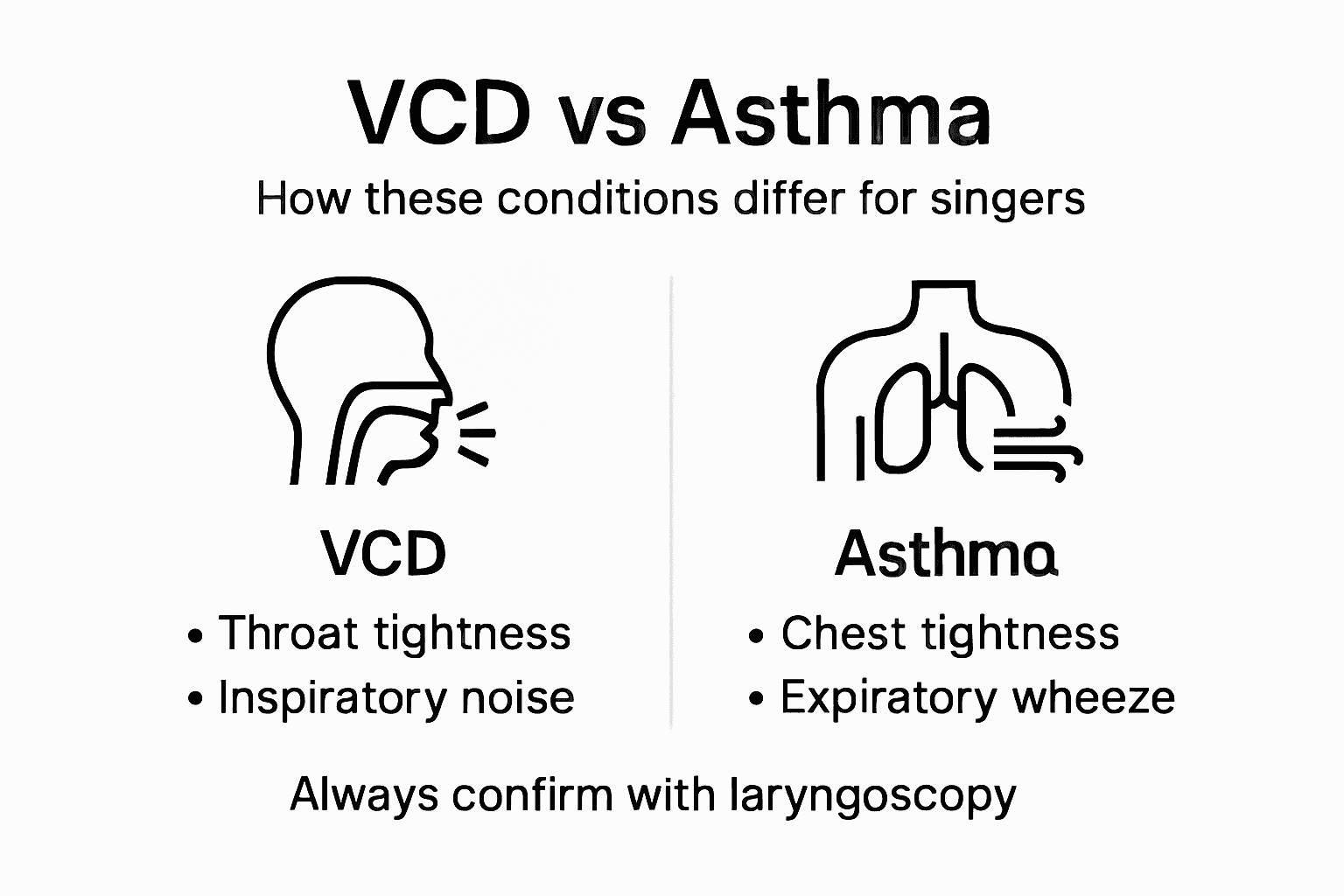
Pro tip: Document detailed symptom patterns and request specialized laryngoscopic examination to ensure accurate diagnosis.
Vocal Cord Dysfunction (VCD) poses significant challenges for professional performers, with profound implications for vocal performance that extend far beyond simple respiratory concerns. The unpredictable nature of this condition can dramatically disrupt a vocalist’s career trajectory and professional stability.
Common triggers that precipitate VCD episodes include:
Professional vocalists face unique risks when experiencing VCD, with potential performance consequences such as:
Vocal professionals must develop comprehensive management strategies to mitigate the potential performance disruptions caused by VCD.
Understanding these triggers allows performers to implement proactive prevention techniques and develop robust contingency plans that protect their vocal health and professional reputation.
Pro tip: Create a personalized symptom tracking system to identify and minimize individual VCD triggers before they escalate during critical performance moments.
Vocal Cord Dysfunction management requires a holistic approach that integrates medical, psychological, and lifestyle interventions. Speech therapy techniques remain foundational in developing comprehensive treatment strategies for vocal professionals experiencing respiratory challenges.
Natural solutions and management strategies include multiple interconnected approaches:
Professional management of Vocal Cord Dysfunction involves several critical therapeutic interventions:
Successful VCD management demands a multidisciplinary approach targeting physiological and psychological components.
Implementing these strategies requires consistent practice, professional guidance, and a proactive approach to understanding individual respiratory patterns and vocal health dynamics.
Pro tip: Develop a personalized vocal health journal to track symptoms, triggers, and treatment response for more targeted medical interventions.
The following table summarizes effective management strategies and their expected benefits for vocal professionals with VCD:
| Management Strategy | Main Focus | Impact for Vocalists |
|---|---|---|
| Respiratory Retraining | Improve breathing patterns | Reduces episodes during singing |
| Environmental Control | Limit exposure to irritants | Fewer symptom triggers |
| Stress Management | Address psychological factors | Increased performance reliability |
| Medical Monitoring | Track progress and adjust care | Prevents misdiagnosis or relapse |
| Speech-Language Therapy | Build vocal cord control | Enhances vocal endurance |
Vocal Cord Dysfunction creates unpredictable challenges for vocal professionals dealing with throat tightness, voice breaks, and respiratory distress. If you are striving to maintain peak vocal performance, you need specialized solutions that support natural vocal health while addressing symptoms like vocal fatigue and hoarseness. Our Singer Enhancements - TMRG Solutions feature natural remedies and voice therapy kits designed specifically for performers facing complex vocal cord issues.

Take control of your vocal wellness now by exploring effective, natural treatments that enhance breathing retraining and vocal cord relaxation. Visit https://tmrgsolutions.com to access expert-backed products with over 25 years of dedication to vocal health. Start your journey to resilient and vibrant voice performance with proven solutions tailored to your unique needs.
Vocal Cord Dysfunction (VCD) typically presents with symptoms such as unexpected shortness of breath, wheezing, persistent nonproductive cough, throat tightness, dramatic voice changes, and audible inspiratory stridor.
VCD is diagnosed through a comprehensive medical evaluation including a detailed clinical history, physical examination, pulmonary function testing, and nasolaryngoscopy during symptomatic episodes.
VCD differs from asthma in that it involves abnormal vocal cord movement during breathing, often triggered by stress or irritants, whereas asthma symptoms typically arise from allergens and are managed with bronchodilators.
Effective management strategies for VCD include respiratory retraining exercises, stress reduction techniques, environmental trigger identification, regular vocal hygiene practices, and personalized speech therapy.
