Your Cart is Empty


When a cold steals your voice, the cause is almost always acute viral laryngitis: the viral infection travels into your larynx and inflames the vocal folds, disrupting the precise vibration they need to produce sound. Most people recover within a couple of weeks with conservative care. If hoarseness persists beyond a few weeks, or if you notice breathing difficulty, blood, or severe pain, those are red flags that need prompt clinical attention.
Acute viral laryngitis is the cause of nearly all cold-related voice loss, and most cases resolve within about two weeks with voice rest, hydration, and humidification.
| Point | Details |
|---|---|
| Primary cause | Acute viral laryngitis from rhinoviruses, influenza, or COVID-19 inflames and stiffens the vocal folds. |
| Expected timeline | Most cases improve within about 2 weeks; hoarseness beyond 3 weeks needs clinical evaluation. |
| Core self-care | Rest your voice, hydrate consistently, run a humidifier, and avoid whispering and smoke. |
| Red flags | Breathing difficulty, blood, severe pain, a neck mass, or worsening voice loss require prompt medical care. |
| Tmrgsolutions support | TMRG drops, sprays, and voice therapy kits offer adjunct mucosal support alongside conservative care. |
The larynx sits in the middle of your throat, just above the trachea. Inside it, two small folds of tissue (the vocal folds, commonly called vocal cords) stretch across the airway. When you speak, exhaled air passes between them and sets them vibrating at speeds ranging from roughly 100 to over 1,000 times per second, depending on pitch. That vibration requires a pliable, well-lubricated mucosal surface. Stiffen or swell that surface, and the sound breaks down.
When a virus infects the larynx, the immune response floods the tissue with fluid (edema). The folds thicken, stiffen, and may not close evenly. Mucus accumulates. The result is a voice that sounds raspy, weak, or disappears entirely. This is acute laryngitis, and it is the standard medical term for what most people call “losing your voice with a cold.”
Acute laryngitis is short-term, usually tied to an infection, and resolves on its own. Chronic laryngitis, by contrast, develops over weeks or months from persistent irritants like acid reflux, smoking, or occupational voice overuse. The distinction matters because chronic cases need a different workup and longer management.
Viral pathogens account for the majority of acute laryngitis cases, and upper respiratory infections are the most common triggers. The main viral culprits, roughly in order of frequency, are:
Beyond the virus itself, several factors commonly worsen cold-related voice loss. Common triggers include reflux, allergies, smoking, chronic cough, and voice overuse:
One pattern worth knowing: post-viral laryngitis. Sometimes the congestion and sore throat clear, but the hoarseness lingers for days or even a couple of weeks longer. This happens because the vocal fold mucosa heals more slowly than the surrounding tissue. It is still within the normal range, but if it stretches past three weeks, evaluation is warranted.
The most common loss of voice symptoms follow a predictable arc. Hoarseness usually appears within the first day or two of a cold, peaks around days 1–3 when inflammation is most intense, and then gradually improves as the infection resolves.
| Phase | Typical timing | What you may notice |
|---|---|---|
| Onset | Days 1–2 of cold | Mild roughness, reduced upper range, vocal fatigue |
| Peak | Days 2–4 | Raspy or breathy voice, reduced volume, possible aphonia |
| Recovery | Days 5–14 | Gradual return of clarity and strength |
| Red-flag zone | Beyond 3 weeks | Persistent hoarseness requiring clinical evaluation |
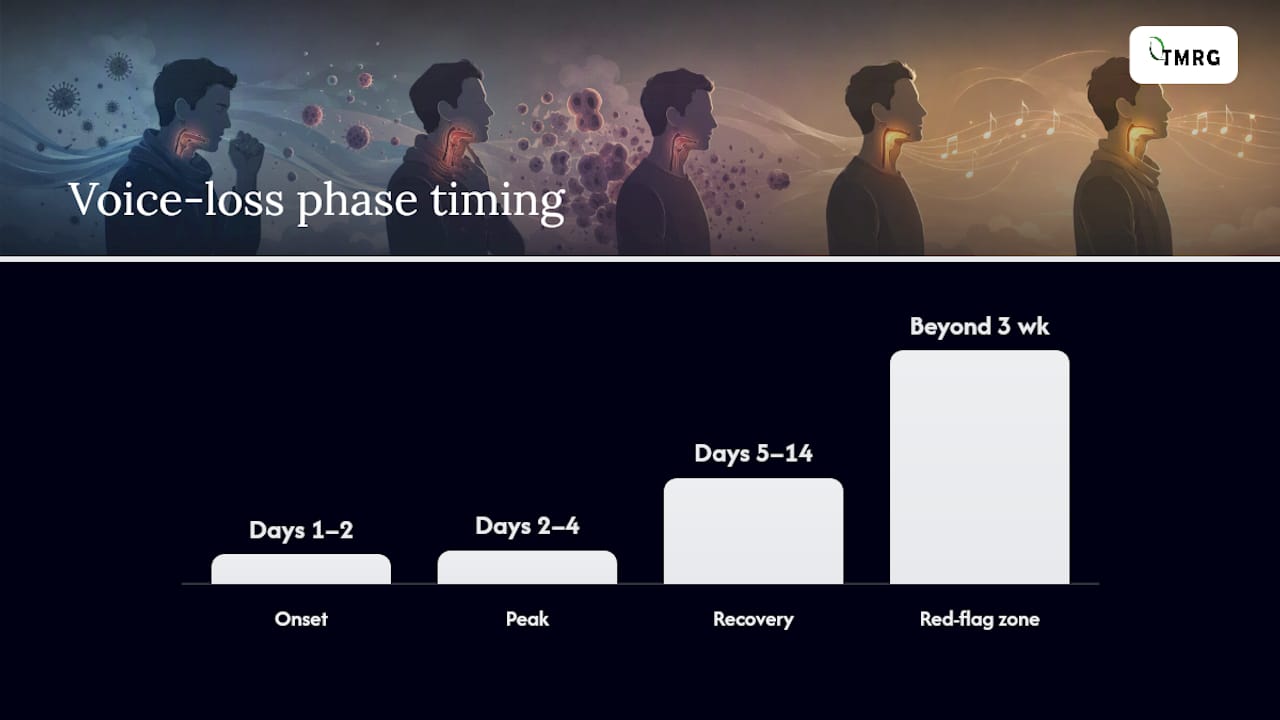
Temporary aphonia (no audible voice at all) is alarming but usually benign when it occurs during an active cold. The folds are simply too swollen to close and vibrate properly.
Singers, teachers, call-center workers, and older adults often take longer to recover. Reflux, which is common in these groups, slows mucosal healing. Older adults have less mucosal pliability at baseline, so even moderate swelling produces more noticeable voice changes. Professional voice users who continue working through the illness tend to extend their recovery by days or weeks.
Most viral laryngitis cases resolve within a couple of weeks with conservative self-care.
Conservative management is the standard treatment: hydration, humidification, voice rest, and avoiding irritants. Here is a practical, step-by-step approach:
Steroids (inhaled or systemic) are occasionally prescribed for severe acute laryngitis, particularly when a performer has an imminent professional obligation. They are not routine and carry risks; a clinician must make that call.
Antibiotics are rarely appropriate. Acute laryngitis is viral in the overwhelming majority of cases, and antibiotics do nothing for viral infections. The exception is a confirmed bacterial cause, which a clinician can identify if the clinical picture warrants it.
Pro Tip: Whispering forces the vocal folds into an abnormal, strained position that actually increases muscular tension compared to gentle normal phonation. If you need to communicate, use a soft, easy, slightly breathy voice at a low pitch rather than a whisper. When your voice starts returning, short, gentle humming (not singing full phrases) helps restore coordination without overloading the recovering tissue.
For additional practical steps, Tmrgsolutions’s guide on recovering from a hoarse voice covers several of these measures in more detail.
Most cold-related voice loss is self-limiting. But certain signs mean you should stop waiting and get evaluated.
See a clinician (non-urgent, within a week or two) if:
Seek urgent or emergency care if you notice:
When a clinician evaluates persistent or concerning hoarseness, they will typically take a focused history and examine the head and neck. Laryngeal visualization (laryngoscopy) and referral to an ENT or speech-language pathologist are reserved for cases that do not resolve on schedule or that carry red flags. Persistent hoarseness beyond several weeks warrants evaluation to exclude other causes, including structural lesions.
Singers, teachers, actors, and call-center workers carry a heavier burden when laryngitis hits. Performing on swollen vocal folds risks hemorrhage, nodules, or prolonged dysfunction that can sideline a professional for weeks or months. Think of it the way an athlete thinks about a sprained ankle: the tissue is injured, and loading it before it heals creates a worse injury.
Practical steps for professional voice users during a cold:
Phonotrauma during inflammation can produce long-term lesions. Repeated strain on swollen folds can lead to callus-like nodules that require voice therapy or, in some cases, surgical intervention. Tmrgsolutions’s resource on avoiding vocal damage outlines prevention strategies worth reviewing before your next performance season.
Non-prescription supportive products do not cure laryngitis, but they can meaningfully reduce discomfort and support the mucosal environment that healing requires.
Saline sprays moisturize the laryngeal and pharyngeal mucosa directly. They are gentle, safe for frequent use, and particularly useful in dry or air-conditioned environments. Herbal throat sprays and drops work similarly, with plant-based ingredients that may soothe irritated tissue. Steam and humidification deliver moisture systemically. Lozenges reduce the urge to clear the throat, which is one of the most damaging reflexes during laryngitis.
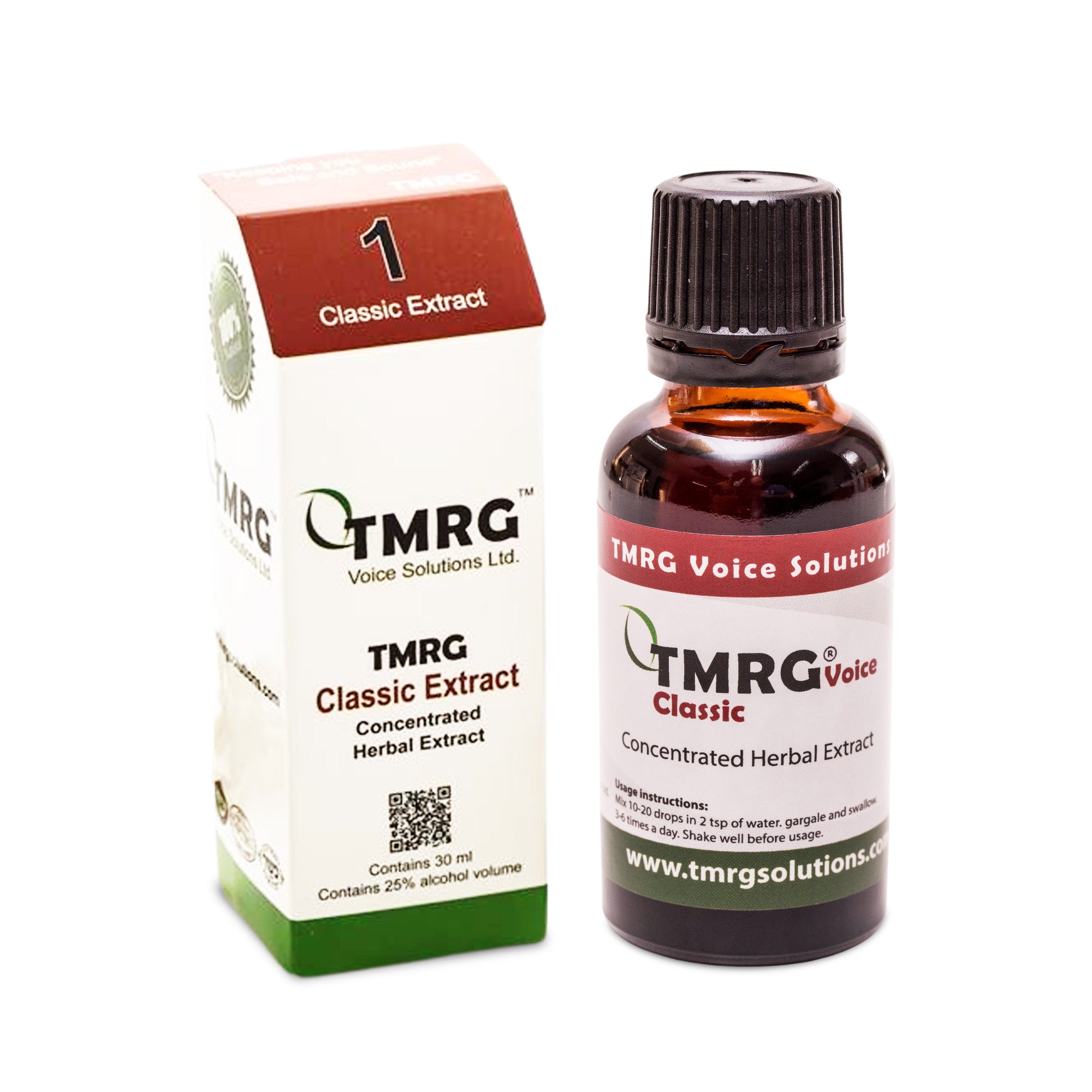
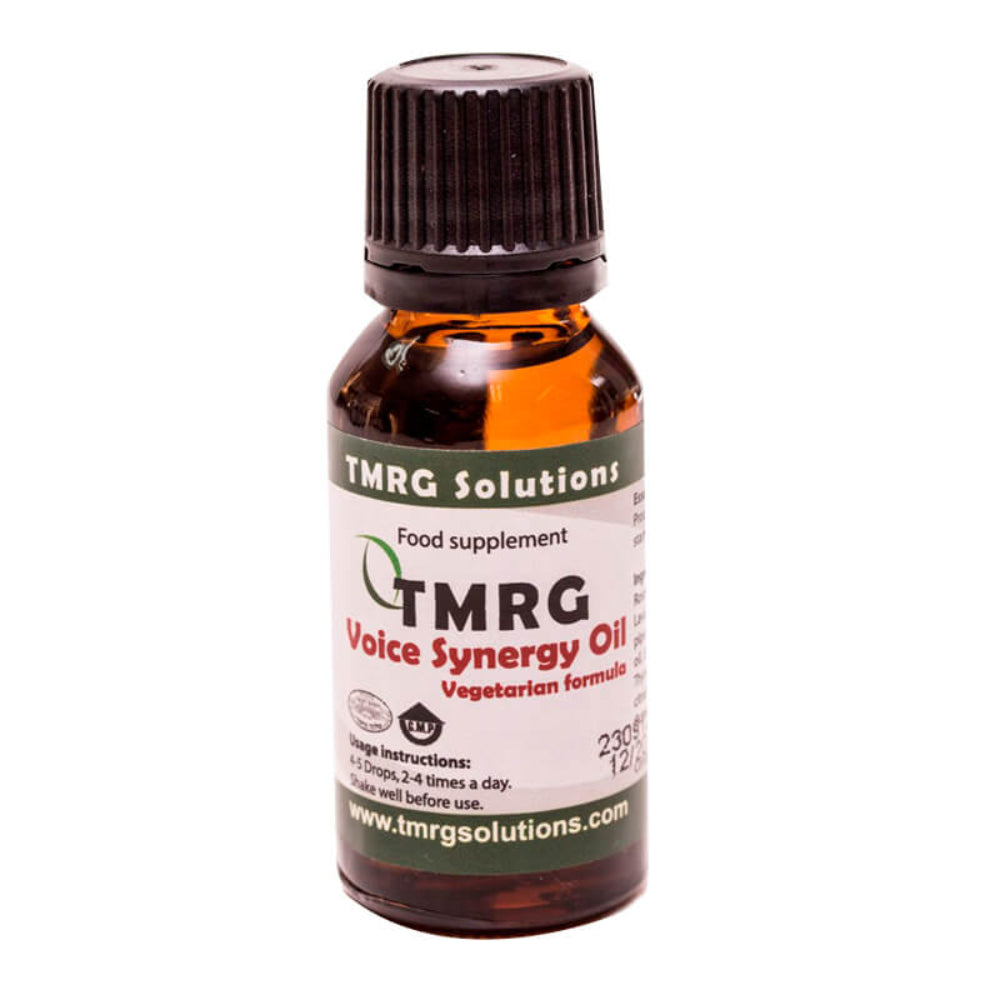
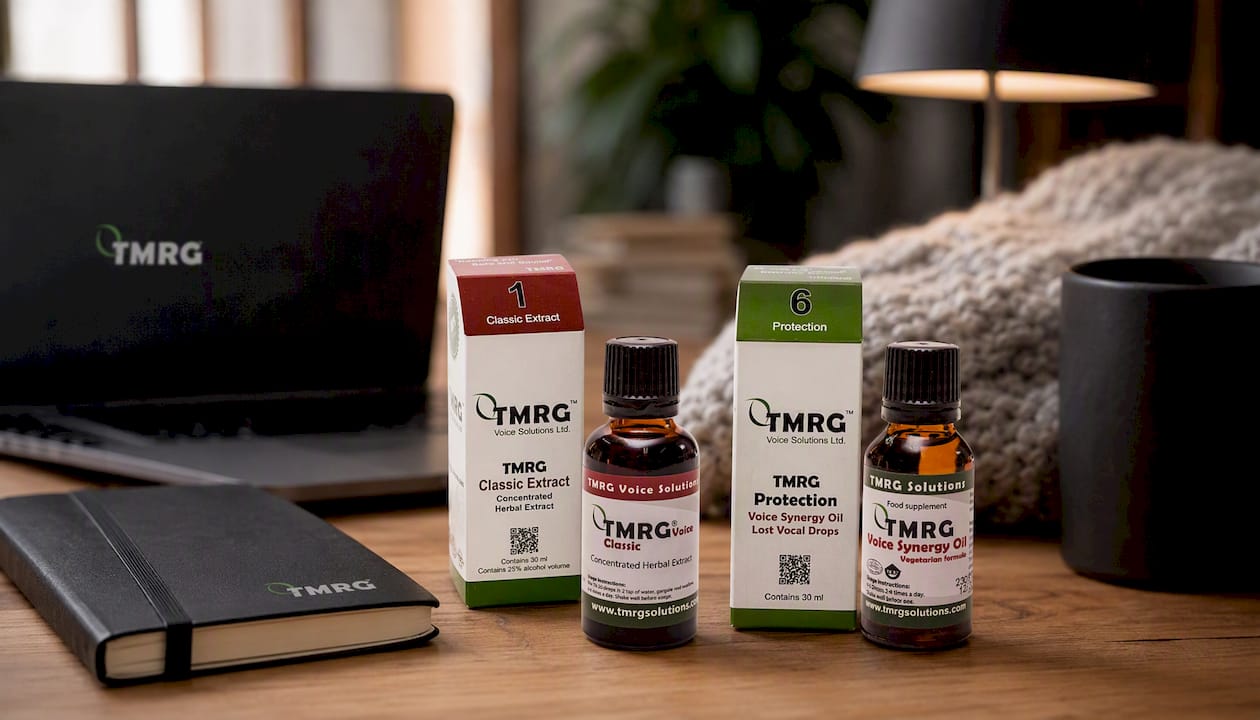
Tmrgsolutions offers several supportive options designed specifically for voice recovery. TMRG Loud & Clear Classic Voice Recovery Drops and TMRG Shine Bright Classic Voice Recovery Spray are formulated to soothe and support the vocal mucosa during recovery. TMRG Defense Oils and Saline Voice and Throat Spray combines saline with oils for direct mucosal moisture, and TMRG Protection Voice Synergy Oil Lost Vocal Drops offers an oil-based option for softening and comfort. These are adjuncts to conservative care, not substitutes for it.
Voice therapy (with a speech-language pathologist specializing in voice) is appropriate when hoarseness persists after the infection clears, when you notice maladaptive habits like throat-clearing or pressed phonation that developed during the illness, or for professionals who want structured prevention. A therapist can identify compensatory behaviors before they become ingrained and guide a safe return to full vocal use.
Consult a clinician for any persistent or severe symptoms. These products support comfort and hydration; they do not treat infection or structural lesions.
Losing your voice during a cold is genuinely unsettling, especially if your work or creative life depends on it. The good news is that the mechanism is well understood and the path forward is clear: protect the tissue, keep it hydrated, and give it time. What tends to go wrong is impatience. People whisper, push through rehearsals, or reach for antibiotics that will not help. The evidence consistently points to rest and hydration as the most effective tools in the acute phase, with clinical care reserved for the cases that genuinely need it.
If you want deeper guidance on vocal health maintenance and recovery, Tmrgsolutions’s educational resources on loss of voice are a practical starting point built on over 25 years of vocal health expertise.
When your voice is down and you want to do more than wait, Tmrgsolutions’s voice recovery line gives you targeted, natural support for the mucosal healing process. The drops, sprays, and oils are designed to soothe irritated tissue, maintain hydration, and reduce the discomfort that makes voice rest harder to sustain.
The TMRG Voice Therapy Kit Basic is a practical option for anyone who wants a structured recovery approach rather than individual products, combining supportive tools in a single kit. For singers and professionals who need a more complete solution, the Premium Voice Therapy Kit includes educational materials and a broader set of recovery tools.
Use these products as part of the conservative care approach described above: alongside voice rest, hydration, and humidification. They are not a replacement for clinical evaluation when red flags are present. If symptoms are severe, worsening, or lasting beyond three weeks, see a clinician first.
Browse the full range and find the option that fits your situation at Tmrgsolutions.
The following medical and clinical resources provide deeper detail on laryngitis, hoarseness, and vocal health:
These resources are intended for further reading and clinician-facing detail. They are not a substitute for evaluation by a qualified healthcare provider.
Rest your voice, drink plenty of warm fluids, run a humidifier, and avoid whispering, smoke, and alcohol. Most cold-related voice loss resolves within about two weeks with this conservative approach.
There is no single best medication because viral laryngitis does not respond to antibiotics. OTC pain relievers like ibuprofen or acetaminophen can reduce inflammation and discomfort; supportive sprays and drops can ease mucosal irritation while the infection clears.
Voice loss typically peaks in the first few days of a cold and improves gradually over 7–14 days. Hoarseness that persists beyond three weeks warrants a clinical evaluation to rule out other causes.
Resting your voice is one of the most effective things you can do, and staying home reduces both vocal demands and the risk of spreading the infection. Singers, teachers, and other professional voice users should avoid performance or heavy speaking until the voice has clearly recovered.
