Your Cart is Empty


Up to 70% of voice loss episodes in singers stem from vocal misuse rather than illness, challenging the common belief that infection is always to blame. This guide explains why singers lose their voice and how to recover naturally through evidence-based strategies. You’ll learn the physiological causes behind voice loss, effective natural remedies that support vocal fold healing, and preventive techniques to maintain long-term vocal health and performance quality.
| Point | Details |
|---|---|
| Vocal overuse damages folds | Excessive strain and poor technique cause microtrauma that leads to inflammation and voice loss. |
| Hydration protects vocal function | Proper lubrication allows vocal folds to vibrate smoothly, preventing stiffness and hoarseness. |
| Moderated rest speeds healing | Structured voice use recovers folds faster than complete silence by maintaining flexibility. |
| Natural remedies reduce inflammation | Herbal sprays, steam inhalation, and hydration soothe irritated vocal tissues effectively. |
| Prevention requires vocal maintenance | Daily warm-ups, technique refinement, and early symptom recognition prevent long-term damage. |
Your voice originates from two bands of muscle and tissue called vocal folds, located in your larynx. These folds vibrate when air passes through them, creating the sound waves that form your voice. The vocal folds require lubrication to vibrate smoothly and produce clear tones.
Proper hydration keeps the mucous membrane covering your vocal folds moist and flexible. When dehydrated, this membrane stiffens, causing rough vibration that produces hoarseness or cracks in your voice. Inflammation from overuse or infection swells the vocal folds, disrupting their normal vibration pattern and reducing your vocal range.
Understanding this physiology helps you recognize early signs of vocal damage before they progress. Your vocal folds are delicate structures that respond immediately to strain, dehydration, and environmental factors. Here’s what impacts their function:
When you lose your voice, it’s typically because inflammation or dehydration has disrupted the precise biomechanics your vocal folds need. The tissue becomes too stiff or swollen to vibrate at the frequencies required for normal speech and singing.
Vocal fold inflammation stands as the leading cause of voice loss among singers, often resulting from prolonged loud singing or speaking without adequate breaks. Overuse and dehydration impair vocal fold biomechanics, causing the tissue to swell and preventing normal vibration. This inflammation can develop within hours of intensive vocal use.

Dehydration creates a cascade of vocal problems by reducing the moisture content in your laryngeal mucosa. Your vocal folds need constant lubrication to prevent friction during vibration. When you’re dehydrated, the folds stiffen and lose flexibility, making it harder to control pitch and volume accurately.
Improper vocal technique and respiratory support force your larynx to compensate for inadequate breath pressure. This compensation increases muscle tension around the vocal folds, creating excess strain that leads to fatigue and voice loss. Many singers unknowingly use harmful techniques learned early in training.
Environmental factors compound these physiological stressors. Background noise in rehearsal spaces or performance venues forces you to project louder than necessary, increasing vocal fold collision force. Dry air from heating or air conditioning systems dehydrates your throat tissues rapidly.
Here are specific behavioral patterns that accelerate voice loss:
Upper respiratory infections introduce additional inflammation that compounds existing vocal strain. Your immune response to infection causes swelling in the larynx, further restricting vocal fold movement.
Many singers fear that losing their voice means permanent damage, but most acute voice loss recovers fully within two to three weeks with proper care. Permanent vocal fold scarring is rare and typically results only from severe trauma, surgery, or chronic untreated conditions. Temporary inflammation and edema resolve naturally as tissues heal.
The belief that complete silence is essential for vocal recovery actually hinders healing in many cases. Research shows that moderate, gentle voice use maintains vocal fold flexibility and promotes faster tissue repair than total voice rest. Your laryngeal muscles need controlled movement to prevent atrophy and maintain coordination.
Pro Tip: Practice semi-occluded vocal tract exercises like humming or straw phonation during recovery to maintain vocal fold contact without strain.
Hydration impacts vocal function far more dramatically than most singers realize. Your vocal folds need systemic hydration from drinking water, not just surface moisture from lozenges or sprays. It takes hours for water to reach laryngeal tissues through your bloodstream, so staying hydrated throughout the day is essential.
Another widespread myth suggests that clearing your throat or coughing helps remove mucus and improve voice quality. These actions actually slam your vocal folds together with significant force, causing additional trauma and prolonging inflammation. Gentle swallowing or sipping water clears mucus more safely.
“The misconception that vocal rest means complete silence has delayed recovery for countless singers. Gentle, strategic voice use accelerates healing by maintaining tissue elasticity and muscle memory.”
Singers often underestimate the importance of proper vocal warm-ups, viewing them as optional rather than essential. Your vocal folds are muscles that require gradual preparation before intensive use, just like any athletic activity. Skipping warm-ups leaves tissues vulnerable to strain and microtrauma.
Some performers believe natural remedies are less effective than pharmaceutical interventions. However, herbal anti-inflammatories and steam treatments target the same physiological mechanisms as medications, often with fewer side effects and better long-term outcomes for vocal health maintenance.
Herbal sprays containing ingredients like slippery elm, marshmallow root, and licorice reduce inflammation by coating irritated mucous membranes with protective compounds. These botanicals contain mucilage that forms a soothing film over vocal fold tissues, reducing friction during phonation. Clinical observations show they provide immediate relief while supporting longer-term healing.
Steam inhalation delivers moisture directly to your larynx, rehydrating dried vocal folds and loosening thick mucus. The warm vapor increases blood flow to laryngeal tissues, accelerating cellular repair and reducing swelling. Add a few drops of eucalyptus or peppermint oil to enhance the anti-inflammatory effects.
Pro Tip: Inhale steam for 10 to 15 minutes three times daily, keeping your face at a comfortable distance to avoid burning delicate throat tissues.
Systemic hydration remains your most powerful tool for vocal recovery. Drink eight to ten glasses of water daily to maintain optimal mucous membrane moisture. Your body prioritizes hydration for vital organs, so your vocal folds only receive adequate lubrication when you’re consistently well-hydrated throughout the day.
Moderated voice rest with structured use produces 72% faster healing than complete silence by maintaining vocal fold pliability while reducing inflammatory load. This approach involves limiting talking to essential communication, speaking softly without whispering, and avoiding prolonged conversations. Gentle humming exercises keep laryngeal muscles active without straining damaged tissues.
Here are evidence-based recovery strategies you can implement immediately:
Natural recovery approaches work best when combined into a comprehensive protocol addressing multiple healing mechanisms simultaneously. Pair herbal sprays with steam therapy and hydration for synergistic effects. Effective vocal recovery strategies integrate rest, natural anti-inflammatories, and gentle vocal exercises to restore function while preventing re-injury.
Avoid menthol-based products that create a cooling sensation but actually dry vocal tissues. Choose remedies with genuine moisturizing and anti-inflammatory properties verified by ingredient research.
The Vocal Health Triad Model provides a systematic approach to preventing voice loss by addressing three interconnected factors: vocal load management, vocal fold care, and technique optimization. This framework helps you identify weak points in your vocal routine before they cause problems. Each component supports the others, creating a comprehensive defense against voice loss.
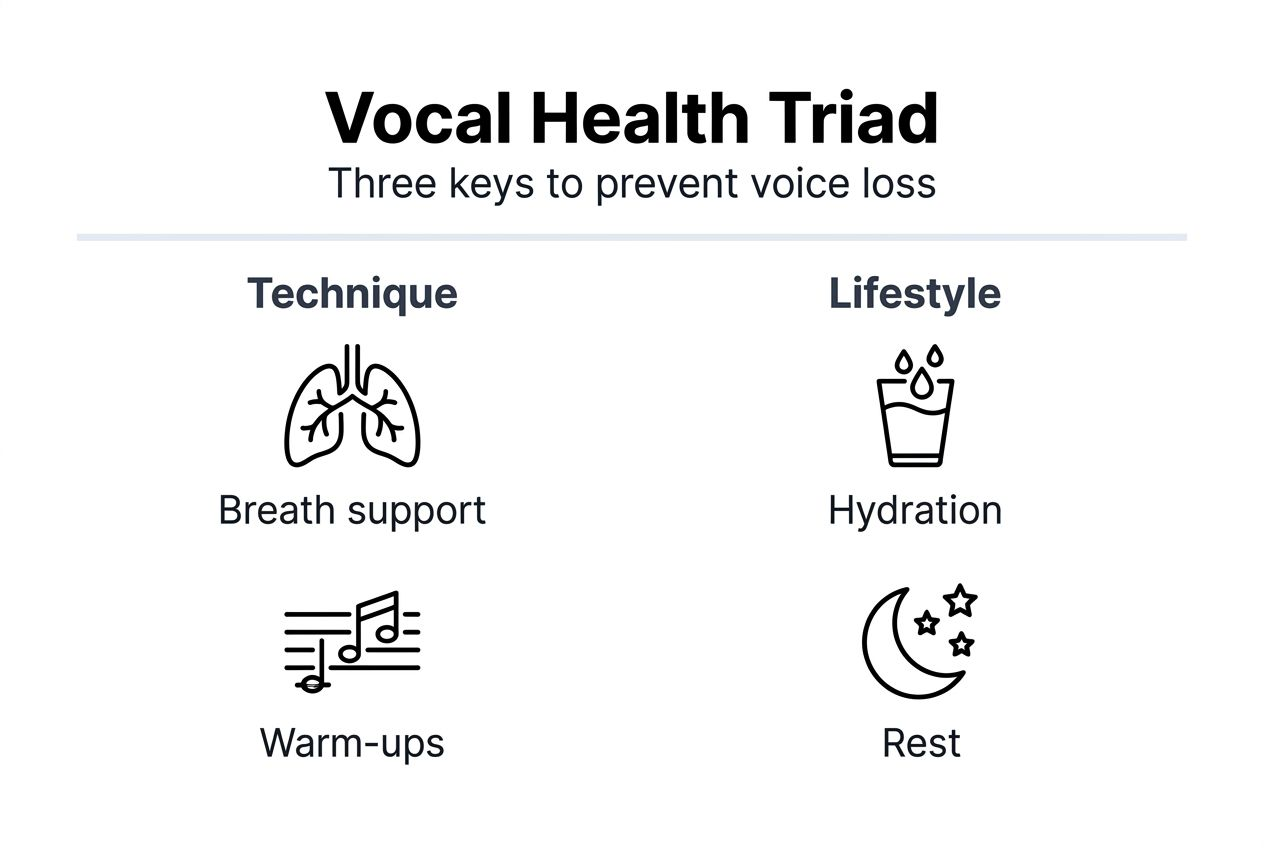
Vocal load management involves tracking and limiting the cumulative stress on your larynx throughout each day. Professional singers often underestimate their total voice use, counting only performance time while ignoring conversations, phone calls, and teaching sessions. Calculate your total phonation time daily, aiming to stay below four hours of moderate-volume speaking and singing combined.
Use amplification during rehearsals and performances to reduce the projection force your vocal folds must generate. Even small decreases in volume significantly lower the collision force between folds, preventing microtrauma accumulation. Schedule regular silence periods between vocal activities to allow tissue recovery.
Vocal fold care focuses on maintaining optimal tissue health through hydration and inflammation control. Your mucous membranes require constant moisture to function properly. Carry water everywhere and sip frequently rather than drinking large amounts sporadically.
Pro Tip: Monitor your urine color as a hydration indicator, aiming for pale yellow throughout the day to ensure adequate systemic moisture.
Reduce inflammatory triggers by avoiding dairy before performances, eliminating tobacco smoke exposure, and managing acid reflux if present. These factors increase mucus production and tissue swelling. Vocal maintenance during intense use requires proactive anti-inflammatory strategies.
| Maintenance Area | Poor Practice | Optimal Practice |
|---|---|---|
| Vocal load | Talking loudly for extended periods | Using amplification and scheduling rest |
| Hydration | Drinking only when thirsty | Consistent water intake throughout day |
| Technique | Pushing through vocal fatigue | Stopping at first signs of strain |
| Recovery | Performing daily without breaks | Alternating heavy and light vocal days |
Technique optimization ensures you’re using proper breathing support and vocal placement to minimize laryngeal strain. Work with a qualified voice teacher to identify and correct harmful habits. Proper technique allows your respiratory system to provide the air pressure needed for phonation, reducing the muscular effort your larynx must generate.
Implement structured warm-up and cool-down routines that prepare your voice for work and facilitate recovery afterward. These routines increase blood flow, improve coordination, and reduce injury risk significantly.
Early symptom recognition allows intervention before minor irritation becomes voice loss. Learn to identify subtle changes in vocal effort, range limitations, and timbre alterations that signal developing problems. Taking action at the first sign of fatigue prevents more serious damage that requires extended recovery periods.
Translating vocal health principles into daily habits protects your instrument while enhancing performance quality. Consistency matters more than intensity when building sustainable vocal practices. Small adjustments to your routine compound over time, creating significant improvements in vocal stamina and resilience.
Start each day with gentle vocal warm-ups before speaking or singing. These exercises increase blood flow to laryngeal muscles and improve neural coordination between your breath support and vocal fold closure. Spend 10 to 15 minutes on scales, arpeggios, and semi-occluded vocal tract exercises before intensive voice use.
Implement these performance-enhancing strategies in sequence:
Restoring your voice naturally requires understanding your individual vocal vulnerabilities. Some singers struggle with dehydration while others battle poor technique or excessive vocal load. Identify your primary risk factors through honest self-assessment and targeted intervention.
Adapt rehearsal spaces to minimize vocal strain by requesting humidity control and reducing background noise. Position monitors effectively so you can hear yourself clearly without over-projecting. These environmental modifications reduce the physiological stress on your vocal folds during extended practice sessions.
Schedule strategic rest periods, especially during intensive performance seasons or recording projects. Your vocal folds need 24 to 48 hours to fully recover from heavy use. Plan lighter vocal days between demanding performances to prevent cumulative fatigue that leads to injury.
Monitor your speaking voice as carefully as your singing voice. Many performers damage their voices through everyday conversation rather than performance. Apply the same technical principles to speaking that you use for singing, maintaining proper breath support and avoiding excessive volume.
Document your vocal health journey by keeping a simple log of daily voice use, hydration levels, and any symptoms or changes you notice. This data helps you identify patterns and make informed adjustments to your maintenance routine.
After understanding the causes and natural recovery strategies for voice loss, many singers seek comprehensive solutions that integrate these principles. TMRG Solutions offers specialized voice therapy and recovery kits designed specifically for vocal professionals experiencing hoarseness, fatigue, or voice loss.

Our basic voice therapy kit combines natural herbal sprays, therapeutic oils, and detailed recovery protocols backed by 25 years of vocal health expertise. These formulations reduce inflammation, enhance hydration, and support tissue repair using botanical ingredients verified by clinical use.
For singers facing more serious vocal challenges, the professional vocal recovery kit provides advanced therapeutic tools including specialized exercises, dietary guidance, and concentrated herbal preparations. This comprehensive system addresses multiple healing pathways simultaneously for faster, more complete recovery.
Explore our complete range of vocal problems solutions tailored to specific conditions and performance demands. Each product integrates seamlessly with professional vocal care routines and complements the natural remedies and maintenance strategies discussed throughout this guide.
Most acute voice loss episodes resolve within seven to fourteen days with proper rest, hydration, and natural remedies. Severe inflammation or vocal fold injury may require three to four weeks for complete healing. Recovery speed depends on the underlying cause, your adherence to rest protocols, and whether you continue activities that stress your voice during healing.
Complete voice rest is rarely necessary and may actually slow recovery by allowing laryngeal muscles to weaken. Moderate voice use with gentle speaking and semi-occluded exercises maintains vocal fold flexibility while reducing strain. Reserve total silence for severe cases involving vocal fold hemorrhage or significant trauma requiring medical intervention.
Chronic dehydration alone doesn’t cause permanent damage but creates conditions that increase injury risk significantly. Repeated vocal fold trauma from performing while dehydrated can lead to scarring, nodules, or polyps that permanently alter voice quality. Maintaining consistent hydration prevents these cumulative injuries from developing.
Herbal throat sprays containing slippery elm and marshmallow root, steam inhalation with essential oils, and systemic hydration provide the fastest natural relief. Combining these approaches addresses both surface irritation and deeper tissue inflammation. Anti-inflammatory foods like ginger and turmeric support healing from within when incorporated into your daily diet.
Prevention requires implementing proper vocal technique, maintaining adequate hydration, scheduling regular voice rest, and using amplification to reduce vocal load. Daily warm-ups prepare your larynx for work while cool-downs facilitate recovery. Monitor early warning signs like increased effort or reduced range, and address problems immediately before they progress to voice loss.
