Your Cart is Empty


Dairy does not reliably create more mucus for every singer, but it can change how your mouth and throat feel for some people. The residue sensation is real; a true mucus increase is not well-supported by research. If you notice thicker throat feel after dairy, skip it in the 2 to 4 hour window before you sing. Run a two-week personal test to know for sure, and follow the practical rules below either way.
TL;DR:
- Most studies show no objective increase in mucus from dairy, but individual reactions may stem from mouth residue, reflux, or allergies.
- Dairy can cause a coated mouth sensation due to fat and protein films, which is often mistaken for mucus but does not increase airway secretions.
- Avoid dairy in the two to four hours before singing if you are sensitive, especially high-fat options like cream and ice cream, to reduce reflux-related irritation.
- Personal two-week blind testing can identify whether dairy affects your voice, as subjective feelings often do not reflect actual mucus production.
- Hydration, warm fluids, and avoiding heavy meals are more reliable strategies than blanket dairy restrictions for vocal health before performances.
The dairy and singing debate has one clear finding at its center: a blinded study on milk and nasal secretions found no measurable difference between subjects who drank milk and those who drank a soy alternative. No extra mucus showed up in objective measurements, which undercuts the long-standing warning that milk clogs the pipes before a show.
Broader clinical reviews back that up. Research examining dairy consumption and respiratory mucus found limited evidence that dairy worsens mucus production or asthma control in the general population. That does not mean nothing is happening in your mouth. Cellular research on airway mucins, specifically MUC5AC secretion dynamics, shows that mucin release depends heavily on timing and dose. That gives a plausible biological reason why a subset of singers notice something after a big glass of milk, even when population-level studies find no pattern.
Three limitations matter here:
The honest read: there’s no universal dairy→mucus link, but individual variation is real and worth testing rather than dismissing outright.
If dairy doesn’t reliably raise mucus, why does your throat feel different after a latte? Three separate mechanisms explain the sensation, and they rarely get untangled in singer folklore.
Whatever the cause, throat clearing makes it worse. The mechanical shear from a hard clear irritates the vocal folds more than any dairy residue ever could, according to voice-health reporting on milk and mucus. Swallow, sip water, or hum gently instead.
Personal testing beats guessing, and it takes about two weeks to get a real answer. The key is blinding yourself, because knowing you had dairy biases how your throat “feels” before you even open your mouth to sing.
Pro Tip: Ask a singing partner or coach to help randomize and label your files. Self-blinding rarely works because you’ll remember what you drank that morning.
If you hear or feel a consistent difference on dairy days, you have your answer, and it’s personal, not universal. If nothing shows up, the myth doesn’t apply to you, and you can stop worrying about it.
Most vocal coaches who work with singers on what to eat before singing land on a timing rule rather than a blanket ban: avoid dairy in the 2 to 4 hour window before you perform if you’re at all unsure how your body reacts.
Not all dairy carries equal risk. Full-fat milk, cream sauces, ice cream, and heavy aged cheeses sit longer in the stomach and are more likely to trigger reflux-related throat irritation. Lighter options, a splash of milk in coffee, low-fat yogurt eaten early in the day, tend to cause fewer complaints.
Pro Tip: Reflux, not dairy, is the more common hidden cause of morning-of vocal tightness. If you get heartburn or a sour taste after eating, that’s worth addressing before you blame the cheese plate.
When you need a substitute or a quick fix, reach for hydration first. Room-temperature water, warm herbal tea (not too hot), or a diluted electrolyte drink all support vocal fold lubrication without the fat load that slows digestion.

Non-dairy milks aren’t automatically safer. Oat, almond, and soy milk each have their own mouthfeel, and some singers report the same coated sensation from oat milk’s natural gums. Test any substitute during rehearsal weeks, never for the first time right before a show.
If you feel coated mid-rehearsal or backstage:
For a longer-term dietary framework, a resource like TMRG’s guide to diet for a healthy voice covers substitutions in more depth than a pre-show checklist can.
A provider with extensive experience has developed natural formulations and voice-care routines targeting singers, actors, and speaking professionals dealing with hoarseness, fatigue, and recovery. That background shapes how this guidance gets translated from research papers into stage-ready rules.
Beyond this article, singers can dig into related resources built on the same evidence-first approach:
Certain product lines, including throat sprays and therapy kits, exist specifically to support hydration and recovery for performance-day vocal care.
The research here supports a narrower conclusion than most singing forums admit: dairy is not a reliable villain, but uncertainty about your own body is a real performance risk. Vocal coaches and nutritionists who work with performers often recommend removing any uncertain dietary variable before a show, not because the food is proven harmful, but because doubt itself creates tension in the throat and the mind.

Conventional advice fails singers in one specific way: it treats dairy as universally guilty, when the better distinction, made by practitioners who separate throat feel from actual mucus, is between subjective sensation and objective airway change. Most singers who “can’t do dairy” are reacting to residue, reflux, or nerves, not a mucus surge.
Prioritize the two-week blind test over any rule you read online, including this one. Your own data beats a general guideline every time. And if throat clearing is part of your pre-show ritual, drop it before you drop the cheese. That habit does more damage than milk ever will.
— Golan
Timing rules handle most pre-show dairy questions, but singers dealing with recurring hoarseness, reflux-related irritation, or general vocal fatigue often need more than a scheduling trick. That’s where TMRG’s product line fits into the picture.
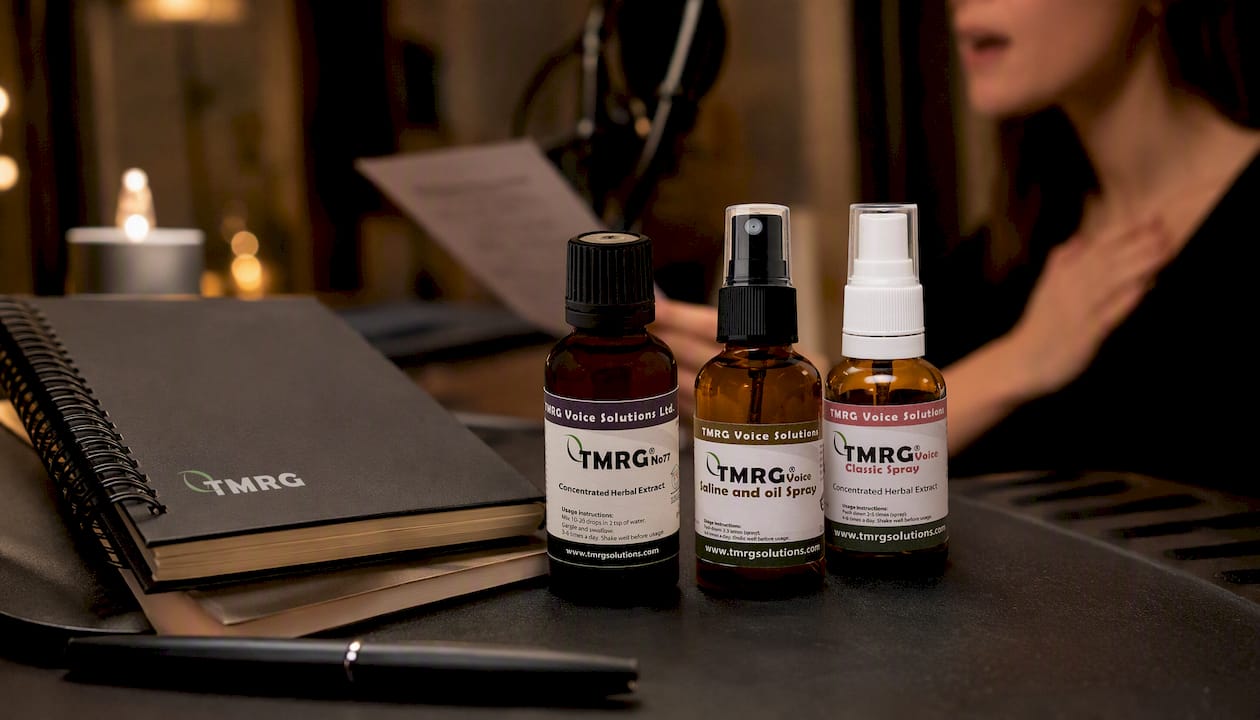
For fast backstage comfort right before you go on, the TMRG Shine Bright Classic Voice Recovery Spray offers quick throat hydration without the wait of a full routine. If reflux or throat dryness tends to build across a run of shows, the TMRG Defense Oils and Saline Voice and Throat Spray targets that ongoing irritation directly. For singers rebuilding after a rough patch, whether from illness, overuse, or diet-related discomfort, the TMRG Voice Therapy Kit Standard combines TMRG’s natural formulations into one recovery-focused routine, and the full TMRG Voice Therapy Kits collection lets you compare options by severity and need. Browse the lineup and pick the level of support that matches where your voice actually is right now, not where you wish it were.
This article is general information, not a substitute for advice from a qualified doctor. Consult a qualified healthcare professional about your own circumstances before acting on anything here.
If you’re sensitive to dairy, avoid it in the 2 to 4 hour window before performing. This gives any mouth residue or reflux-related irritation time to settle before you need your voice at full capacity.
Room-temperature water, warm herbal tea, and light foods low in fat support vocal comfort better than heavy or fried meals. A saline throat spray, like TMRG’s Defense Oils and Saline Spray, can also cut through surface residue without drying the throat.
A blinded study comparing milk to a soy alternative found no measurable increase in mucus, so dairy doesn’t reliably create more mucus for most people. Some singers still notice a coating sensation from milk fat residue or reflux, which is a different mechanism than actual mucus production.
Large, fatty, or spicy meals close to showtime raise reflux risk more than any single food group, including dairy. Stick to smaller, lighter meals a few hours out, and save rich dairy dishes like cream sauces or ice cream for after the performance.
