Your Cart is Empty


Guaifenesin can help some singers by thinning stubborn mucus, but it works for a minority of voices and never replaces hydration as your first line of defense. Choose a single-ingredient formula only, since formulas containing pseudoephedrine or diphenhydramine can dry your vocal folds instead of helping them. Give it a short trial period; if you feel no change in that time, stop and talk to a voice specialist rather than staying on it indefinitely.
TL;DR:
- Guaifenesin’s effectiveness is limited to certain mucus-related issues like thick secretions or postnasal drip, and it does not address underlying causes like reflux or allergies.
- Its benefit for voice outcomes is inconsistent across studies, and it should only be used for about one week before reassessment, not as a routine solution.
- Proper hydration, steam inhalation, saline rinses, and avoiding drying medications are more reliable first-line strategies for managing mucus in singers.
- Make sure to select pure guaifenesin products without pseudoephedrine or diphenhydramine to avoid counterproductive drying effects.
- When trialing guaifenesin, monitor for zero improvement after a week and consult a specialist if symptoms persist or worsen.
Guaifenesin is an expectorant. It pulls more water into your respiratory secretions, which makes mucus thinner and, in theory, easier to clear without the throat-clearing habit that irritates your vocal folds over time. That’s the entire mechanism. It doesn’t numb pain, reduce swelling, or repair tissue.
What clinical literature actually shows is murkier than product packaging suggests. Reviews of expectorant trials confirm the thinning effect on secretions, but the connection between thinner mucus and better voice outcomes is inconsistent across studies. Voice centers echo that gap in practice.
The Sean Parker Institute for the Voice notes that mucolytics like guaifenesin are available over the counter and sometimes used for throat discomfort, but their benefit for voice problems specifically is uneven. One reason: “thick mucus” often isn’t the actual root cause of a singer’s voice trouble. Reflux, allergies, vocal fatigue, and dehydration all mimic the same sticky, coated feeling.
That’s why laryngologists tend to lead with hydration and treat guaifenesin as a secondary experiment, not a fix.
Pro Tip: If your mucus sensation shows up mainly in the morning, suspect postnasal drip or reflux before assuming you need an expectorant at all.
Guaifenesin makes the most sense for a narrow set of complaints, not as a general voice tonic.
Contraindications matter here. Pregnant singers, people with certain chronic kidney or liver conditions, and anyone on other medications should check with a clinician before adding guaifenesin, since even simple OTC drugs can interact with existing prescriptions.
Watch for signs that point away from mucus entirely. Hoarseness that doesn’t track with congestion, throat pain, a voice that changes character rather than just feeling “thick,” or zero improvement after a full week on guaifenesin all suggest something else is driving the problem. Laryngopharyngeal reflux (LPR) is a frequent culprit that gets misread as a mucus issue for months before anyone catches it.
Pro Tip: Track your symptoms against your reflux triggers for a few days. Coffee, late meals, and alcohol worsening your “mucus” is a strong clue you’re dealing with LPR, not secretions.
Read the active ingredient panel before anything else. Guaifenesin should be the only active ingredient listed. Many combination cold products pair guaifenesin with drying agents, which defeats the purpose entirely.
Standard OTC dosing runs by product label, typically every four hours for immediate-release tablets or every twelve hours for extended-release versions, always with a full glass of water. Guaifenesin only works if you’re hydrated enough to give it water to pull into your secretions.
Ingredients to avoid on any label:
Both are commonly flagged by ENT practices as more harmful than helpful for singers because they thicken secretions instead of thinning them, working directly against your goal.
Give the trial about one week. If you notice no meaningful change in throat comfort or clearing frequency within that period, stop and reassess with a clinician rather than continuing indefinitely on faith.
Hydration comes first, every time. Laryngologists at UT Southwestern point to systemic fluid intake as the primary strategy for managing mucus, not any pill. A common baseline is a substantial amount of water daily, with an extra glass right after waking, when your vocal folds are driest from hours of low airflow overnight.
Steam inhalation and a bedroom humidifier add moisture directly to the air you’re breathing, which supports the folds passively throughout the day. Saline nasal irrigation clears postnasal drip at the source rather than treating the throat symptom it causes.
Topical throat sprays and lubricants round out this list as low-risk adjuncts, worth pairing with any of the above rather than relying on medication alone.

Golan has spent more than 25 years watching singers reach for the wrong fix first. The pattern repeats: someone feels “thick” and grabs a multi-symptom cold pill instead of a glass of water, then wonders why their voice feels worse by showtime. Guaifenesin has a place, but it’s the third or fourth tool in the kit, not the first.
The routines that actually hold up combine steady hydration, steam, a single-ingredient expectorant only when secretions are the confirmed issue, and topical support for immediate comfort. When singers report lasting mucus sensations, pain, or no change after a proper trial, the answer isn’t a stronger product. It’s a laryngology visit.
— Golan
Once hydration, steam, and an honest look at your ingredients are handled, the right product fills a specific gap instead of trying to do everything at once. For immediate lubrication before you walk onstage, the TMRG Shine Bright Classic Voice Recovery Spray targets that dry, coated feeling in minutes rather than hours.
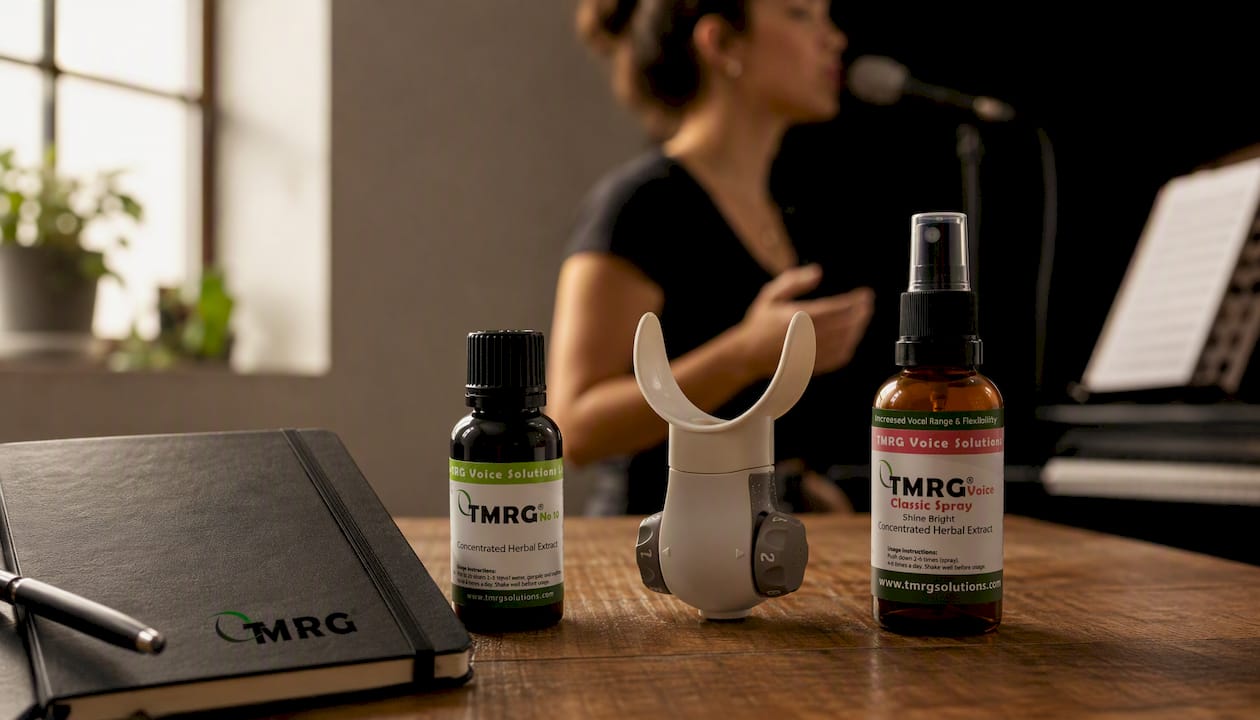
If breath control feels shaky when congestion is dragging your stamina down, the TMRG BB Breath Strengthener and Enhancer V3 supports the respiratory side of performance, working alongside whatever mucus strategy you’ve settled on. For daily maintenance between shows, TMRG Impact Voice Enhancement Drops round out a routine built for consistency rather than crisis management.
Pair any of these with your water intake and, if you’re trialing guaifenesin, keep the two separate by at least a short window so you can tell what’s actually working. Stop use if you notice irritation, and check with your provider about interactions if you’re taking other medications. Ready to build a routine that fits your voice? Browse the full product lineup and start with whichever gap matches your most immediate need.
This article is general information, not a substitute for advice from a qualified doctor. Consult a qualified healthcare professional about your own circumstances before acting on anything here.
Most singers manage mucus through consistent hydration, steam inhalation, and saline nasal irrigation, reserving a single-ingredient guaifenesin trial for cases where thick secretions persist despite those steps.
Professional singers typically rely on steady water intake, topical throat sprays like the TMRG Shine Bright spray for immediate comfort, and humidified air rather than medicated syrups as a daily habit.
Decongesting safely means avoiding pseudoephedrine and antihistamines, which dry vocal tissue, and instead using saline rinses, steam, and hydration to clear congestion without sacrificing vocal flexibility.
Preventing cough starts with avoiding throat clearing, keeping the air around you humid, staying hydrated, and treating reflux or allergies early since both are common hidden drivers of chronic coughing in singers.
Single-ingredient guaifenesin is generally considered low risk for most healthy adults when taken with adequate water, but anyone pregnant, on other medications, or with chronic conditions should confirm with a clinician first.
