Your Cart is Empty


TL;DR:
- Stronger vocal performance depends on breath support, vocal fold resistance, and proper vocal hygiene practiced daily. Systematic training, hydration, and load management develop lasting power without strain or injury, promoting efficient and effortless singing. Consistent resistance exercises and attention to posture and resonance enhance natural voice quality and prevent damage over time.
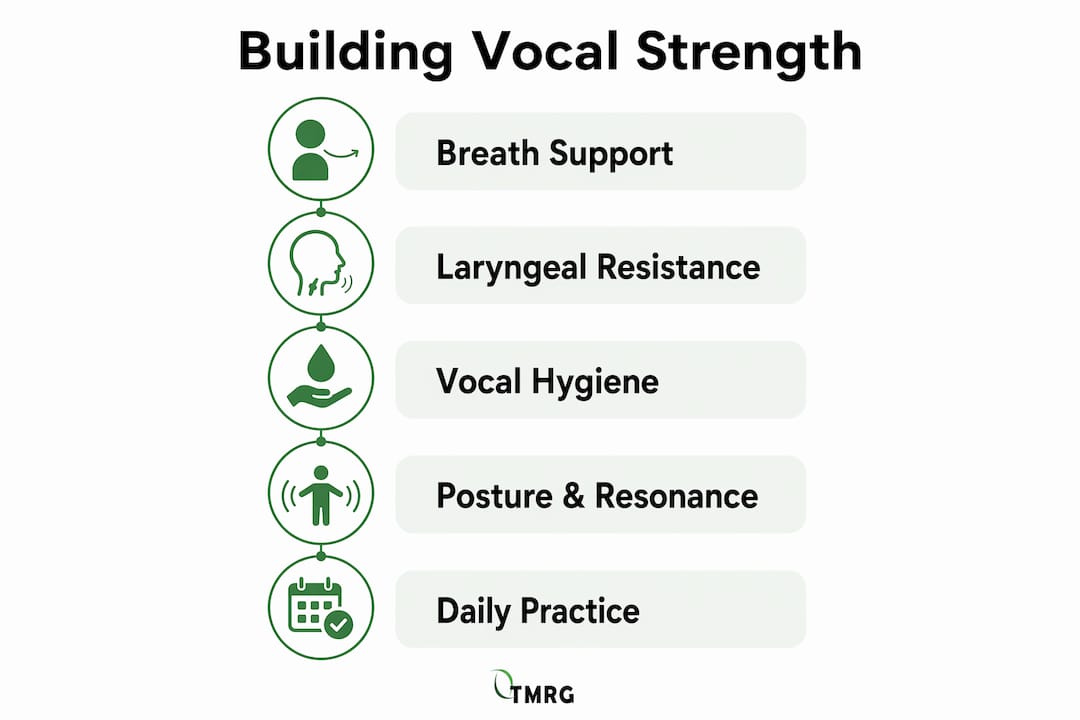
Stronger vocal performance naturally is built through breath support, vocal fold coordination, and consistent vocal hygiene rather than sheer volume or force. These three pillars form the foundation of what vocal pedagogists call natural vocal enhancement, a method that develops real, lasting power without strain or injury. Vocal coaches like Cari Cole and ENT specialists both point to the same truth: your voice grows stronger when you train it systematically, protect it daily, and resist the urge to push. This guide gives you the exact framework to do that.
Breath support from diaphragmatic breathing controls airflow efficiently, creating subglottal pressure that sustains and amplifies your voice without strain. Subglottal pressure is the air pressure that builds below your vocal folds before and during phonation. When that pressure is steady and well-managed, your vocal folds vibrate with less effort and produce a fuller, more resonant tone.
The key is rib expansion. When you inhale deeply and allow your ribs to expand outward, your diaphragm descends fully and your lungs fill from the bottom up. That gives you a larger air reservoir to draw from during a phrase. Singers and actors who skip this step often run out of breath mid-phrase and compensate by squeezing their throat muscles, which causes fatigue and thinning of the tone.
Many performers confuse pushing volume with supporting it. Pushing vocal volume instead of supporting it causes strain and potential injury. Volume should come from coordinated breath and vocal fold function, not from muscular force in the neck or jaw.
Here are the core breath support habits to build into your practice:
Pro Tip: Place one hand on your belly and one on your lower ribs during a breath exercise. Both should move outward on the inhale. If only your chest rises, you are breathing too shallowly to support a strong vocal tone.
Laryngeal resistance is the ability of vocal folds to resist lung air pressure without collapsing. This is the physiological core of true vocal strength. When your vocal folds close efficiently and hold their position against the airstream, you produce a full, grounded tone. When they collapse or gap, the voice sounds breathy, thin, or fatigued.
Most performers warm up before a show but never actually train their vocal folds for strength. Warm-ups prepare the voice but do not build strength. Strength develops through specific resistance exercises done daily over several weeks. Think of it the way a runner distinguishes between a pre-race stretch and actual interval training. Both matter, but only one builds capacity.
Laryngeal resistance training requires progressive loading of the vocal folds over time. Here is a structured approach to build that strength:
True vocal strength feels effortless and grounded, engaging internal laryngeal muscles rather than tight neck or throat muscles. If your neck tenses during these exercises, reduce the volume and slow down.
Pro Tip: Record yourself during resistance exercises once a week. Listen for changes in tone fullness and ease. Progress in vocal training is often more audible than it is felt in the moment.
Vocal hygiene consists of three factors: tissue health (hydration), technique (efficient resonance), and load management (micro-rests and amplification). Neglecting load management reduces the effectiveness of the other two. Many performers drink water and warm up faithfully but still develop chronic fatigue because they never reduce their vocal load.
Here are the core habits that protect your voice over the long term:
Symptoms like chronic throat clearing, frequent hoarseness, and vocal fatigue indicate a need for vocal hygiene revision and possibly professional voice therapy. Do not ignore these signals.
| Vocal hygiene factor | What it means | How to apply it |
|---|---|---|
| Tissue health | Keeping vocal fold mucosa moist | Drink water steadily; use a humidifier in dry rooms |
| Technique | Producing sound with minimal fold collision | Practice resonance and breath support exercises daily |
| Load management | Limiting total vocal output | Use micro-rests; amplify when possible; avoid noisy environments |
Performers with persistent hoarseness for more than 2–3 weeks should seek ENT evaluation to prevent permanent damage such as nodules or polyps. Early intervention protects your career. You can learn more about vocal fold injuries and when to act at Tmrgsolutions.
Proper posture enhances vocal resonance and projection by maximizing pharyngeal space and diaphragmatic capacity. Your body is the instrument. When it is aligned, sound travels freely through the vocal tract and resonates in the chest, mouth, and nasal cavities. When it is collapsed or tense, resonance is blocked and you compensate by pushing.
The ideal performance posture follows these principles:
Resonance is the natural amplification of sound inside your vocal tract. You do not need to push volume when resonance is working correctly. The tone fills the space on its own.
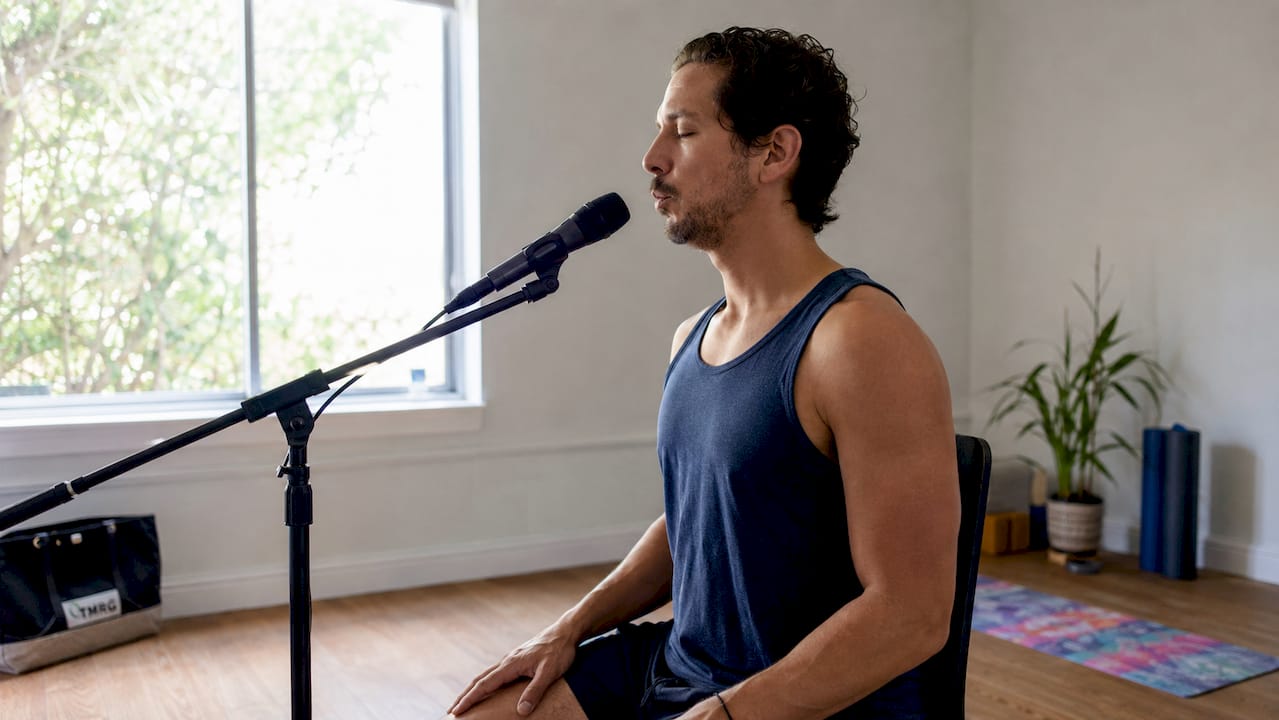
Semi-occluded vocal tract exercises such as lip trills and straw phonation promote safe vocal fold vibration and enhance resonance without strain. Straw phonation, where you phonate through a narrow cocktail straw, creates back pressure in the vocal tract that gently massages the vocal folds and trains them to vibrate efficiently. Use it as a warm-up tool or a recovery exercise after heavy use.
| Technique | Effect on voice | Best use case |
|---|---|---|
| Lip trills | Reduces fold tension; improves breath flow | Warm-up and cool-down |
| Straw phonation | Builds fold efficiency; reduces strain | Recovery and resonance training |
| Open pharynx vowels | Increases resonance space; adds fullness | Tone building during practice |
A consistent daily routine is what separates performers who improve steadily from those who plateau or get injured. 20 minutes of daily focused voice training significantly improves vocal strength over weeks, shifting the voice from strained to easy. That is a small investment for a major return.
Here is a practical daily structure for singers and actors:
Following a daily vocal care routine built around these steps gives your voice the structure it needs to grow stronger week over week.
Stronger vocal performance naturally requires breath support, laryngeal resistance training, and consistent vocal hygiene working together every day.
| Point | Details |
|---|---|
| Breath support is foundational | Diaphragmatic breathing creates subglottal pressure that amplifies tone without strain. |
| Warm-ups do not build strength | Laryngeal resistance exercises done daily over weeks produce real vocal power. |
| Load management matters most | Micro-rests and amplification protect vocal folds even when hydration and technique are good. |
| Posture shapes resonance | Aligned posture opens the pharynx and allows natural amplification without pushing. |
| Seek ENT care early | Hoarseness lasting more than 2–3 weeks requires medical evaluation to prevent permanent damage. |
I have worked with singers and actors for years, and the single most common mistake I see is treating vocal power as a volume problem. Performers push harder, speak louder, and strain through fatigue thinking they are building strength. They are not. They are accumulating damage.
The shift happens when you understand that a strong voice is an efficient voice. It does not feel like effort. It feels like the sound is coming from somewhere deep and stable, not from your throat. That feeling is laryngeal resistance working correctly. It takes weeks of deliberate training to develop, and it cannot be faked or rushed.
What I find most performers resist is the idea that 20 minutes a day of quiet, focused exercises will outperform an hour of loud rehearsal. But the evidence is consistent. Quiet, targeted resistance work builds the internal muscles that hold your voice together under pressure. Loud rehearsal without that foundation just wears the instrument down.
My honest advice: stop adding more to your practice schedule and start making what you already do more precise. Fewer repetitions with better breath support and cleaner fold closure will take you further than any shortcut. Consistency over weeks is the only path that actually works.
— Golan
Building a stronger voice naturally takes daily commitment, and the right support makes that process more sustainable.

Tmrgsolutions has spent 25+ years developing natural vocal health products designed specifically for singers, actors, and professional voice users. The TMRG Classic Drops support throat hydration and vocal clarity, making them a practical complement to your daily training routine. For performers managing vocal fatigue or recovery, the TMRG Voice Therapy Kit Premium combines targeted tools and natural formulations to support fold recovery and sustained performance readiness. These products do not replace technique training, but they give your vocal folds the tissue health foundation they need to respond to that training.
Laryngeal resistance is the ability of your vocal folds to resist airflow without collapsing, which is the physiological basis of vocal power. Strong laryngeal resistance produces a full, grounded tone with minimal effort.
Consistent daily resistance exercises over several weeks produce measurable improvements in vocal strength. Most performers notice a shift from strained to easier tone within 4–6 weeks of focused daily training.
Hydration supports tissue health but does not build strength on its own. Vocal hygiene requires all three factors: tissue health, efficient technique, and load management working together.
Seek ENT evaluation if hoarseness or vocal loss persists for more than 2–3 weeks. Early evaluation prevents permanent damage such as vocal nodules or polyps.
Yes. Semi-occluded vocal tract exercises like lip trills and straw phonation promote safe vocal fold vibration and build resonance efficiency without strain, making them ideal for both warm-up and recovery.
