Your Cart is Empty


TL;DR:
- Vocal strain involves inflamed and irritated vocal folds caused by excessive voice use. Recovery requires strict vocal rest, staying hydrated, and performing gentle vocal exercises like straw phonation. Persistent hoarseness beyond 14 days needs medical evaluation to prevent long-term damage.
Vocal strain, clinically known as vocal fatigue or vocal fold overuse, is defined as inflammation and irritation of the vocal folds caused by excessive or improper voice use. To cure vocal strain quickly, you need three things working together: strict vocal rest, consistent hydration, and targeted recovery exercises. Recovery typically ranges from 1–2 days to 1–2 weeks, depending on severity. Hoarseness or voice changes that persist beyond 14 days require medical consultation. Singers, teachers, actors, and anyone who relies on their voice daily can speed up healing significantly by following the evidence-based methods covered here.

Immediate relief from vocal strain starts with two non-negotiable actions: silence and water. Everything else builds on that foundation.
Complete vocal rest means no speaking, no singing, and absolutely no whispering. Whispering increases vocal fold tension in an unnatural way, forcing the laryngeal muscles to work harder than normal speech. Many people assume whispering is gentle on the voice. It is not. Silent mouthing also engages laryngeal muscles and delays recovery. True rest means silence.
For professional voice users, complete silence all day is rarely realistic. The practical guideline is 10 minutes of vocal rest for every 60 minutes of voice use. This prevents cumulative damage and gives the vocal folds time to reduce swelling between sessions.
Drinking water keeps the mucous membranes lining the vocal folds supple. Aim for consistent intake throughout the day rather than large amounts at once. Caffeine and alcohol both dehydrate the vocal tract, so reduce or eliminate them during recovery.
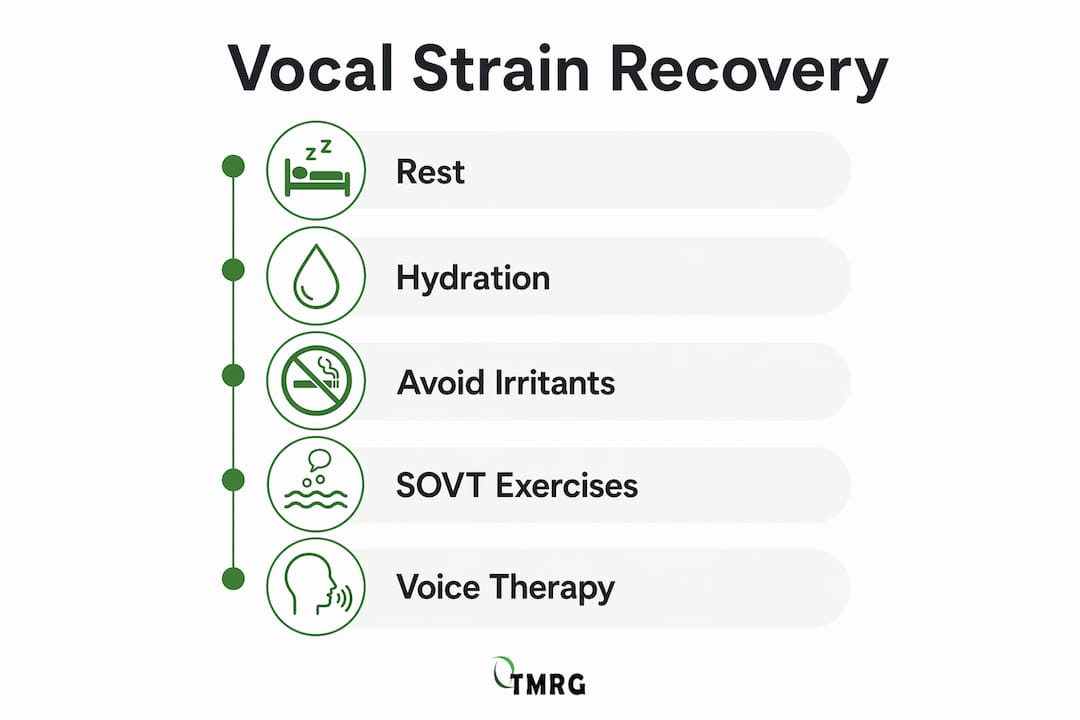
Surface hydration works differently and faster. Steam inhalation and nebulized saline deliver moisture directly to the vocal fold surface, lowering the threshold pressure needed for the folds to vibrate. This means your voice requires less effort to produce sound, reducing further irritation. A simple steam bowl or a personal steam inhaler works well for home use.
Pro Tip: Carry a small notepad or use a text-to-speech app on your phone during vocal rest periods. Removing the temptation to speak even briefly makes a measurable difference in recovery speed.
Recovery time depends on how severe the strain is and how well you protect the voice during healing. Acute voice loss from a single overuse event, like cheering at a concert, often resolves within 1–2 days with proper rest. Strain from sustained overuse, such as a week of heavy teaching or touring, can take 1–2 weeks to fully clear.
The table below outlines typical recovery windows and the factors that influence them.
| Scenario | Typical Recovery Time | Key Influencing Factor |
|---|---|---|
| Single overuse event (shouting, cheering) | 1–2 days | Immediate rest and hydration |
| Sustained overuse (days of heavy voice use) | 1–2 weeks | Vocal load reduction and rest breaks |
| Strain with underlying irritants (smoking, reflux) | 2–4 weeks or longer | Eliminating the underlying cause |
| Hoarseness persisting beyond 14 days | Requires medical evaluation | Possible structural change or nodule |
Underlying health conditions extend recovery significantly. Acid reflux, for example, bathes the vocal folds in stomach acid during sleep, re-irritating tissue that is trying to heal. Allergies cause postnasal drip that triggers throat clearing. Address these conditions alongside vocal rest for faster results.
Voice therapy is a professional intervention that teaches you how to use your vocal muscles with less strain. It is not just for severe cases. Even moderate vocal fatigue benefits from guided therapy, which rebalances the three vocal subsystems: respiration, phonation, and resonance.
Passive rest alone is not always the fastest path to recovery. Targeted vocal exercises, when done correctly, actively reduce swelling and restore healthy vocal fold function. The key is choosing exercises that work the voice gently rather than forcefully.
Semi-Occluded Vocal Tract (SOVT) exercises are the gold standard for active vocal rehabilitation. The term refers to any exercise that partially closes the front of the vocal tract, creating back-pressure that gently massages the vocal folds from the inside. SOVT exercises like straw phonation and lip trills reduce the collision force between the vocal folds with each vibration cycle, which directly decreases swelling and irritation.
The three most effective SOVT exercises for recovery are:
Pro Tip: Use a coffee stirrer instead of a regular straw for straw phonation. The narrower diameter creates greater resistance, which produces stronger back-pressure and more effective rehabilitation of the vocal folds.
You can find a full breakdown of these techniques in the SOVT exercise guide from Tmrgsolutions, which covers proper form and progression for each exercise.
Voice therapy typically involves weekly 45-minute sessions over 4–6 weeks. A licensed speech-language pathologist guides you through exercises that retrain vocal muscle coordination and eliminate the habits that caused the strain in the first place. For singers and professional speakers, this structured approach produces faster and more durable results than self-directed rest alone.
Recovery does not happen in isolation. What you do away from the microphone or classroom matters as much as the exercises you practice.
Singers and performers can find additional maintenance strategies in the vocal maintenance guide from Tmrgsolutions, which covers managing vocal load during high-demand periods.
Curing vocal strain quickly requires combining strict vocal rest, consistent hydration, and targeted SOVT exercises while eliminating irritants that delay healing.
| Point | Details |
|---|---|
| Vocal rest means silence | No speaking, whispering, or silent mouthing; all engage laryngeal muscles and slow recovery. |
| Hydration works two ways | Drink water consistently and use steam or nebulized saline for direct surface hydration. |
| SOVT exercises accelerate healing | Straw phonation and lip trills reduce vocal fold collision force and swelling during recovery. |
| 14-day rule for medical care | Hoarseness lasting more than 14 days requires evaluation by a physician or ENT specialist. |
| Lifestyle habits determine speed | Eliminating smoking, managing reflux, and prioritizing sleep directly shorten recovery time. |
Most people who struggle to recover from vocal strain make the same two mistakes. They whisper instead of staying silent, and they return to full voice use the moment they feel slightly better. Both choices restart the injury cycle.
The hardest part of vocal recovery is social. Staying silent feels rude. Whispering feels like a reasonable compromise. But the research is clear: complete vocal rest excludes whispering and silent mouthing, because both engage the laryngeal muscles and prevent full recovery. A notepad and a firm explanation to the people around you will protect your voice far better than a strained whisper.
The second thing I’ve observed is that people treat recovery as passive. They rest, they wait, and they hope. The singers and teachers who recover fastest are the ones who add gentle SOVT exercises within the first 24–48 hours of rest. Straw phonation for five minutes, three times a day, does more for swollen vocal folds than two extra days of silence alone.
My honest recommendation: treat your voice the way an athlete treats a muscle injury. Rest it, hydrate it, do the prescribed rehabilitation exercises, and do not rush the return to full load. Early intervention and consistent preventive care are what separate people who recover in three days from those who are still hoarse three weeks later.
— Golan
Vocal rest and exercises form the foundation of recovery. The right supportive products make that foundation stronger.

Tmrgsolutions has spent 25+ years developing natural formulations specifically for voice professionals. The Classic Voice Recovery Drops are designed to soothe irritated vocal folds and support faster recovery from hoarseness and vocal fatigue. For a more complete approach, the Voice Therapy Kit pairs recovery tools with structured guidance to help you rebuild vocal strength safely. The Defense Oils and Saline Spray adds direct surface hydration, complementing the steam inhalation techniques covered above. Each product is formulated to work alongside vocal rest and SOVT exercises, not replace them.
Strict vocal rest combined with consistent hydration and gentle SOVT exercises like straw phonation produces the fastest recovery. Steam inhalation also accelerates healing by lowering the vibration threshold of the vocal folds.
Whispering is not safe during vocal rest. Whispering forces unnatural tension in the vocal folds and delays recovery just as much as normal speaking.
See a physician or ENT specialist if hoarseness or voice changes persist beyond 14 days. Prolonged symptoms may indicate a structural issue such as vocal nodules or polyps.
SOVT exercises create back-pressure inside the vocal tract that gently massages the vocal folds and reduces collision force during vibration. This decreases swelling and allows the tissue to repair more quickly.
Yes. Singers can begin gentle straw phonation and lip trills within the first 24–48 hours of vocal rest, provided there is no pain. These exercises support healing without adding harmful load to the vocal folds.
