Your Cart is Empty


Before reaching for medication, there are powerful natural ways to ease a sore throat — especially for singers. From honey and warm lemon water to steam inhalation and herbal teas, this guide covers the most effective natural remedies that soothe irritation without harming your voice. Do now**:** Apply a saline or herbal spray (such as TMRG Shine Bright or TMRG Defence/), run a steam session for 10 minutes, and sip room-temperature water steadily.
Stop immediately: Loud talking, throat-clearing, whispering, and any vocal loading that strains the folds.
Safety note: If hoarseness persists beyond two weeks, see an ENT. The NIDCD treats this as a clinical threshold, not a suggestion.
Pro Tip: Instead of total silence, use semi-occluded vocal tract exercises (SOVTE) like straw phonation or lip trills during recovery. A peer-reviewed review confirms that active recovery with SOVTE reduces collision forces on the folds and avoids the deconditioning that prolonged silence can cause.
For voice professionals, the most effective natural approach to vocal soreness combines targeted surface hydration, short vocal rest with SOVTE-based active recovery, and safe herbal products, with clinical escalation if hoarseness persists beyond two weeks.
| Point | Details |
|---|---|
| Surface hydration first | Steam and sprays reach the vocal folds faster than drinking alone; use them within the first hour of noticing soreness. |
| 64 oz water daily | UT Southwestern recommends this as a baseline; increase intake if you consume caffeine or alcohol. |
| SOVTE over total silence | Lip trills and straw phonation reduce fold collision forces and prevent deconditioning during recovery. |
| Thyme drops show trial support | In a randomized trial, 83.3% of professional voice users reported throat well-being with thyme drops vs. 50.0% with placebo. |
| Tmrgsolutions recovery options | The TMRG Shine Bright spray, Loud & Clear drops, and Powerful Vocal Recovery Kit map directly to the surface hydration and herbal-drop steps in this protocol. |
How do vocal warm-ups and technique changes support recovery?
Tmrgsolutions products that fit directly into this recovery plan
The 24-hour protocol for voice professionals centers on three actions: stop vocal loading, apply surface hydration, and support systemic hydration with consistent water intake.
Surface hydration works faster than drinking alone because steam and sprays reach the mucosal surface of the vocal folds directly. UT Southwestern ENT specialists explain that water produces thin, watery mucus that lubricates the folds, and that steam brings moisture closer to the folds than any beverage can. Their baseline recommendation is 64 ounces of water daily, with more needed if you consume caffeine or alcohol.
Stop vocal loading. Cancel or reschedule any rehearsal or lecture within the first 12 hours. Schedule vocal naps: 30-minute periods of complete silence spread through the day.
Steam session. Use a personal steam inhaler or a bowl of hot water with a towel for 10 minutes. Repeat twice in the first 24 hours.
Apply a surface spray or drops. TMRG Shine Bright spray or TMRG Defense saline and oil spray coat the mucosal surface and provide lubrication between steam sessions.
Use a glycerin-based lozenge or herbal drop. A randomized trial in 48 professional voice users found that thyme drops produced significantly higher self-reported throat well-being after vocal loading compared to placebo.
Finish with gentle SOVTE. After your final steam session, do 5 minutes of straw phonation or lip trills at low intensity rather than going straight to silence.
Most voice professionals notice a meaningful reduction in scratchiness within 24–72 hours when they follow this sequence consistently.
Pro Tip: If you have a performance the next day, humidify your backstage space and schedule two vocal naps before showtime. A small travel humidifier plus a pocket spray covers both surface and ambient hydration without any vocal loading.
Surface-hydration sprays and saline solutions act fastest because they contact the mucosa directly. Herbal drops with anti-inflammatory compounds come next. Steam devices and voice therapy kits support medium-term recovery.
TMRG Shine Bright spray delivers surface hydration for immediate backstage or pre-performance use. TMRG Defense combines oils and saline for mucosal lubrication and is suited to routine and pre-performance application. Use 2–3 sprays directed toward the back of the throat, not the tongue. Avoid menthol-containing products for prolonged use; UT Southwestern specialists note that menthol can cause a drying rebound effect over time.
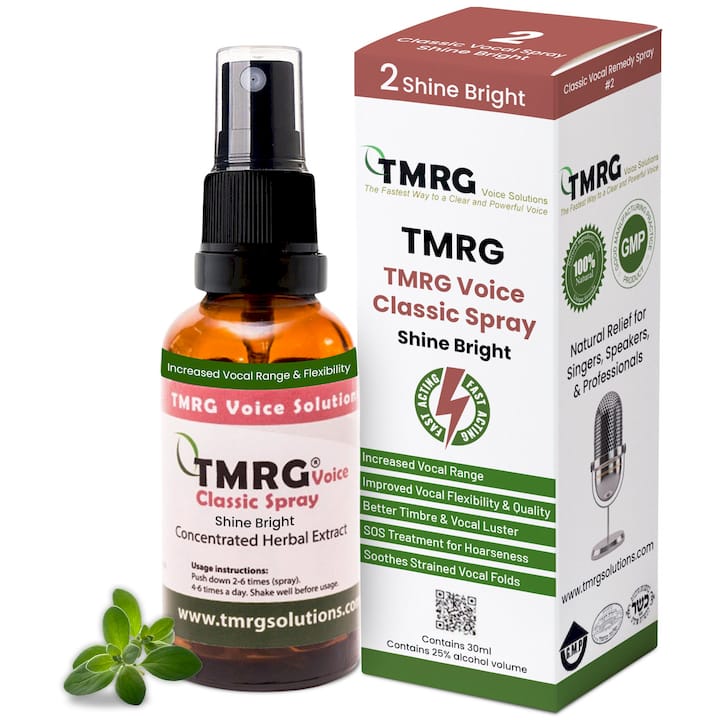
TMRG Loud & Clear drops are formulated for quick throat comfort after vocal loading. Thyme-based compounds (thymol and carvacrol) show antispasmodic and anti-inflammatory activity in respiratory tissue. Use drops 20–30 minutes before or after vocal loading, not during. Check for herb allergies before first use. For a deeper look at herbal solutions for vocal care, the Tmrgsolutions resource library covers safe application in detail.
TMRG Voice Therapy Kit Basic: entry-level kit for daily warm-ups and SOVTE guidance; ideal for building a consistent routine.
TMRG Voice Therapy Kit Standard (TVT-S): structured active-recovery tools and exercises for recurring strain or post-performance recovery.
TMRG Powerful Vocal Recovery Kit: combines sprays, drops, and exercises for acute recovery after heavy vocal loading.
Contraindications to note: Avoid herbal drops if you are pregnant or nursing without clinician approval. If you have GERD, acidic or spicy herbal formulations may worsen reflux and irritate the folds further. Patch-test any new herbal product with a small dose and monitor for 24 hours.
The most impactful daily habits are consistent systemic hydration, targeted surface hydration, a diet rich in vitamins A, C, and E, adequate sleep, and environmental controls that reduce mucosal dryness. A vocal hygiene review from Transilvania University frames these as inseparable from performance practice, not optional add-ons.
Drink a sufficient amount of water daily; increase intake if you consume caffeine or alcohol.
Run a humidifier in your bedroom overnight, targeting 40–50% relative humidity.
Eat whole grains, fruits, and vegetables to support mucosal tissue. Vitamins A, C, and E are particularly relevant for epithelial health. See the diet for healthy voice guide for specific food choices.
Limit caffeine and alcohol in the 12 hours before any performance.
Avoid spicy foods and known GERD triggers, which can cause acid to reach and irritate the vocal folds.
Honey and ginger have a long history as supportive natural anti-inflammatories. Small trials and traditional use suggest they may soothe mucosal irritation, though neither replaces clinical treatment. Warm ginger tea with honey is a reasonable backstage beverage. For a broader list of soothing teas that voice professionals use, that resource covers options worth knowing.
Sleep 7–9 hours. Vocal tissue repairs during sleep, and fatigue compounds hoarseness.
Recovery timeline to plan around:
24–72 hours: Scratchiness and mild hoarseness typically ease with surface hydration, vocal naps, and herbal drops.
1–2 weeks: Persistent hoarseness that is improving slowly may still respond to continued routine care.
Beyond 2 weeks: Natural care alone is insufficient. Escalate to an ENT.
Pro Tip: Build a compact backstage kit: TMRG Shine Bright spray, TMRG Loud & Clear drops, a small travel humidifier, and a thermos of warm (not hot) water. That covers surface hydration, herbal support, and ambient moisture in one bag.
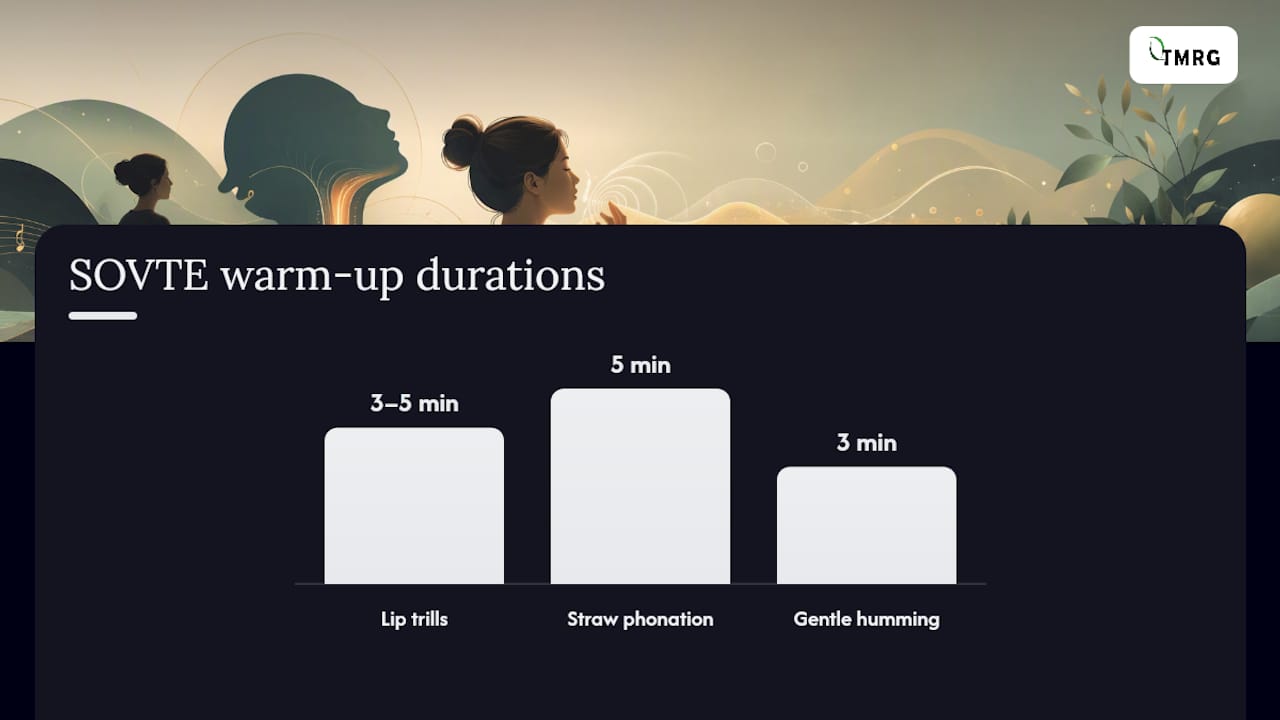
Structured SOVTE and breath-supported warm-up protocols help recovery more reliably than total silence for routine vocal fatigue. Complete silence can cause deconditioning; SOVTE reduces collision forces on the folds while keeping the vocal mechanism gently active.
Lip trills: 3–5 minutes at low pitch and low volume after steam. Keep airflow steady and avoid pushing.
Straw phonation: Phonate through a thin straw for 5 minutes. This is one of the most studied SOVTE methods for reducing fold impact.
Gentle humming: Closed-mouth humming at mid-range pitch for 3 minutes as a cool-down after performance.
Avoid whispering. It creates more muscular tension than normal speech and does not rest the folds. Avoid screaming or projecting at high volume until soreness resolves. When you need to clear your throat, do it once with a gentle cough rather than repeated harsh clearing. Repeated clearing creates a cycle of irritation that worsens the very problem you are trying to solve.
Consider a referral to a speech-language pathologist (SLP) if you experience chronic strain, recurring hoarseness across multiple performance cycles, or any functional change that affects your professional work. An SLP can provide structured voice therapy, resonance retraining, and occupational voice-use planning. For voice care tips for actors and practical warm-up sequences, Tmrgsolutions has a dedicated resource.
See an ENT if hoarseness persists beyond two weeks, if you experience sudden voice loss, throat pain with fever, difficulty breathing, or blood in saliva. These signs require clinical evaluation and cannot be managed with natural care alone.
Hoarseness lasting more than 2 weeks without improvement
Sudden inability to phonate or a dramatic pitch break
Breathing difficulty or stridor (audible breathing sounds)
Throat pain accompanied by fever above 101°F
Blood in saliva or mucus
Progressive change in voice quality over days, not hours
For working performers, document your symptoms with dates and performance schedule before your appointment. This helps the clinician assess occupational load and pattern. An ENT evaluates structural issues (nodules, polyps, hemorrhage); an SLP addresses functional and behavioral patterns. Many voice professionals benefit from seeing both. A public-health study of professional actors and singers identified loud speech and respiratory allergy as significant occupational risk factors, reinforcing why early screening matters for this population.
Always check ingredients before using any spray, drop, or lozenge. Herbal formulations vary widely, and what soothes one person’s vocal folds may irritate another’s.
Menthol: Avoid prolonged use. Short-term application may feel soothing, but extended use can cause a drying rebound effect on the mucosa.
GERD: If you have acid reflux, avoid acidic or spicy herbal products. Reflux reaching the folds causes its own form of chemical irritation.
Pregnancy and nursing: Consult a clinician before using herbal drops. Many herbal compounds lack safety data for pregnancy.
Allergy history: Thyme, eucalyptus, and other botanicals can trigger reactions. Start with a small dose and wait 24 hours before regular use.
Medications: Some herbal compounds interact with anticoagulants, antihypertensives, and other medications. Coordinate herbal use with your prescribing clinician if you are on any regular medication.
Pro Tip: If you have chronic vocal issues or take daily medications, bring your spray and drop labels to your next ENT or SLP appointment. A clinician can flag interactions you might not anticipate from reading the label alone.
The strongest evidence supporting these recommendations comes from four sources.
| Evidence item | Key finding | Source |
|---|---|---|
| Vocal fold vibration and hydration | Vocal folds vibrate rapidly during speech; thin, watery mucus from adequate hydration is essential for smooth fold movement | UT Southwestern |
| NIDCD clinical voice-care guidance | Vocal naps, avoiding spicy foods, and breath support are evidence-based behaviors; see ENT if hoarseness lasts 2+ weeks | NIDCD |
| Thyme drops randomized trial | In 48 professional voice users, thyme drops produced 83.3% agreement for throat well-being vs. 50.0% for placebo after vocal loading | IJOPL trial |
| SOVTE active recovery review | Structured SOVTE is effective for vocal fatigue and preferable to total silence for day-to-day management | Springer review |
That gap, in a professional voice-user population, is a meaningful signal even though larger trials are still needed.
The single most common mistake I see is treating surface hydration as optional. Professionals drink water, but they skip the steam and the spray, then wonder why recovery takes longer than expected. Surface hydration is not a luxury; it is the fastest lever you have.
My practical priority order: surface hydration first, safe herbal drops second, SOVTE-based active recovery third, and escalation to an ENT if nothing has shifted in two weeks. Combine product-based immediate relief with a consistent daily routine and you will recover faster and strain less often. Realistic timeline: most mild hoarseness from vocal loading clears in 24–72 hours with this approach. Persistent or structural problems need a clinician, and there is no shame in that referral.
Tmrgsolutions has spent 25+ years developing natural vocal-health products built specifically for performers and professional voice users. Every product in the TMRG line maps to a step in the recovery protocol above, so you are not assembling a kit from unrelated sources.

For immediate surface relief, the TMRG Shine Bright spray and TMRG Loud & Clear drops work as a paired backstage kit. The spray coats the mucosa between steam sessions; the drops support throat comfort before and after vocal loading. For a full acute-recovery protocol, the TMRG Powerful Vocal Recovery Kit combines sprays, drops, and structured exercises in one package. If you are building a long-term routine, the TMRG Voice Therapy Kit Standard (TVT-S) provides active-recovery tools and SOVTE guidance for recurring strain. Browse the full range and find the right starting point at Tmrgsolutions.
Voice care: Sorting fact from fiction | ENT | UT Southwestern Medical Center
Semi-occluded vocal tract exercises and active recovery for voice professionals (review)
This article is general information, not a substitute for advice from a qualified doctor. Consult a qualified healthcare professional about your own circumstances before acting on anything here.
Mild hoarseness from vocal loading typically improves within 24–72 hours with surface hydration, vocal naps, and herbal drops. If soreness persists beyond two weeks, see an ENT.
Most herbal drops are safe for short-term use, but check for herb allergies and avoid them during pregnancy without clinician approval. TMRG Loud & Clear drops are formulated for professional voice users; start with a small dose and monitor for 24 hours.
Drinking water supports systemic hydration and helps thin mucus over time, but it does not contact the vocal folds directly. Steam and sprays deliver moisture to the mucosal surface of the folds immediately, which is why UT Southwestern specialists recommend both approaches together.
Total silence is rarely the best choice for routine vocal fatigue. A peer-reviewed review confirms that structured SOVTE, such as straw phonation and lip trills, reduces fold collision forces and supports active recovery better than extended silence.
See an ENT if hoarseness lasts more than two weeks, if you experience sudden voice loss, breathing difficulty, throat pain with fever, or blood in saliva. These signs go beyond what natural remedies can address.
