Your Cart is Empty


The fastest way to clear a hoarse morning voice is to sip room-temperature water right after waking, breathe warm steam for five to ten minutes, and skip the urge to clear your throat. Hum softly or try a few lip trills instead of forcing your voice. Give it about an hour before any real talking or singing. If the hoarseness sticks around past two weeks, or comes with pain, breathing trouble, or blood, that’s your cue to see a clinician rather than wait it out.
TL;DR:
- Drinking room-temperature water immediately after waking and using steam inhalation can improve hoarseness within 30 minutes by rehydrating vocal folds and loosening mucus.
- Nighttime habits, such as maintaining optimal humidity, elevating the head, and avoiding late meals and alcohol, significantly reduce the likelihood of morning hoarseness caused by dryness or reflux.
- Lingering hoarseness beyond two weeks, or if accompanied by pain, breathing difficulty, or blood, requires prompt medical evaluation for serious underlying conditions.
- Voice overuse, allergies, or silent reflux often cause persistent or daily hoarseness, which may need long-term treatment like PPI therapy or voice therapy for resolution.
- Support products like TMRG Drops and oils can complement home remedies but should not replace medical assessment when symptoms are severe or recurrent.
Your vocal folds dry out overnight the same way your lips do, and the fix follows the same logic: rehydrate before you push them to work. Start with an 8 to 12 ounce glass of water at room temperature. Cold water can tighten throat muscles that are already stiff from hours of stillness, while warm water works but isn’t necessary first thing.
Steam comes next. A hot shower does the job, but if you want something more targeted, lean over a bowl of steaming water with a towel tented over your head for five to ten minutes, or use a personal steam inhaler. The moisture loosens the mucus coating your vocal folds, which is often what’s making your voice sound thick and creaky. Simple home measures like steam and hydration remain the standard first response to acute hoarseness for good reason: they’re low risk and they work fast.
Once you’ve hydrated and steamed, warm up gently instead of testing your voice with a loud “good morning.” Try:
Avoid throat clearing entirely during this window. It slams your vocal folds together and can cause more irritation than the mucus it’s trying to dislodge. Warm tea with honey, a non-medicated lozenge, or a warm saltwater gargle can soothe irritated tissue further, though skip anything overly minty or numbing, since it can mask soreness you actually need to notice. Throat sprays can help too, but choose an alcohol-free formula. Alcohol-based sprays dry the exact tissue you’re trying to hydrate.
Pro Tip: Set a phone reminder for “quiet hour” right after your steam session. Most people undo the benefit by jumping straight into a work call and pushing volume before their voice has actually warmed up.

Morning hoarseness is often decided the night before, not the moment you wake up. A few adjustments to your evening routine and sleep environment address most of the usual triggers.
These changes take a few nights to show results, but they compound. Skipping late meals alone often makes a noticeable difference within a week.
A little morning rasp is normal. Vocal folds stiffen slightly overnight from dehydration and reduced movement, and that mild “morning voice” typically resolves within 15 to 60 minutes once you’ve hydrated and talked a bit. Hoarseness that lingers longer or shows up every single day points to something more specific.
Most morning hoarseness clears on its own with hydration and time. See a clinician if hoarseness lasts longer than two weeks, keeps getting worse rather than better, or shows up alongside difficulty breathing, difficulty swallowing, coughing blood, or pain that has nothing to do with your voice.
Viral causes usually resolve within one to two weeks. Reflux-driven hoarseness runs on a longer clock, which is worth knowing before you get frustrated with a remedy that hasn’t worked yet.
If your clinician suspects LPR, treatment usually follows a three-part approach: dietary and behavioral changes, head-of-bed elevation, and, when indicated, a trial of proton pump inhibitors. Stanford’s LPR protocol notes that symptomatic improvement often shows up in four to six weeks, but an initial PPI regimen commonly runs at least six months.
Worth knowing: Voice symptoms frequently improve well before the tissue itself has fully healed, according to the same Stanford protocol, so feeling better isn’t a signal to stop treatment early.
For hoarseness rooted in muscle tension or vocal misuse rather than reflux, voice therapy with a speech-language pathologist is often the most durable fix, addressing the habits causing the strain rather than just the symptom. Expect several sessions built around breathing coordination and gentle vocal exercises.
Consistency matters more than intensity here. Skipping doses or reverting to late meals resets the clock on improvement.
Home remedies handle a lot, but a focused product can support the same routine you’ve just read about. TMRG Loud & Clear Classic Voice Recovery Drops work well as your steam-and-hydration follow-up, offering quick soothing right when your throat feels tight after waking. TMRG Protection Voice Synergy Oil gives topical mucosal support for nightly maintenance, useful alongside your humidifier habit. TMRG Impact Voice Enhancement Drops suit days when you need extra vocal readiness before a demanding call or performance.
These products are designed as complements to the same habits ENTs recommend, not replacements for them.
The habit that gets skipped most often isn’t dramatic. It’s the boring one: humming for a minute before you speak, night after night, instead of reaching for a fix only when your voice already sounds wrecked. Home remedies work well for the ordinary, dehydration-driven rasp, but they have limits. If hoarseness keeps returning on a schedule, that’s a pattern worth handing to a professional rather than managing quietly for months. A daily vocal care routine beats emergency fixes almost every time.
— Golan
Everything covered here, from steam sessions to nightly humidity control, works better with the right support on hand. TMRG Solutions built its lineup around exactly these moments: waking up hoarse, needing quick relief before a call, or maintaining a voice that gets used hard on a regular basis.
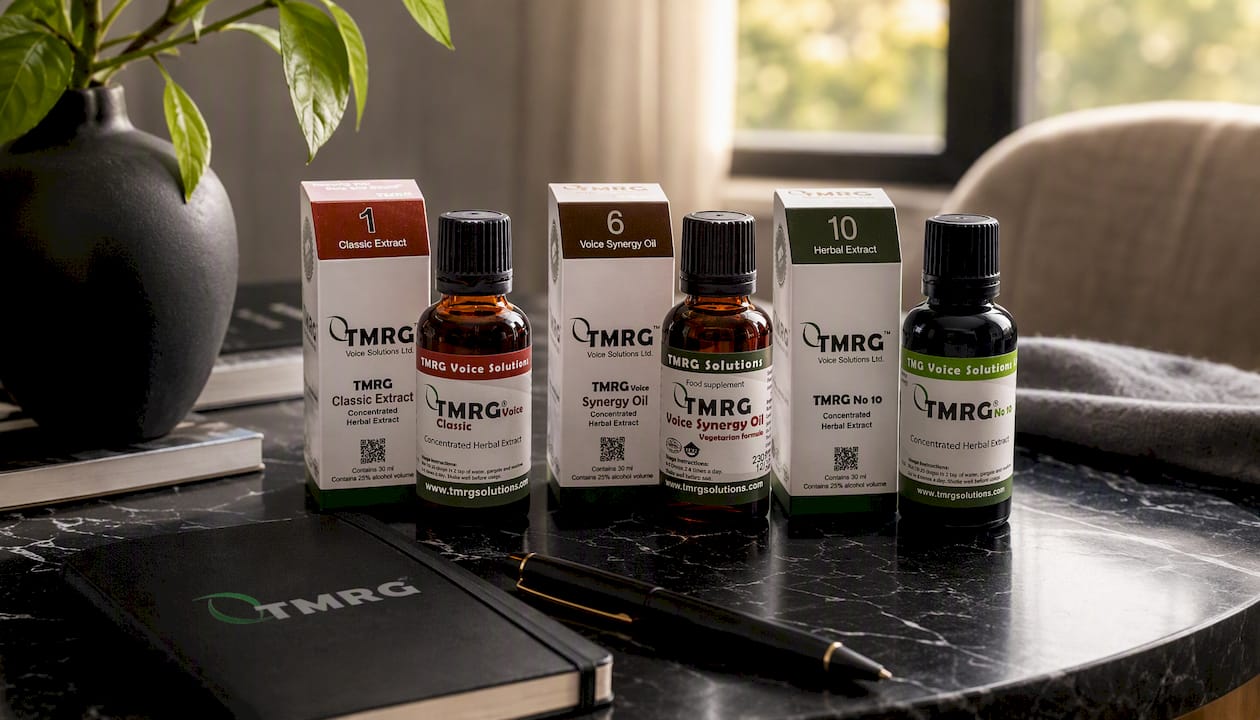
Start with the Classic Voice Recovery Drops for immediate morning soothing, add the Voice Synergy Oil for nightly mucosal support, or reach for the Voice Enhancement Drops before a demanding day. Browse the full lineup and pick the combination that matches your routine.
For deeper clinical detail, see Stanford’s LPR treatment protocol, Cleveland Clinic’s hoarseness overview, Mayo Clinic’s home remedy guidance, and TMRG’s own hoarseness prevention guide.
Overnight dehydration, mucus buildup, and mild vocal fold stiffness cause a temporary rasp that usually clears within an hour. If it happens daily and lingers, silent reflux or allergies are common culprits.
Room-temperature water first, followed by warm tea with honey or a warm saltwater gargle. Skip caffeine and alcohol, since both dehydrate the exact tissue you’re trying to soothe.
This is a classic sign of silent reflux (LPR), where acid and pepsin irritate the vocal folds without triggering the burning sensation typical of heartburn.
Non-acidic, non-spicy foods that avoid triggering reflux, paired with consistent hydration, are linked to measurable voice quality improvement when followed consistently. Caffeine, alcohol, and late-night meals are the main foods and habits to avoid.
