Your Cart is Empty


Your voice is your instrument, yet hoarseness and fatigue threaten every performance. Singers, actors, and voice professionals face constant challenges maintaining vocal strength and clarity. Natural remedies offer safe, evidence-based solutions that support lasting vocal health without harsh chemicals or invasive treatments. This guide delivers practical strategies proven to reduce hoarseness, enhance endurance, and protect your voice for the long haul.
| Point | Details |
|---|---|
| Natural remedies effectively reduce hoarseness and vocal fatigue | Evidence-based practices support vocal cord health without harsh chemicals or side effects |
| Hydration and environment control form the foundation | Proper fluid intake and humidity levels prevent most vocal issues before they start |
| Daily vocal exercises and steam inhalation boost endurance | Consistent practice with SOVT techniques and steam therapy builds vocal strength systematically |
| Monitoring progress prevents injury and optimizes results | Tracking symptoms and adjusting routines ensures safe, sustained vocal improvement |
Vocal health challenges plague performers at every skill level. Hoarseness, fatigue, and reduced performance quality stem from overuse, environmental dryness, and inadequate vocal care routines. These issues compound quickly, undermining your ability to deliver consistent, powerful performances.
Natural remedies provide safe, accessible solutions that address root causes rather than masking symptoms. Unlike quick fixes, these approaches support vocal cord hydration, reduce inflammation, and promote muscle recovery through gentle, sustainable methods. Maintaining indoor humidity at 40-60% levels dramatically improves chronic vocal issues.
Common vocal problems include persistent hoarseness, vocal breaks, reduced range, throat pain, and rapid fatigue during speaking or singing. Contributing factors range from environmental dryness and poor hydration to vocal overuse and improper technique. Recognizing these symptoms early allows you to implement targeted natural interventions before minor issues escalate into serious injury.
Typical symptoms signaling immediate vocal care needs:
A consistent natural approach builds resilience over time, whereas temporary fixes often create dependency without addressing underlying problems. Vocal remedies for hoarseness work best when integrated into daily routines. Learning to recover from hoarseness naturally empowers you to maintain vocal health independently. For comprehensive strategies, explore this vocal health and remedies guide detailing evidence-based practices.
Effective natural vocal care requires specific tools, ingredients, and environmental conditions. Gathering these essentials before starting ensures consistent practice and maximizes remedy effectiveness.
Essential natural ingredients include raw honey for its antibacterial and soothing properties, herbal teas containing slippery elm or licorice root, and fresh ginger root for anti-inflammatory benefits. These simple, accessible ingredients form the foundation of most vocal care remedies.
Required equipment:
Hydrating with 2.7 to 3.7 liters of fluids daily maintains vocal cord moisture and prevents fatigue. This hydration baseline supports all other natural remedies by ensuring vocal tissues remain supple and responsive.
Optimal environmental conditions include consistent humidity control, temperature stability between 68-72°F, and air quality free from irritants like smoke or strong chemicals. Maintaining indoor humidity at 40-60% levels prevents the dryness that causes most vocal problems.
Footwear considerations matter for vocal exercises. Stable, flat shoes promote proper posture alignment, which directly impacts breath support and vocal production. Avoid high heels or unstable footwear during practice sessions.
| Equipment | Key Features | Effectiveness Rating |
|---|---|---|
| Steam Inhaler | Targeted moisture delivery, portable | Excellent for pre/post performance |
| Humidifier | Room-wide moisture control, automatic | Critical for consistent prevention |
| Herbal Spray Bottle | Convenient application, travel-friendly | Good for on-the-go relief |
| Water Tracking Bottle | Measurement marks, reminder system | Essential for hydration goals |
Proper preparation reduces vocal stress by ensuring remedies work efficiently. Your daily vocal care routine depends on these foundational elements. Understanding how environment affects vocal health helps you optimize conditions proactively. Additional insights on vocal environment and hydration tips and vocal fatigue and hydration guidelines provide deeper context.
Implementing natural vocal remedies requires consistent daily practice. These evidence-based techniques address vocal health systematically, building strength and resilience over time.
Daily routine for vocal health:
Steam inhalation for 10 minutes before and after singing hydrates vocal cords effectively and reduces fatigue. This simple practice creates immediate improvements in vocal comfort and flexibility.
Preparing herbal remedies involves steeping anti-inflammatory herbs in hot water for 10 minutes, straining thoroughly, and allowing the mixture to cool before use. Apply herbal sprays by targeting the back of the throat with 2-3 pumps, avoiding excessive amounts that trigger coughing. Drink herbal teas warm but not hot, as extreme temperatures stress vocal tissues.

Semi-occluded vocal tract (SOVT) exercises reduce vocal fold tension and improve efficiency, preventing fatigue. Lip trills involve buzzing your lips together while producing sound, creating back pressure that balances vocal effort. Straw phonation requires humming or singing through a narrow straw, which optimizes vocal fold vibration patterns.
Gentle laryngeal massage techniques:
Performance tips include warming up for at least 10 minutes before any vocal demand, staying hydrated throughout performances, and avoiding clearing your throat aggressively. Common mistakes involve skipping cool-down exercises, using voice immediately after cold beverages, and pushing through vocal discomfort instead of resting.
Pro Tip: Consistency matters more than intensity. Daily gentle practice yields better results than sporadic intense sessions that risk vocal strain.
Safety notes emphasize voice rest when experiencing pain or persistent hoarseness. Avoid shouting, whispering excessively, or talking over loud noise. Never push through sharp pain during exercises, as this signals potential injury requiring professional evaluation.
Discover natural remedies for vocal strength and refine your daily vocal care routine for optimal results. Learn more about steam inhalation benefits and SOVT vocal exercises through these resources.
Beyond core practices, additional natural supports enhance vocal recovery and endurance. Herbal supplements and comprehensive therapy kits provide convenient, targeted solutions for busy voice professionals.
Herbal supplements known for vocal support include marshmallow root for mucous membrane protection, turmeric for powerful anti-inflammatory effects, vitamin C for immune support, and zinc for tissue repair. These supplements complement daily hydration and steam therapy by addressing inflammation and promoting healing from within.
Vocal therapy kits integrate multiple remedies into streamlined systems. These kits typically include herbal sprays, essential oils for steam therapy, instructional guides for exercises, and measurement tools for tracking progress. Incorporating these kits into daily routines saves time while ensuring comprehensive care.
Rotating remedies maintains potency and addresses different vocal challenges effectively. Alternating between different herbal formulations prevents tolerance buildup and targets various aspects of vocal health. For example, use slippery elm-based remedies for lubrication on performance days and ginger-based formulas for inflammation during recovery periods.
Dietary considerations complement vocal care significantly. Anti-inflammatory foods like leafy greens, berries, fatty fish, and nuts support overall vocal health. Avoid dairy before performances if it increases mucus production for you, and limit caffeine and alcohol, which dehydrate tissues.
Key components in therapy kits:
Pro Tip: Store herbal remedies in cool, dark places and replace every 2-3 months to ensure effectiveness. Natural ingredients lose potency over time, so fresh supplies deliver optimal benefits.
Explore supplemental vocal remedies and learn about common vocal problems to identify which supplements best address your specific needs.
Tracking vocal health improvements ensures your remedy routine works effectively. Systematic monitoring identifies what works, reveals mistakes, and prevents injury through early intervention.
Keeping a vocal health journal provides invaluable insights. Record daily symptoms including hoarseness severity, vocal fatigue onset time, and performance quality ratings. Note which remedies you used, environmental conditions, and any dietary changes. Review entries weekly to identify patterns and adjust your routine accordingly.
Common mistakes undermine natural remedy effectiveness. Skipping warm-up and cool-down exercises leaves vocal muscles unprepared and vulnerable. Poor hydration negates benefits from other remedies, as dry tissues cannot respond optimally. Overusing your voice without adequate rest periods creates cumulative damage that remedies alone cannot reverse.
Warning signs of potential vocal injury:
Troubleshooting tips for common errors include increasing water intake if experiencing persistent dryness, adding extra steam sessions if hoarseness continues, and reducing vocal load if fatigue appears earlier than usual. Adjust remedy timing to match your vocal demands, applying sprays and performing exercises closest to performance times for maximum benefit.
Safety Warning: Apply gentle laryngeal massage techniques only. Harsh pressure or aggressive manipulation can damage delicate vocal structures. If massage causes pain, stop immediately and consult a professional.
When professional help becomes necessary, seek evaluation from laryngologists or voice therapists. These specialists use imaging and analysis to identify structural problems that natural remedies cannot address alone. Early professional intervention prevents minor issues from becoming career-threatening injuries.
Refine your approach using vocal care routine tips and understand how herbal medicine activates healing in your body. Additional vocal fatigue management techniques provide deeper troubleshooting guidance.
Realistic expectations help you stay motivated and recognize genuine progress. Natural remedies produce measurable improvements when applied consistently, though timelines vary individually.
Typical timelines show vocal endurance improvements within 2-4 weeks of consistent practice. Many users report 18-25% better stamina, allowing longer performance periods without fatigue. Voice clarity often improves within the first week as hydration and steam therapy reduce inflammation.
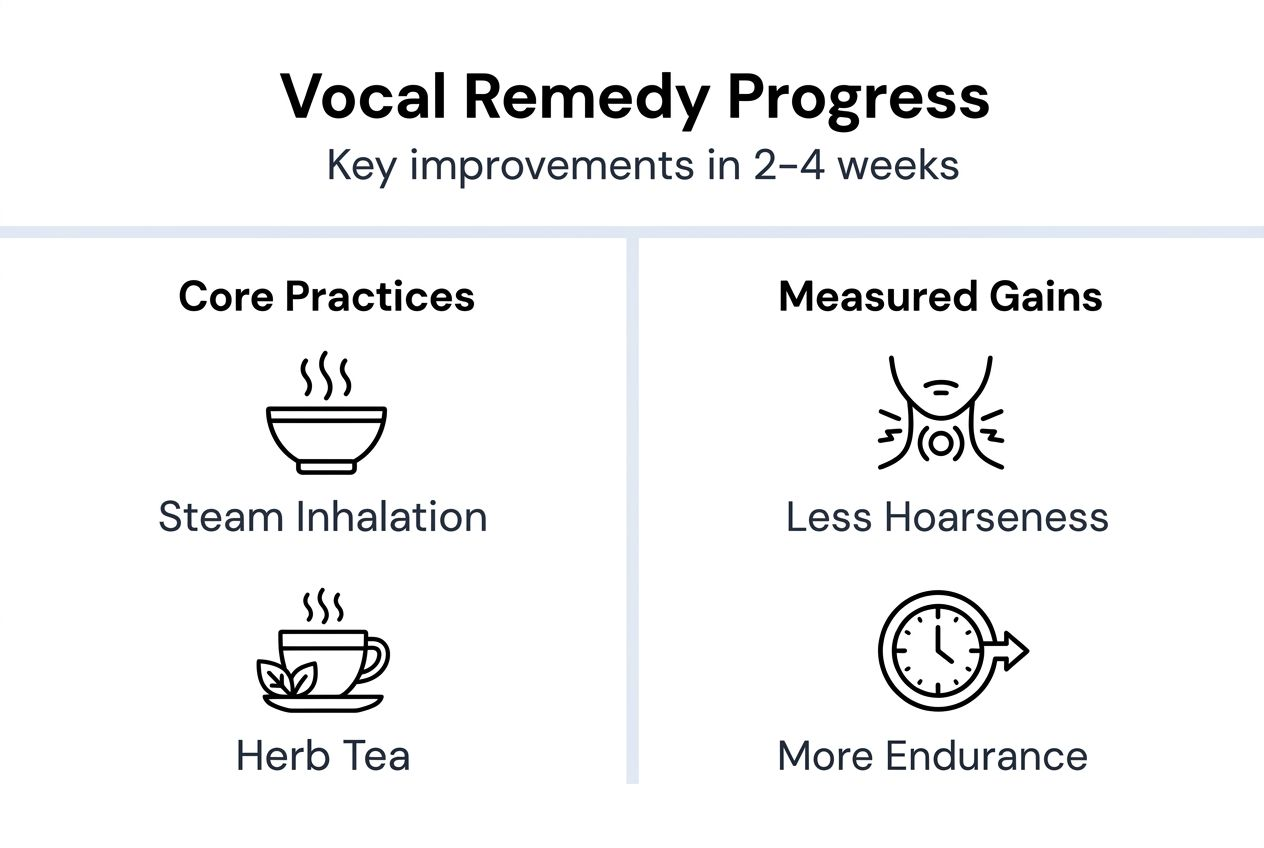
Reduction benchmarks for hoarseness depend on severity and consistency. Mild hoarseness often resolves within 3-5 days of dedicated natural remedy use. Moderate cases may require 1-2 weeks, while chronic hoarseness demands 4-6 weeks of consistent application plus professional evaluation to rule out structural issues.
Metrics for assessing improvements include extended performance time before fatigue, reduced recovery time after vocal use, clearer tone quality with less breathiness, expanded comfortable vocal range, and decreased frequency of vocal breaks or cracks. Track these metrics weekly to quantify progress objectively.
| Timeline | Expected Improvements | Symptoms to Monitor |
|---|---|---|
| Week 1 | Reduced throat dryness, easier morning voice | Persistent scratchiness, pain during speech |
| Weeks 2-3 | 15-20% better endurance, clearer tone | Vocal breaks, limited range |
| Weeks 4-6 | 18-25% stamina increase, expanded range | Fatigue onset time, recovery speed |
| Weeks 8+ | Sustained improvements, injury resistance | Overall vocal stability, performance consistency |
Maintaining routines beyond initial gains ensures long-term vocal health. Natural remedies work cumulatively, building resilience that protects against future challenges. Even after achieving your goals, continue daily hydration, regular steam sessions, and consistent SOVT exercises to preserve vocal strength.
After establishing your natural remedy foundation, practical tools amplify your results. TMRG Solutions offers specialized voice therapy kits designed specifically for singers, actors, and voice professionals seeking comprehensive vocal care.

These therapy kits simplify your routine by combining essential remedies, instructional materials, and tracking tools in convenient packages. The TMRG voice therapy kit basic provides foundational support for daily vocal maintenance, while the voice therapy kit standard includes advanced formulations for intensive vocal demands.
Each kit complements the natural practices outlined in this guide, offering herbal sprays, therapeutic oils, and detailed instructions backed by 25+ years of vocal health expertise. Explore the full range of options at TMRG vocal health solutions to find products matching your specific vocal care needs.
Most users notice initial improvements within 3-7 days of consistent practice, particularly in throat moisture and comfort levels. Significant endurance gains typically appear within 2-4 weeks, with many experiencing 18-25% better stamina. Results depend heavily on consistency, as daily application produces faster, more sustainable improvements than sporadic use.
Natural remedies generally complement medical treatments safely, but always inform your healthcare provider about all substances you use. Some herbal ingredients may interact with medications or contraindicate certain conditions. Professional guidance ensures your natural and medical approaches work together optimally rather than conflicting.
Persistent hoarseness beyond two weeks despite consistent natural remedy use requires professional evaluation. This may indicate structural issues like nodules, polyps, or other conditions needing specialized treatment. Never delay professional assessment for ongoing vocal problems, as early intervention prevents permanent damage.
Steam inhalation is safe when performed correctly, using warm rather than scalding temperatures. Avoid excessively hot steam that can burn delicate tissues. Limit sessions to 10-15 minutes to prevent overhydration, which paradoxically can stress vocal cords. Always maintain safe distance from steam sources and ensure proper ventilation.
Monitor urine color as a practical hydration indicator. Pale yellow suggests adequate hydration, while dark yellow indicates insufficient fluid intake. Most voice professionals need 2.7-3.7 liters daily, but individual requirements vary based on activity level, climate, and vocal demands. Increase intake if you notice persistent throat dryness despite other remedies.
