Your Cart is Empty


Yes, most singers dealing with congestion or post-nasal drip can safely use a neti pot, and it’s one of the more effective tools for clearing the resonance space before a rehearsal or show. The one rule that overrides everything else: never rinse with plain tap water straight from the faucet. Use distilled water, sterile water, or water you’ve boiled and cooled, because tap water can carry organisms your sinuses have no business meeting, according to the FDA’s consumer guidance on neti pot safety. Skip ahead to the step-by-step section for the exact saline ratio and technique.
Pro Tip: Keep a labeled jug of cooled, previously boiled water in your green room or practice space so you’re never tempted to grab tap water in a rush before a rinse.
Nasal irrigation clears post-nasal drip and nasal congestion effectively for most singers, but only when done with sterile water and correct saline ratios.
| Point | Details |
|---|---|
| Water sterility is non-negotiable | Use only distilled, sterile, or boiled-and-cooled water to avoid infection risk. |
| Saline ratio matters | Mix roughly 1 teaspoon of non-iodized salt per 8 fluid ounces of lukewarm water. |
| Time it away from curtain | Rinse 60 to 90 minutes before performing, never right before you sing. |
| Know the stop signs | Fever, severe pain, or unusual discharge means stop rinsing and see a doctor. |
| Sprays complement, don’t replace | Products like TMRG’s Oils and Saline Voice and Throat Spray support throat comfort after irrigation clears the sinuses. |
A stuffy nose does more than sound bad. It forces you to breathe through your mouth, which dries the vocal folds and throws off your breath support mid-phrase. Post-nasal drip is the bigger culprit, though. Mucus dripping down the back of the throat triggers the throat-clearing habit that irritates vocal folds over time and can contribute to the kind of chronic irritation discussed in why singers get vocal nodules. Clearing that drainage before it reaches your throat is the actual win.
Clinical research backs this up: high-volume, low-pressure nasal irrigation devices, neti pots included, are effective for clearing nasal secretions and reducing drip, particularly during acute sinus infections, according to research on irrigation devices and saline solutions. Singer-specific benefits show up in practice:
A singer walking into a matinee with spring pollen coating every surface backstage often finds one rinse an hour or two before curtain quiets the throat-clearing reflex that would otherwise interrupt a sustained phrase.
Getting the saline concentration and technique right matters more than most singers assume. Too weak, and it stings. Too strong, and you’ll feel like you inhaled ocean water.
The saline recipe: Mix a small amount of non-iodized salt (plain canning or pickling salt works, not table salt with additives) into lukewarm distilled, sterile, or boiled-and-cooled water in a ratio that avoids stinging. Some practitioners add a pinch of baking soda to buffer the mixture and reduce stinging, a habit documented in singer-focused irrigation routines from the Jala Neti tradition.

Water safety comes first. Tap water, even filtered tap water, can contain organisms that survive in warm nasal passages and cause serious infections. Use only distilled, sterile, or water you’ve brought to a rolling boil for at least one minute and then cooled to lukewarm, per FDA guidance.
Once your saline is mixed, follow this sequence:
Pro Tip: Do your rinse in the shower. The steam loosens mucus before you even start, and you skip the sink cleanup entirely.
Most singers tolerate nasal irrigation well, but it’s not universally risk-free. Mild stinging or a brief sensation of ear pressure or fullness are the most common complaints, and both usually ease once you dial in the correct saline ratio and slow your pour rate.
Certain situations call for skipping irrigation altogether, or checking with a doctor first:
Stop and seek medical attention if you notice fever, a headache that won’t quit, unusual colored or foul-smelling discharge, or facial swelling after a rinse. Those are signs of something beyond simple congestion, and self-treating past that point delays real care.
Timing changes the entire value of a rinse. Do it too close to curtain and residual moisture or a lingering post-nasal sensation can distract you mid-performance.
Pairing a rinse with steam inhalation beforehand loosens thicker mucus, making the irrigation itself more effective, an approach echoed in ENT tips for singers managing congestion.
Pro Tip: Never irrigate for the first time on a show day. Test your routine during a low-stakes rehearsal so you know exactly how your body reacts.
A full irrigation isn’t always the right tool. Sometimes a lighter option fits the moment better:
Choose the gentler option when you’re traveling, pressed for time, or dealing with mild dryness rather than genuine congestion.
Nasal irrigation is a self-care tool, not a substitute for professional evaluation. Book a visit if symptoms persist or worsen despite consistent rinsing and conservative care, or if you experience recurring nosebleeds, known structural issues, or a history of sinus or skull surgery. Specialist guidance is also standard practice for confirming irrigation suits your specific anatomy. Voice changes that linger beyond a typical cold, or any sign the vocal folds themselves are affected, warrant a laryngologist visit specifically, not just a general ENT.
Clinical evidence on nasal irrigation is more solid than most home remedies get. High-volume, low-pressure devices, the category neti pots fall into, show measurable effectiveness for clearing secretions and easing post-nasal drip, especially during acute sinus infections.
The core safety principle across every major source is the same: irrigation fluid must be distilled, sterile, or previously boiled and cooled, mixed at roughly 1 teaspoon of non-iodized salt per 8 fluid ounces of water.
That water-safety rule isn’t optional caution, it’s the difference between a helpful habit and a genuine infection risk. For readers who want the primary sources, the FDA’s consumer safety update, the Mayo Clinic’s neti pot FAQ, and WebMD’s overview of neti pot use all cover the same ground from slightly different angles.
I recommend irrigation to singers dealing with recurring allergies or seasonal congestion, timing it in the morning and again a couple of hours before rehearsal, never right before a show. One habit I teach: pair the rinse with a few minutes of steam first, so drainage clears more completely. A student who irrigated consistently through allergy season cut her mid-rehearsal throat clearing dramatically within two weeks.
Nasal irrigation handles what’s happening above the soft palate, but singers often need something for the throat surface itself once drainage clears. A saline and oil formula like the TMRG Defense Oils and Saline Voice and Throat Spray targets that surface comfort directly, giving you a quick option between rinses or on travel days when a full irrigation setup isn’t practical.
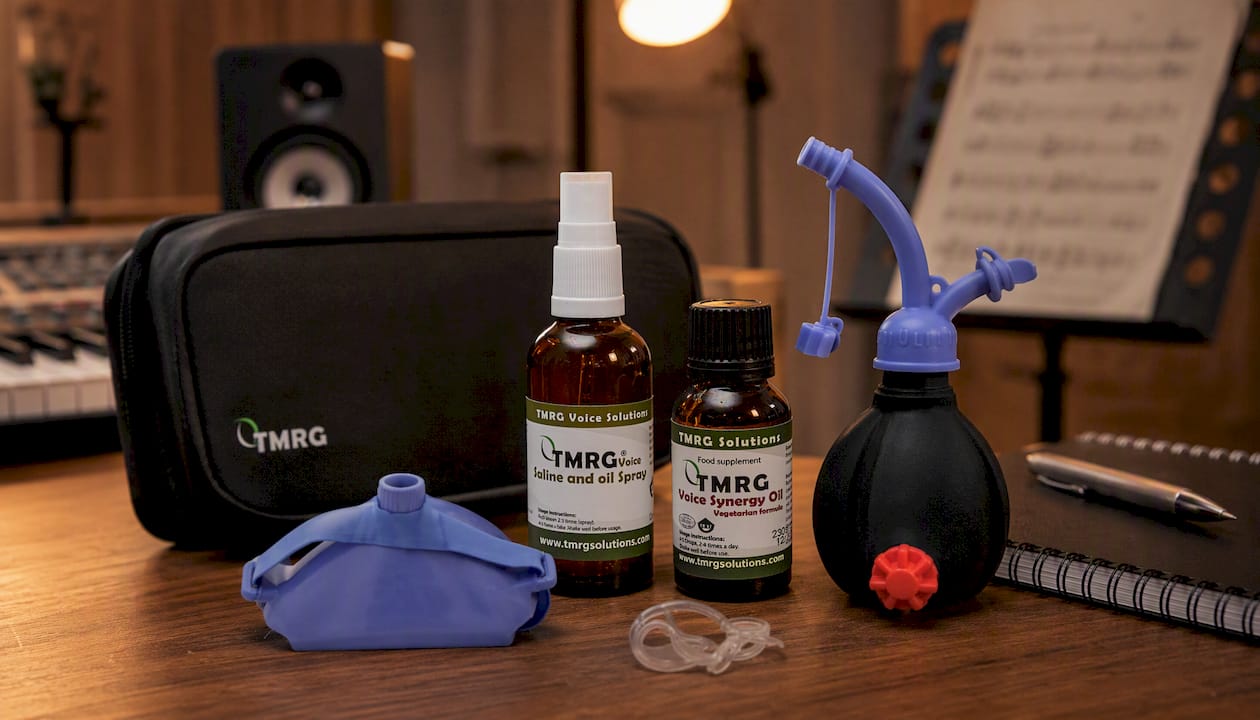
For singers who deal with both congestion and general vocal fatigue, the TMRG Defense and Protection Duo pairs protective spray support with additional care for ongoing maintenance, while TMRG Singer’s Super Power is built for singers who want a consistent routine product rather than a reactive fix. None of these replace what a neti pot does for your sinuses, and none replace an ENT visit if something feels genuinely wrong. What they do is pick up where irrigation leaves off: soothing the throat surface itself. Browse the full vocal problems shop to find the option that matches your specific symptoms, and start with whichever product addresses your most immediate discomfort today.
Most singers rely on saline nasal irrigation, either through a neti pot or a squeeze bottle, along with steam inhalation to loosen mucus before rehearsals or shows.
Clearing nasal congestion through saline irrigation reduces the stuffed-up resonance that muffles vowels and consonants, and it works best when done well before you start warming up.
You can sing with clogged sinuses, but it forces mouth breathing and strains breath support, so clearing congestion with irrigation or steam beforehand typically improves both tone and comfort.
Many professional singers pair nasal irrigation for sinus congestion with a dedicated throat spray, such as the TMRG Defense Oils and Saline Voice and Throat Spray, to soothe the throat surface separately from the nasal passages.

Daily use during allergy season or active congestion is common, tapering to as-needed once symptoms clear, with most singers capping rinses at twice a day.
