Your Cart is Empty


Diluted pineapple juice can genuinely help your voice between takes, but the operative word is diluted. The bromelain in pineapple juice may thin mucus and calm swelling in the throat, giving you a clearer, freer sound for a short window. It’s a smart adjunct to vocal care, never a substitute for hydration, rest, or an ENT visit when hoarseness lingers.
TL;DR:
- Diluted pineapple juice at a 1:3 to 1:4 ratio can help thin mucus and reduce swelling, but its effects vary based on enzyme content and individual response.
- Drinking undiluted pineapple juice increases acid reflux risk, especially for singers with reflux issues, allergies, or sensitive oral tissues.
- Proper preparation involves straining out pulp, using fresh 100% juice, and storing in glass bottles to ensure consistent enzyme activity and safety.
- Most benefits derived from bromelain are based on laboratory and small clinical reports rather than large, controlled trials specific to singing performance.
- Pineapple juice should be used as a short-term supportive aid, not a replacement for hydration, vocal technique, or medical evaluation for persistent voice issues.
Bromelain is the enzyme that makes pineapple juice worth discussing at all. It’s a proteolytic enzyme, meaning it breaks down proteins, and that same action gives it mucolytic and anti-inflammatory properties in several studies. For singers, that translates into a plausible mechanism: thinner mucus sits more easily on the vocal folds instead of clumping into the thick, sticky coating that makes your voice feel muffled or “gunky” before a show.
The anti-inflammatory piece matters just as much. Swollen vocal fold tissue vibrates less efficiently, which is part of why a hoarse voice sounds rough and effortful. If bromelain reduces localized edema the way it does in other soft tissue, singers might notice slightly easier onset and less strain during a set.
Here’s where you need to keep your expectations grounded. The evidence for bromelain’s anti-inflammatory and mucus thinning effects comes largely from mechanistic studies and smaller clinical reports, not large randomized trials built around singing performance specifically. Otolaryngology practice reports describe bromelain’s use in ENT settings for reducing swelling, but that’s a different context than a vocalist sipping juice before a two-hour set.
What the research actually shows, in short:
That last point is worth sitting with. A glass of pineapple juice isn’t a measured dose of medicine. It’s a food with a plausible enzyme benefit, and the effect size will vary from bottle to bottle and from singer to singer.
Acidity is the real risk, not bromelain itself. Pineapple juice has a low pH, and drinking it undiluted can aggravate acid reflux, particularly laryngopharyngeal reflux (LPR) or GERD. Singers with reflux already deal with a throat that’s chronically irritated by stomach acid creeping upward; adding more acid on top of that is asking for trouble. Practitioner guidance is direct on this point: chugging straight juice can worsen the very hoarseness you’re trying to fix.
A few groups need to be especially careful:
None of this means pineapple juice is inherently dangerous. Most negative reports trace back to misuse, drinking it straight, in large volumes, or too close to stage time on an empty stomach, rather than to the enzyme itself. Used correctly, in small diluted sips, the risk profile drops considerably.
Pro Tip: If you notice throat burning, increased mucus, or a sour taste creeping up within 15 to 20 minutes of sipping, stop the protocol for that session. That’s your body telling you the acidity outweighs the benefit today.
Know your stop criteria before you start: any allergic symptom, any reflux flare, or any new throat pain means you shelve the juice and focus on water, rest, and standard vocal hygiene instead.
Getting this right is less about the juice and more about how you handle it. Vocal coaches who’ve built protocols around this remedy consistently land on the same core ratio and sipping pattern.
On tour or in a studio session, prep matters as much as the ratio. Premix single serve bottles of the diluted juice in the morning, refrigerate them, and treat each bottle as a one day supply. Diluted juice still carries active enzymes, but bacterial growth risk climbs if you leave it warm or reuse a bottle across multiple days.
If straight pineapple juice isn’t your thing, or your throat is telling you it’s not the day for it, complementary options exist. Steam inhalation and saline rinses support the same goal of reducing throat dryness and mucus buildup without any acidity concern. Evidence-based voice sprays formulated for singers can deliver similar soothing benefits with more consistent dosing than a homemade juice mix. And no matter which remedy you lean on, none of it replaces the fundamentals covered in a solid vocal hygiene routine.
Pro Tip: Keep a small notebook or phone note tracking how your voice feels 30 minutes after each diluted juice session. Patterns show up fast, and you’ll know within a week or two whether this remedy is actually earning its place in your routine.
A company focused on natural vocal health solutions for many years highlights that singers want remedies that are both effective and honestly explained, not oversold. Pineapple juice sits in an interesting middle ground. The mechanism behind bromelain is real and published, but the leap from “bromelain reduces inflammation in a lab setting” to “pineapple juice fixes your voice before a show” is bigger than most casual advice admits.
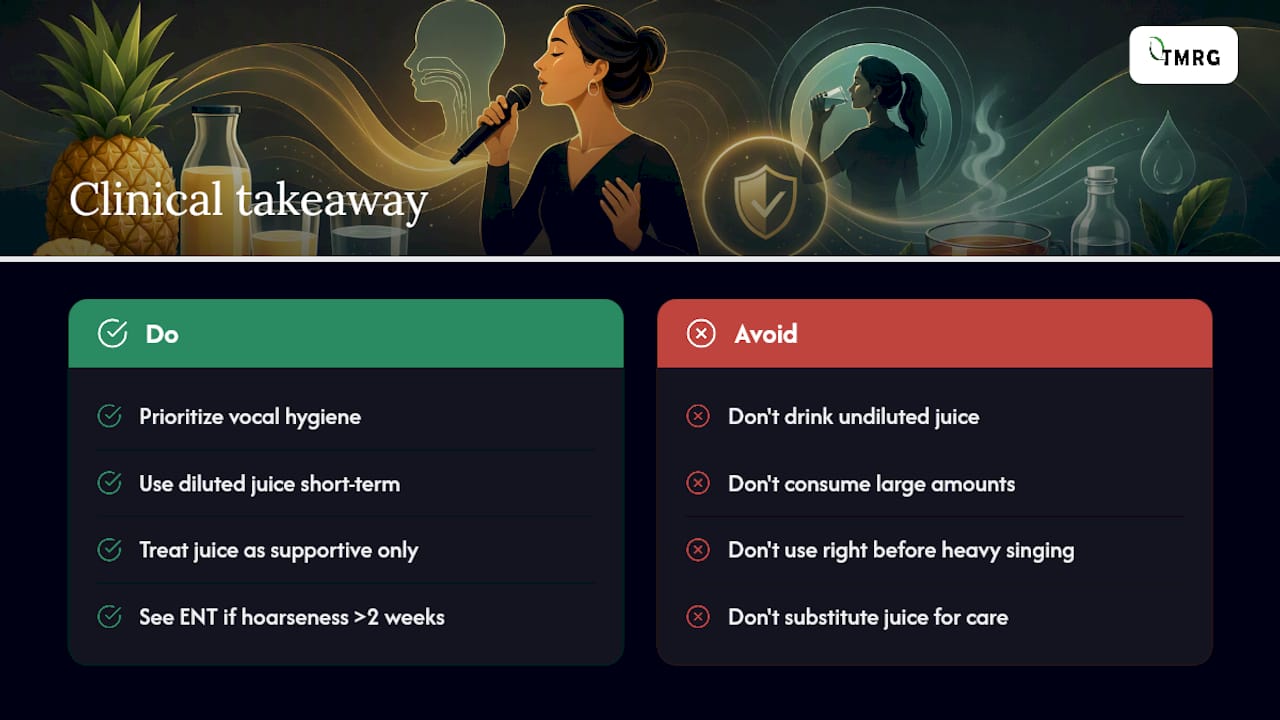
Otolaryngology guidance consistently puts vocal hygiene first: hydration, adequate rest, and proper technique are the foundation, with something like bromelain treated as a secondary, supportive layer. UT Southwestern’s voice care guidance makes this hierarchy explicit, noting that supplements vary in potency because the FDA doesn’t regulate them the way it regulates medications. That’s not a reason to dismiss pineapple juice. It’s a reason to treat it as one tool among several, not a headline act.
Vocal coaches with years of stage experience report consistent, real-world benefit from heavily diluted pineapple juice used as a short-term, targeted aid. Nearly all the negative accounts trace back to misuse: drinking it straight, in large amounts, or too close to a demanding vocal session.
That distinction between correct use and misuse explains most of the conflicting opinions you’ll find online. Persistent hoarseness lasting more than two weeks, voice changes without an obvious cause, or any suspicion of reflux disease warrants an evaluation by an ear, nose, and throat specialist rather than more juice. Home remedies work best as short-term support around a healthy baseline, not as damage control for an underlying problem that needs medical attention.
The conventional advice on pineapple juice splits into two unhelpful camps: singers who treat it like a stage-ready miracle, and skeptics who dismiss it outright because the trials aren’t large enough. Both miss the more useful middle ground. The mechanism is real, the dilution protocol from experienced vocal coaches is specific and testable, and the risk profile is low when you follow it. That’s a reasonable trade for a low-cost, low-effort addition to your routine.
What gets overlooked most often is timing. Singers fixate on whether pineapple juice “works,” but the bigger variable is whether you’re using it as a targeted, short-term aid or leaning on it as a crutch for a voice that needs rest, better technique, or a medical checkup. Prioritize the fundamentals first. Then let diluted pineapple juice earn its small, specific role alongside them, not instead of them.
— Golan
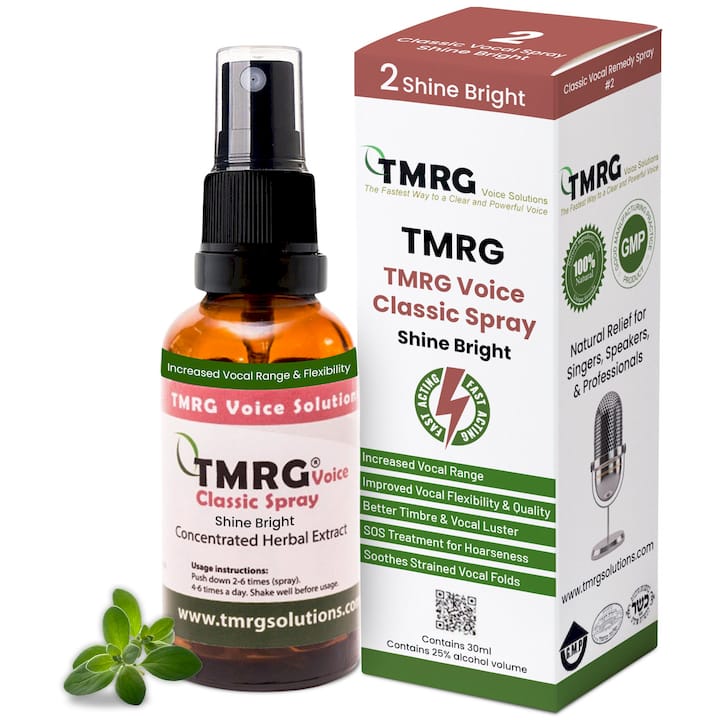
Diluted pineapple juice earns its spot in a singer’s kit, but it works best alongside products built specifically for the demands of performance. Some companies have developed natural, herb-based formulations designed for targeted, short-term vocal support, avoiding the need for straining juice or measuring dilution ratios mid-tour.
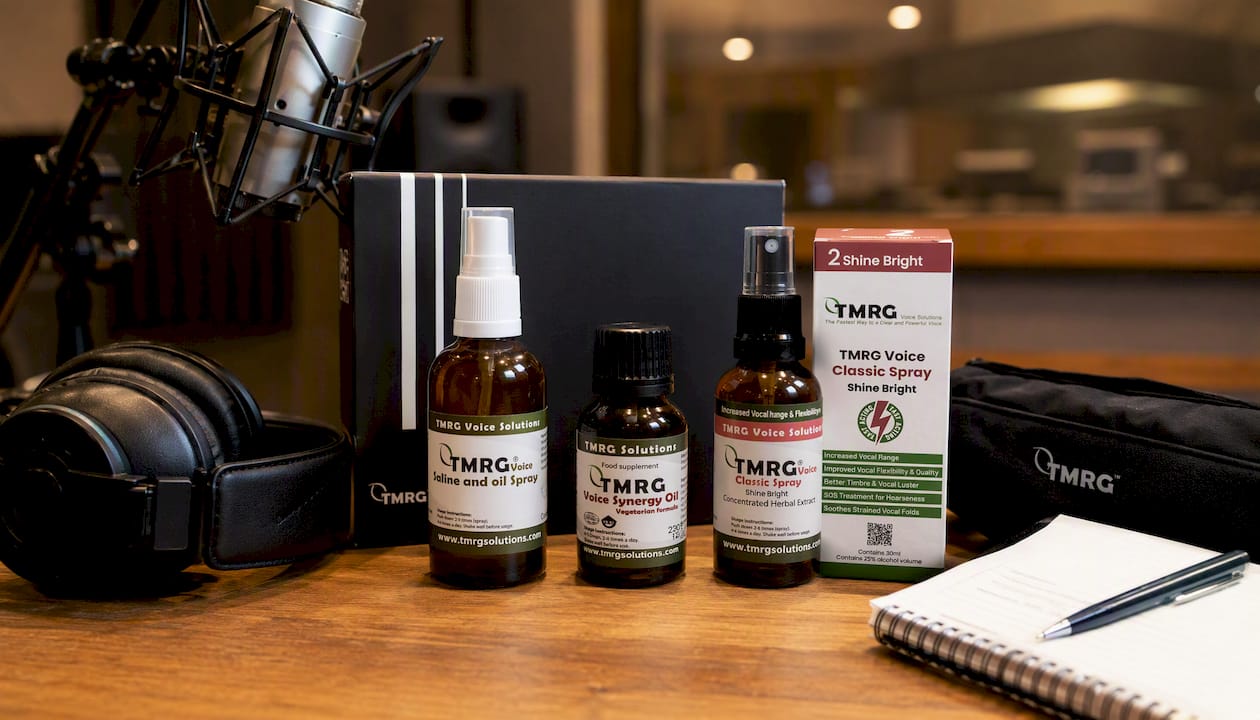
For singers who want a fast-acting layer before and after shows, the TMRG Defense and Protection Duo pairs two formulas aimed at pre-show protection and post-show recovery. If you’re managing repeated sets or long tour stretches, the TMRG Singer’s Super Power targets sustained vocal demand rather than a single performance. And for the moments when you need immediate throat relief without prepping juice at all, TMRG Shine Bright Classic Voice Recovery Spray delivers quick, topical hydration you can use backstage in seconds. None of these replace medical care for persistent hoarseness, but they give you consistent, dosed support where a homemade juice mix can’t. Browse the full Voice Therapy Kits collection to build a routine that fits your schedule, and check current pricing directly on each product page.
The claims in this guide draw from a mix of clinical research and practitioner experience, worth revisiting if you want to dig deeper:
This article is general information, not a substitute for advice from a qualified doctor. Consult a qualified healthcare professional about your own circumstances before acting on anything here.
Diluted pineapple juice may support vocal clarity short-term by thinning mucus and easing throat swelling, thanks to the enzyme bromelain, but it works best at a 1:3 to 1:4 dilution and isn’t a substitute for hydration, rest, or medical care.
Warm water, herbal teas without caffeine, and diluted pineapple juice are common choices, alongside consistent hydration throughout the day rather than a single fix right before singing.
Many singers sip small amounts of diluted pineapple juice or warm water with honey between songs, avoiding anything overly acidic, sugary, or dairy-based right before a performance.
Bromelain has documented anti-inflammatory and mucolytic properties that could support easier vocal onset and clearer tone, though large controlled studies specific to singing outcomes are still limited.
Yes. Options like the TMRG Singer’s Super Power and TMRG Shine Bright Classic Voice Recovery Spray are designed for targeted, performance-ready support alongside or instead of a homemade juice protocol.
