Your Cart is Empty


TL;DR:
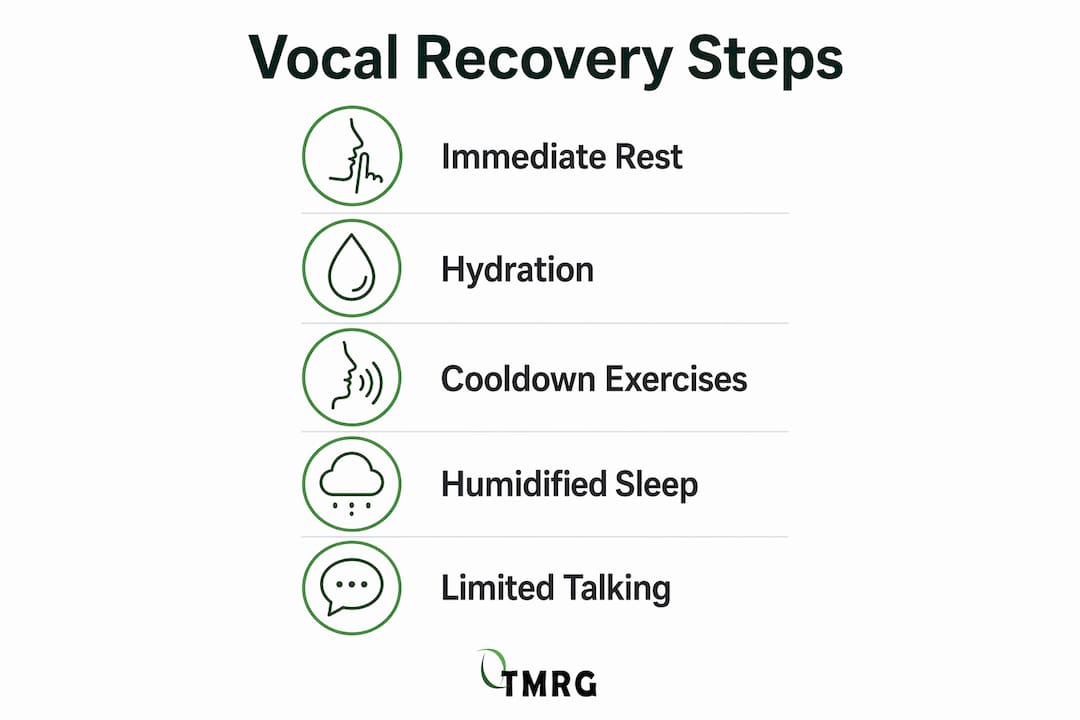
- Immediately resting the voice, hydrating, and performing cooldown exercises quickly reduce inflammation and prevent further damage. Consuming 2.7 to 3.7 liters of fluids, avoiding whispering and alcohol, and using steam inhalation support overnight recovery. Regular cooldown routines and maintaining a suitable sleeping environment help preserve vocal health over time.
Singer voice recovery overnight is achieved through immediate vocal rest, targeted hydration, and cooldown exercises that reduce inflammation and restore your vocal folds before your next performance. The clinical term for what you experience after a heavy show is vocal fold edema, a swelling of the delicate tissue that vibrates to produce sound. Left unaddressed, that edema hardens overnight into the hoarseness and lost top notes you dread the next morning. The good news is that the recovery window is real, and what you do in the first two hours after leaving the stage determines how your voice sounds tomorrow.
Vocal fatigue is the physiological result of mechanical stress on the vocal folds. Every note you sing forces those two small folds of tissue to collide hundreds of times per second. After a full performance, the tissue is inflamed, slightly swollen, and more fragile than usual.
The inflammatory process peaks in the hours directly following vocal performance. That peak is your critical recovery window. If you keep talking, laughing, or shouting at the post-show gathering during that window, you are loading already-damaged tissue and driving the swelling deeper.
Here is what makes the situation worse for most singers:
Pro Tip: Text your friends instead of talking after a show. Written communication is not antisocial. It is professional vocal management.
The risks of ignoring this window compound over time. Repeated inflammation without adequate recovery leads to chronic hoarseness, nodule formation, and shortened vocal range. One night of discipline protects years of your instrument.
Hydration is the most accessible and most underused quick vocal repair tool available to singers. Your vocal folds require a thin, even layer of mucus to vibrate efficiently. Dehydration thickens that mucus, increases friction between the folds, and forces your laryngeal muscles to work harder to produce sound.

Drinking 2.7 to 3.7 liters of fluids daily supports both systemic and vocal fold hydration necessary for optimal vibration and healing. That range accounts for body size and activity level. Singers performing under hot stage lights lose fluid faster and need to aim for the higher end.
Follow this hydration sequence on the night of a performance:
Vocal mists and sprays applied directly to the throat provide surface-level relief and can reduce the sensation of dryness. They work best as a complement to systemic hydration, not a replacement for it.
A vocal cooldown is to singers what a cool-down lap is to sprinters. It is not optional, and it is not just about feeling better. It is a physiological intervention that interrupts the inflammatory cycle before swelling becomes trapped in the tissue.
Initiating a 10-minute cooldown using aspirated descending “ee” exercises before any talking significantly reduces next-day hoarseness. The aspirated “ee” works by gently moving the vocal folds through their full range while the breath flow keeps them from pressing together hard. This drains edema from the tissue rather than letting it settle.
Here is how to execute the cooldown correctly:
Pro Tip: Record your cooldown on your phone. Listening back tells you whether your voice is genuinely relaxing or whether you are still pushing. A healthy cooldown sounds soft, even, and slightly breathy.
Common mistakes include rushing through the exercises in two minutes, skipping them entirely because you feel fine, and talking between repetitions. The full 10 minutes matter. Singers who ritualize cooldowns and rest after performances retain vocal range longer and recover faster from heavy schedules than those who do not.
The environment you sleep in directly affects how well your vocal folds recover. Dry air is one of the most overlooked threats to overnight vocal repair.
| Factor | Recommended action | Why it matters |
|---|---|---|
| Room humidity | Use a humidifier set to 40–60% | Dry air dehydrates the mucous membranes overnight |
| Sleeping position | Elevate head slightly | Reduces post-nasal drip that irritates the throat |
| Caffeine and alcohol | Avoid after 6:00 PM on show days | Both dehydrate tissue and disrupt sleep quality |
| Smoking and secondhand smoke | Avoid completely | Smoke inflames and dries the vocal fold lining |
| Voice use after performance | Maintain vocal silence | Continued use prolongs the inflammatory cycle |
Quality sleep is not passive recovery. During deep sleep, your body releases growth hormone and drives tissue repair throughout the body, including the vocal folds. Cutting sleep short to socialize after a show trades tomorrow’s performance for tonight’s conversation.
Anti-inflammatory drugs can relieve discomfort but do not repair vocal fold tissue. They can also mask symptoms and encourage you to use your voice before the tissue has healed. Use them only under medical guidance, not as a routine post-show tool.
Singers also benefit from building a vocal budget by limiting non-essential talking to conserve vocal fold function for performances. On show days, that means fewer phone calls, quieter conversations, and written messages where possible. You can find a full framework for this approach in the step-by-step vocal recovery process from Tmrgsolutions.
For singers who perform frequently, pairing these environmental habits with a daily vocal care routine creates a baseline of vocal health that makes overnight recovery faster and more reliable.
Effective singer voice recovery overnight requires immediate vocal rest, 10 minutes of aspirated cooldown exercises, and 2.7–3.7 liters of daily hydration to reduce inflammation and restore vocal fold function before the next performance.
| Point | Details |
|---|---|
| Cooldown before conversation | Do 10 minutes of aspirated descending “ee” exercises before speaking to anyone post-show. |
| Hydration targets matter | Drink 2.7–3.7 liters of fluids daily, prioritizing warm water and herbal teas on show nights. |
| Whispering causes harm | Whispering strains inflamed vocal folds as much as normal voice use. Use text instead. |
| Steam inhalation accelerates repair | Steam before cooldown exercises hydrates folds and lowers the effort needed to vibrate them. |
| Seek medical help when needed | Hoarseness persisting beyond 7–14 days requires evaluation by an ENT or laryngologist. |
Most singers treat vocal recovery the way most people treat sleep. They know it matters, they know they are not doing it right, and they keep cutting corners until something breaks.
The pattern I see most often is the post-show social trap. The adrenaline is still running, the crowd energy is real, and the last thing you want to do is stand in a corner breathing steam while everyone else celebrates. I understand that. But the singers who build long careers are the ones who learn to separate the performance high from the vocal instrument. They celebrate. They just do it quietly, with water in hand and a 10-minute cooldown already done.
The other thing I have noticed is how quickly singers reach for anti-inflammatory medication when their voice feels rough. That impulse is understandable, but it is also dangerous without supervision. Masking pain does not fix the tissue. It just makes you more likely to push through damage you cannot feel.
What actually works is boring and consistent. Cooldown, steam, water, silence, sleep. Repeat it after every show, not just the hard ones. Your voice is a physical instrument, and it responds to physical care. Track how your voice feels the morning after each show and you will quickly see which habits make the biggest difference for your specific instrument.
For singers managing heavy schedules, the strategies for preventing vocal fatigue outlined by Tmrgsolutions offer a clinical framework worth building into your routine. The evidence on vocal performance recovery consistently points to cooldown rituals and medical insight as the foundation of sustainable vocal health.
— Golan
Tmrgsolutions has spent 25+ years formulating natural remedies specifically for singers, actors, and voice professionals who need reliable overnight voice remedies they can trust.

The TMRG Loud & Clear Voice Recovery Drops are formulated to soothe inflamed vocal folds and support the tissue repair process that happens during sleep. Pair them with the TMRG Voice Therapy Kit for Singers, which combines recovery sprays, oils, and targeted support tools into one post-performance system. Both products are designed to complement the cooldown and hydration routine described in this article, not replace it. Singers who want a complete, structured approach to vocal health will find Tmrgsolutions’ full range at tmrgsolutions.com.
The fastest method combines a 10-minute aspirated cooldown immediately after performing, steam inhalation, and 2.7–3.7 liters of fluid intake throughout the day. Vocal silence after the cooldown allows the tissue to repair during sleep.
Whispering is not safe for strained vocal folds. It creates excessive airflow friction across inflamed tissue and can cause as much damage as normal speaking.
Vocal silence for at least 2–4 hours post-performance is the minimum. If hoarseness persists beyond 7–14 days despite rest, an ENT or laryngologist evaluation is necessary.
Yes. Steam inhalation directly hydrates the vocal folds and lowers the phonation threshold pressure, meaning your cords need less effort to vibrate. Use it before cooldown exercises for the best result.
Anti-inflammatory drugs relieve discomfort but do not repair vocal fold tissue. Used without medical supervision, they mask symptoms and increase the risk of premature voice use and further injury.
