Your Cart is Empty


Stress does not just make you anxious on stage or in the studio—it physically alters how your voice works, often showing up as hoarseness, fatigue, or sudden vocal breaks when you need control most. For professional singers and actors, understanding the reality that psychological and physical stress can trigger muscle tension, restricted breathing, and vocal cord dysfunction is vital for long-term performance. This guide reveals how stress affects vocal health and offers real-world strategies so you can address these issues before they disrupt your career.
| Point | Details |
|---|---|
| Impact of Stress on Voice | Stress tightens muscles and disrupts breathing, leading to vocal issues such as hoarseness and fatigue. |
| Understanding Vocal Health | Vocal health encompasses the ease of sound production and resilience, which can be negatively impacted by stress. |
| Management Strategies | Effective stress management techniques, including cognitive reframing and breathing exercises, support vocal performance and recovery. |
| Recognizing Symptoms | Identifying early signs of stress-induced vocal fatigue can help prevent long-term damage and ensure timely intervention. |
Your voice is built on a foundation of breathing, muscle coordination, and nervous system control. When stress enters the picture, every layer of this foundation gets disrupted.
Stress is a psychological and physiological response to demands that exceed your perceived ability to handle them. For singers and actors, stress triggers your body’s fight-or-flight system, which tightens muscles, restricts breathing, and increases vocal tension.
Vocal health refers to the physical and functional condition of your voice—how easily you produce sound, sustain notes, and maintain quality across your range without fatigue or pain.
When these two intersect, the results are predictable but often overlooked.
Stress doesn’t just affect your mind; it rewires how your body produces sound. Stress-induced physiological changes directly manifest in vocal symptoms like hoarseness, voice fatigue, and loss of control during performances.
Here’s what happens:
Stress doesn’t just make you nervous—it physically alters how your vocal mechanism functions, reducing efficiency and control when you need it most.
The nervous system connection runs deeper than most realize. Voice stress analysis reveals how breathing, phonation, and resonance stages all suffer under psychological pressure, driven by imbalances in your central and autonomic nervous systems.
Your body can’t distinguish between a threatening audience and an actual physical threat. Both activate the same stress response.
Auditions. Opening night. Standing ovations. These moments demand your voice at its absolute best. But stress hijacks your vocal control exactly when stakes are highest.
Professional singers report:
Understanding this connection transforms how you prepare. You’re not just training your voice; you’re training your nervous system.
Pro tip: Recognize that vocal symptoms like hoarseness or fatigue during high-stress periods signal nervous system activation, not vocal damage—this awareness helps you respond with targeted stress management rather than pushing through tension.
Your vocal cords are delicate structures that rely on precise muscle coordination and smooth vibration. Stress hijacks this system, introducing tension that fundamentally disrupts how your vocal cords move and function.
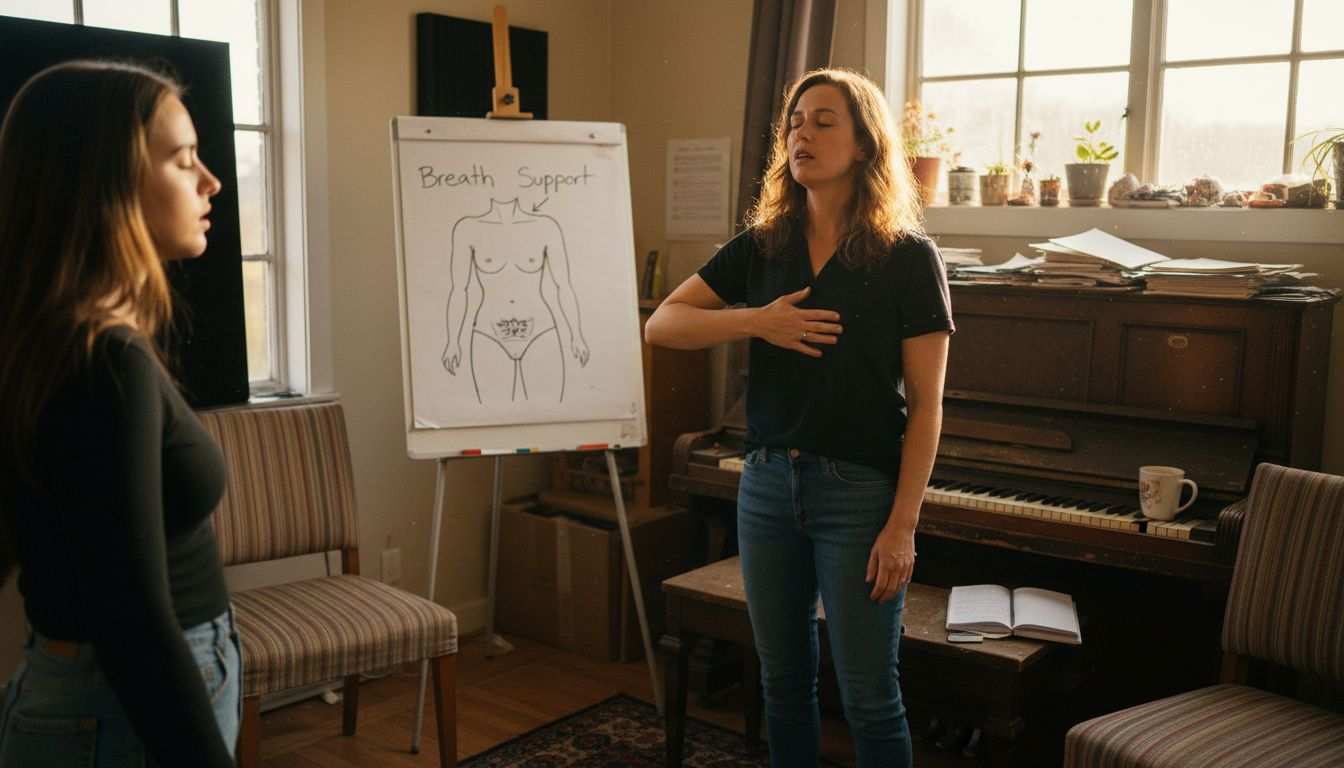
When you experience stress, your body triggers a fight-or-flight response that immediately tightens muscles throughout your larynx and throat. This isn’t a minor tightness—it’s a cascade of physiological changes that directly impacts vocal cord vibration and control.
Stress-induced muscle tension dysphonia is one of the most common vocal problems performers face. Your vocal cords can’t vibrate freely when surrounding laryngeal muscles are locked in tension.
Here’s what happens:
Stress doesn’t just make you nervous—it physically prevents your vocal cords from vibrating with the freedom and efficiency they need for optimal performance.
Research confirms that psychological stress and anxiety significantly contribute to muscle tension dysphonia, often leading to dysfunctional vibration patterns that damage vocal cord health over time.
Stress triggers multiple simultaneous changes in your vocal mechanism. Understanding each one helps you recognize why your voice feels different during high-pressure moments.
Muscular responses:
Mucosal changes:
Breathing disruption:
Acute stress causes temporary dysfunction. Chronic stress causes structural damage. Repeated tension over weeks or months can lead to vocal nodules, polyps, or scarring on your vocal cords.
Professionals who ignore this connection often experience:
Your voice today reflects the stress management choices you made last week. Building awareness of this connection is your first defense.
Pro tip: When you notice tension building in your throat during stressful moments, pause and consciously relax your jaw and shoulders—these small releases interrupt the stress response before it fully locks down your vocal cords.
Stress doesn’t create one vocal problem—it creates many. Different performers experience different symptoms depending on their stress response, vocal habits, and individual physiology. Understanding which problems you’re facing helps you address them effectively.
Stress-induced vocal problems include dysphonia, muscle tension dysphonia, vocal fatigue, stuttering, and voice tremors. Each arises from the same root cause—stress-induced muscle tension and disrupted breathing—but manifests differently across performers.
The primary categories you’ll encounter:
Stress doesn’t discriminate—it affects every aspect of voice production simultaneously, which is why stress-related vocal problems feel so unpredictable and frustrating.
Beyond obvious problems like hoarseness, psychological conditions like anxiety exacerbate vocal quality issues including increased fundamental frequency, jitter, and shimmer00235-4/fulltext). These technical changes translate to real performance problems.
What you’ll hear in your own voice:
Stress-related vocal issues hit hardest during high-stakes moments. Audition nerves, opening night jitters, or performance anxiety amplify every underlying tension pattern.
During performances, you might experience:
Acute stress creates temporary vocal changes that resolve when stress subsides. Chronic stress causes persistent vocal problems that linger even during rest periods.
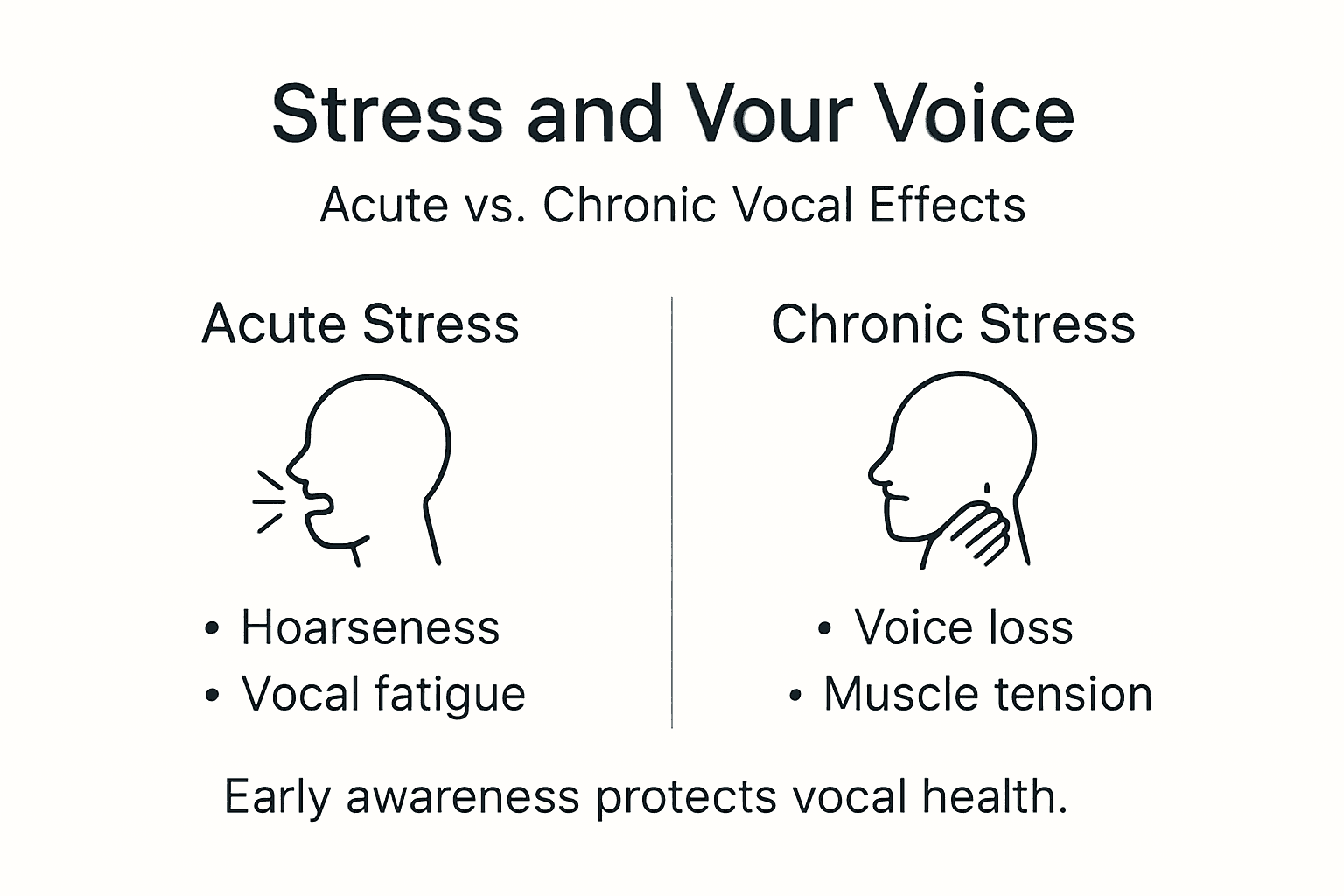
If stress symptoms persist for more than two weeks despite reduced pressure, your body is signaling that stress-induced tension has become habitual. This is when understanding the causes of hoarseness and vocal issues becomes essential for targeted recovery.
Recognizing which type you’re experiencing helps determine your next steps. Temporary problems require stress management. Chronic problems require both stress management and vocal rehabilitation.
Here is a summary comparing acute versus chronic stress effects on vocal health:
| Aspect | Acute Stress | Chronic Stress |
|---|---|---|
| Duration | Hours to a few days | Weeks to months |
| Main Impact | Temporary dysfunction | Structural vocal changes |
| Voice Recovery | Quick after rest and stress reduction | Slow, may require rehabilitation |
| Risk Level | Lower risk of lasting damage | Higher risk of nodules or scarring |
| Typical Symptoms | Mild hoarseness, tension | Persistent fatigue, reduced range |
| Intervention | Stress management usually resolves | Requires medical and behavioral intervention |
Pro tip: Track your vocal symptoms during high-stress periods and calm periods separately—noting which problems appear only under pressure versus which persist constantly helps you distinguish stress-induced issues from structural damage.
Vocal fatigue feels different from simple tiredness. It’s a progressive weakening of your voice that accumulates throughout the day and resists recovery despite rest. Stress accelerates this process dramatically.
Recognizing the early signs of stress-induced vocal fatigue helps you intervene before damage becomes chronic. The symptoms appear in layers—some obvious, some subtle.
You’ll notice these changes in how your voice feels and performs. Patients with vocal fatigue report increased vocal effort, hoarseness, decreased vocal endurance, and discomfort, creating a predictable pattern of decline throughout performance or speaking demands.
What you’ll feel:
Vocal fatigue under stress creates a vicious cycle—tension makes phonation harder, harder work increases fatigue, and fatigue deepens tension.
Beyond how you feel internally, stress-induced vocal fatigue manifests through diminished vocal performance with voice breaks, reduced endurance, and objective acoustic changes. These measurable changes show up in voice quality and consistency.
Listeners will detect:
Stress-induced vocal fatigue typically develops across recognizable stages. The first signs appear within hours of significant stress. Without intervention, symptoms persist and worsen.
Day one: Mild effort increase and minor pitch instability during demanding passages.
Days two to three: Noticeable discomfort, reduced range access, and slower warm-up recovery.
Weeks two plus: Persistent hoarseness, chronic throat discomfort, and significantly diminished vocal endurance even during low-demand periods.
Understanding early signs of vocal damage becomes critical when stress-induced fatigue persists beyond two weeks. At that point, your body signals that stress-induced tension has become habitual and requires targeted intervention.
Not all vocal fatigue comes from stress. Structural damage, illness, or dehydration create similar symptoms but require different solutions.
Stress-specific fatigue typically:
Pro tip: Keep a vocal fatigue log noting stress levels, voice symptoms, and recovery time—patterns will reveal whether your fatigue stems from stress, overuse, or structural issues, guiding your recovery approach.
Managing stress-induced vocal problems requires a two-pronged approach: reduce the stress impact itself, then support vocal recovery. Neither works alone. Together, they interrupt the tension cycle and restore vocal function.
You can’t eliminate stress from performance entirely. But you can control how your body responds to it.
Cognitive-behavioral therapies and behavioral interventions, including breath control and relaxation training, effectively reduce stress impact and improve vocal control. These techniques address the root cause—the nervous system’s stress response—rather than just treating symptoms.
Key approaches include:
The most effective stress management strategy addresses your thoughts and nervous system response, not just your vocal technique.
Proper breathing transforms stress response. Shallow, rapid breathing amplifies anxiety. Deep, controlled breathing signals safety to your nervous system.
Practical techniques:
After stress-induced vocal strain, recovery demands intentional rest and support. Complete vocal rest for 24-48 hours allows inflammation to decrease and muscle tension to release.
Recovery essentials:
One-time interventions help acute situations. Long-term resilience requires consistent practice. Performers who maintain regular stress management practices experience significantly fewer stress-related vocal crises.
Building resilience:
Pro tip: Practice your stress management techniques during calm moments, not just during crises—your nervous system learns the relaxation pattern through repetition, making it accessible automatically when stress hits during auditions or performances.
The following table outlines key strategies for managing stress-related vocal issues and their primary benefits:
| Strategy | Main Benefit | Example Activity |
|---|---|---|
| Cognitive Techniques | Lowers anxiety and tension | Reframing negative thoughts |
| Breathing Exercises | Enhances vocal control | Diaphragmatic breathing drills |
| Vocal Rest & Hydration | Reduces inflammation and fatigue | Complete voice rest, steam inhalation |
| Physical Relaxation | Releases muscle tension | Jaw and neck stretching |
| Consistent Practice | Builds long-term resilience | Daily mindfulness or relaxation routine |
The article highlights how stress can disrupt your vocal foundation by tightening muscles, limiting breath support, and causing vocal fatigue. These issues greatly impact your ability to perform with confidence and consistency. If you experience hoarseness, loss of range, or voice cracks during stressful moments, you are not alone. Stress-induced vocal tension and fatigue demand targeted solutions that support both recovery and resilience.

Explore our specially curated Vocal Recovery Products & Therapy Kits | TMRG Online Store - TMRG Solutions designed to soothe muscle tension and restore vocal function naturally. For those facing more severe challenges like hoarseness or voice loss, our Lost voice - TMRG Solutions collection offers effective herbal formulations to accelerate healing. Take action now to break the cycle of stress-related vocal strain and safeguard your voice with trusted remedies developed over 25+ years at https://tmrgsolutions.com. Your voice is your instrument. Protect it before stress steals your performance edge.
Stress can tighten laryngeal muscles, restrict breathing, and increase vocal tension, all of which can lead to symptoms like hoarseness, voice fatigue, and loss of control during performances.
Common stress-induced vocal problems include dysphonia (hoarseness), muscle tension dysphonia, vocal fatigue, voice tremors, and pitch instability.
Effective stress management techniques include cognitive reframing, mindfulness practice, relaxation training, and controlled breathing exercises that help regulate your body’s stress response.
Signs of stress-induced vocal fatigue include increased vocal effort, throat discomfort, difficulty sustaining notes, slow recovery after vocal use, and noticeable vocal weakness as performance time continues.
