Your Cart is Empty


Many singers blame poor technique when their voice tires quickly, but often the real culprit is confusing vocal strength with endurance. Understanding these distinct capabilities transforms how you train and recover. Research shows unbalanced vocal training increases fatigue risk by 40%, leading to chronic hoarseness and shortened careers. This guide clarifies the science behind vocal strength versus endurance and provides evidence-based strategies to enhance both safely.
| Point | Details |
|---|---|
| Strength and endurance differ physiologically | Vocal strength involves maximal force production; endurance measures sustained phonation without fatigue |
| Different muscle fibers control each capability | Fast-twitch fibers power strength bursts; slow-twitch fibers support prolonged performance |
| Vocal fatigue stems from inflammation and metabolic stress | Prolonged phonation causes vocal fold inflammation, reducing both strength and endurance |
| Targeted training prevents injury | Distinct exercises for strength and endurance optimize vocal health while reducing overuse risk |
| Natural remedies amplify training benefits | Hydration and herbal supplements support recovery and improve vocal fold function by 20% |
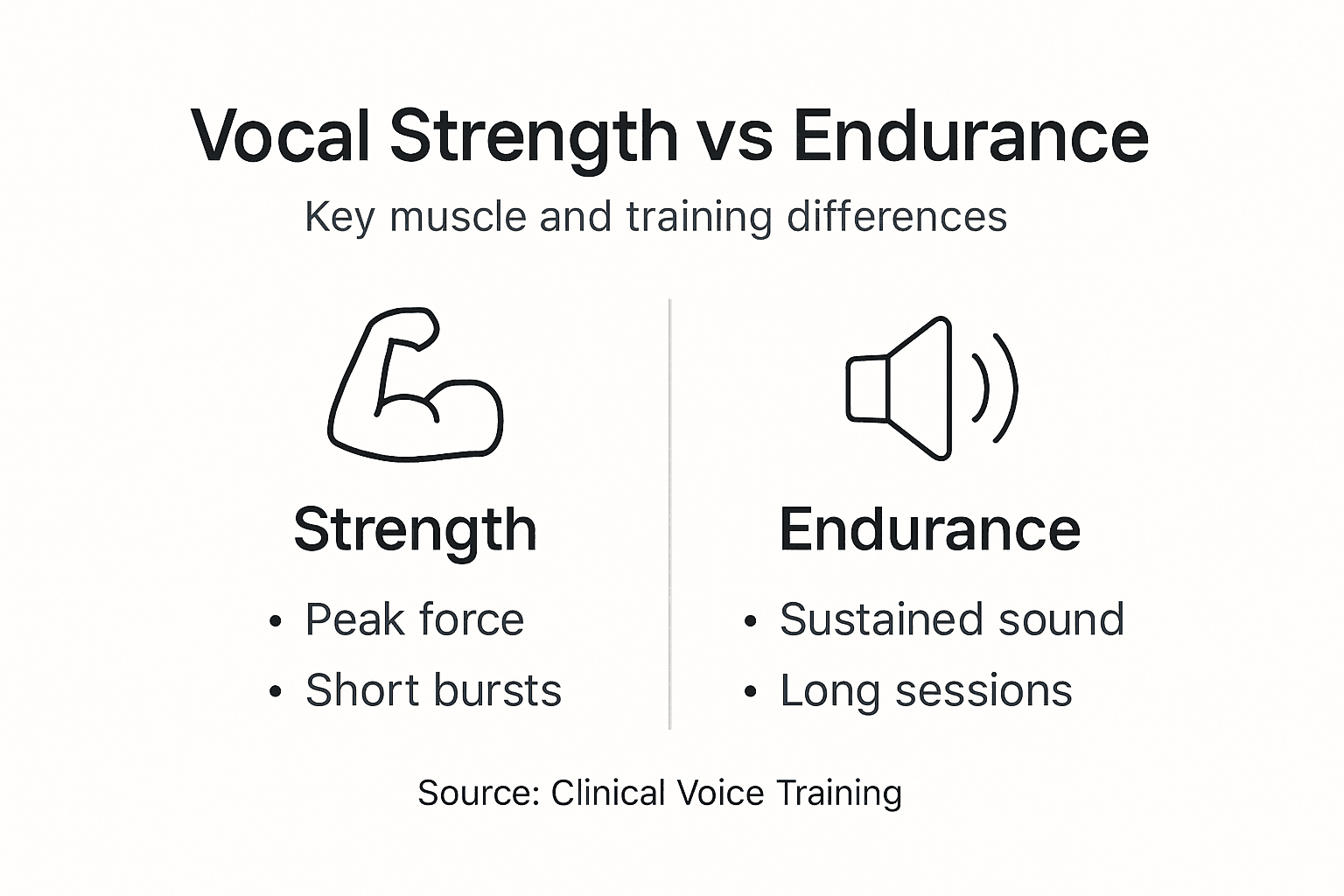
Your voice relies on two fundamentally different capabilities that most singers treat as one. Vocal strength primarily relates to the maximal force that vocal fold muscles can produce during sound production, whereas vocal endurance describes the capacity to sustain phonation over time without fatigue. Think of strength as your ability to hit powerful high notes or project over an orchestra. Endurance determines whether you can maintain vocal quality through a three-hour rehearsal or back-to-back performances.
The confusion between these capabilities creates training programs that develop one at the expense of the other. A singer might excel at belting but struggle to maintain tone through an entire show. Another vocalist sustains long phrases beautifully yet lacks the power needed for climactic moments. Both scenarios indicate imbalanced development.
The physiological basis explains why generic vocal exercises fail many singers. Your laryngeal muscles contain distinct fiber types optimized for either explosive force or sustained activity. Fast-twitch muscle fibers generate maximum power for brief periods, handling strength demands. Slow-twitch fibers contract more slowly but resist fatigue, supporting endurance tasks.
Key distinctions include:
Recognizing these differences lets you design training that addresses your specific weaknesses. A musical theater performer needs different preparation than an opera singer or voice-over artist. Your vocal demands determine the strength-endurance ratio your training should target.
Your vocal fold muscles function like any skeletal muscle, containing fiber types with distinct performance characteristics. Vocal strength relates more to recruitment of fast-twitch muscle fibers, while vocal endurance depends on slow-twitch fibers’ fatigue resistance. Understanding this physiology guides effective training choices.
Fast-twitch fibers contract quickly and forcefully but fatigue rapidly. They rely primarily on anaerobic metabolism, producing energy without oxygen through glycolysis. This metabolic pathway generates power quickly but creates fatigue byproducts like lactic acid. When you push for that climactic high note, fast-twitch fibers do the heavy lifting.

Slow-twitch fibers operate differently. They contract more slowly and generate less peak force but maintain activity much longer. Their aerobic metabolism uses oxygen efficiently, producing energy sustainably. These fibers contain more mitochondria and capillaries, supporting prolonged phonation without significant fatigue accumulation.
The ratio of fiber types varies among individuals based on genetics and training history. Elite endurance athletes show higher slow-twitch proportions, while power athletes have more fast-twitch fibers. Singers can shift this balance somewhat through targeted training, though genetic predisposition sets limits.
Neurological factors also influence vocal performance:
Metabolic considerations matter equally. Vocal fold muscles need adequate glycogen stores for strength tasks and efficient oxygen delivery for endurance. Nutritional status, hydration, and systemic health all affect these metabolic processes. Supporting your voice requires attention to whole-body wellness, not just laryngeal exercises.
Training programs must respect these physiological realities. Pushing for strength gains without endurance work risks vocal fold injury from inadequate muscular stamina. Focusing solely on endurance leaves you unable to meet peak power demands. Explore natural vocal strength support strategies that complement your training approach.
Vocal fatigue is caused by prolonged phonation leading to metabolic stress and inflammation in the vocal fold muscles, which reduces endurance and causes hoarseness. Understanding these mechanisms helps you recognize warning signs before significant damage occurs.
Prolonged voice use depletes energy stores in vocal fold muscles. Glycogen reserves that fuel muscle contraction run low during extended performances or teaching days. As energy availability drops, muscle fibers struggle to maintain coordinated vibration. Your voice feels effortful, pitch control suffers, and tone quality deteriorates.
Inflammation develops when mechanical stress exceeds tissue capacity for repair. Repeated collision of vocal folds during phonation creates microtrauma. Normally, overnight rest allows healing. When voice demands exceed recovery capacity, inflammation accumulates. Vocal folds swell, reducing their flexibility and increasing collision forces in a destructive cycle.
Typical onset patterns include:
Vocal fatigue affects both strength and endurance but through different pathways. Strength declines when neural drive decreases and fast-twitch fibers deplete their energy reserves. You notice reduced volume and difficulty accessing upper range. Endurance suffers as slow-twitch fibers accumulate metabolic byproducts that interfere with sustained contraction.
Hoarseness specifically indicates vocal fold tissue changes. Swelling alters the mass and stiffness of vocal folds, changing their vibratory characteristics. Breathiness increases as inflamed folds fail to close completely. Pitch becomes unstable because asymmetric swelling creates irregular vibration patterns.
Prevention strategies center on matching voice use to current capacity. Warm up prepares muscles metabolically and neurologically. Strategic rest during long performance days allows partial recovery. Post-performance cool down helps clear metabolic waste products. Following natural hoarseness recovery tips supports faster healing when fatigue occurs.
Objective measurement transforms vague impressions into actionable data. Maximum phonation time (MPT) is a standard endurance metric, with healthy trained singers averaging 20 to 35 seconds sustained phonation. Tracking these numbers reveals training progress and early fatigue signs.
Maximum phonation time measures how long you sustain a single vowel on one breath at comfortable pitch and volume. This simple test directly assesses vocal endurance. Values below 15 seconds suggest significant endurance limitations or inefficient breath support. Elite singers often exceed 35 seconds, demonstrating superior slow-twitch fiber development and breath management.
Strength assessment proves more complex but equally valuable. Intensity measurements using sound level meters quantify vocal power. Healthy conversational speech registers around 60 to 65 decibels. Trained singers project 85 to 95 decibels comfortably. Maximum vocal intensity reaches 100 to 110 decibels in professional performers.
Other useful metrics include:
| Metric | Measurement Method | Healthy Range | Clinical Significance |
|---|---|---|---|
| Maximum Phonation Time | Sustained /a/ vowel | 20 to 35 seconds | Endurance capacity |
| Maximum Intensity | Sound level meter | 85 to 95 dB | Vocal strength |
| Frequency Range | Pitch analysis | 2+ octaves | Flexibility and control |
| Phonation Threshold | Aerodynamic testing | 3 to 5 cm H2O | Efficiency |
Regular self-assessment helps you catch problems early. Test MPT weekly under consistent conditions, same time of day and vocal rest status. Track maximum comfortable volume during scales. Note subjective effort required for standard repertoire. Declining numbers signal accumulated fatigue before symptoms become severe.
Clinical voice labs offer sophisticated assessment using videostroboscopy, electroglottography, and aerodynamic analysis. These tools reveal subtle changes in vocal fold function invisible to the naked eye. Consider professional evaluation if self-measurements show persistent decline despite rest and vocal recovery strategies.
Semi-occluded vocal tract exercises increase both vocal strength and endurance by improving vocal fold vibration efficiency. Strategic training develops each capability while maintaining overall vocal health.
Strength training emphasizes high-intensity, short-duration exercises. Glissandos into upper range, dynamic accent patterns, and forte singing recruit fast-twitch fibers. Rest periods between sets prevent premature fatigue, allowing maximum effort on each repetition. Think weight training principles applied to voice.
Endurance training takes the opposite approach. Sustained phonation exercises, long phrases at moderate volume, and extended practice sessions target slow-twitch fiber development. Gradual progression increases duration while maintaining good technique. Marathon training offers a useful analogy: building capacity through consistent, manageable challenges.
| Training Focus | Exercise Type | Duration | Intensity | Rest Ratio | Primary Benefit |
|---|---|---|---|---|---|
| Strength | Glissandos, accents | 30 to 60 seconds | High (forte) | 1:3 (work:rest) | Maximum power |
| Endurance | Sustained tones | 2 to 5 minutes | Moderate (mezzo) | 1:1 | Stamina |
| Mixed | Semi-occluded exercises | 1 to 2 minutes | Variable | 1:2 | Efficiency |
Semi-occluded vocal tract (SOVT) exercises provide unique benefits for both areas. Phonating through straws, lip trills, or humming creates back-pressure that optimizes vocal fold contact. This improves vibration efficiency, reducing the effort needed for phonation. SOVT exercises work across intensity levels, making them versatile training tools.
Specific strength builders include:
Endurance developers focus on:
Pro Tip: Balance strength and endurance work within each training session and across your weekly schedule. Alternate focus days rather than combining maximum efforts, allowing adequate recovery for each muscle fiber type. Monitor fatigue signals and adjust intensity before problems develop.
Explore comprehensive guidance through vocal exercises guide resources that detail progression strategies and common pitfalls.
Hydration improves vocal fold pliability and endurance, reducing phonation effort by 20%. Supporting your voice naturally accelerates recovery and enhances training adaptations.
Systemic hydration maintains vocal fold tissue flexibility. Well-hydrated tissues vibrate more freely, requiring less subglottal pressure for phonation. Aim for pale yellow urine as a hydration target. Drinking water helps, but true hydration happens at the cellular level over hours. Consistent daily intake matters more than pre-performance gulping.
Herbal remedies offer targeted support backed by traditional use and emerging research. Slippery elm contains mucilage that coats and soothes irritated tissues. Marshmallow root provides similar demulcent properties. Licorice root reduces inflammation through glycyrrhizin compounds, though those with hypertension should use deglycyrrhizinated forms.
Antioxidants combat oxidative stress from intense vocal use. Vitamin C, vitamin E, and polyphenols from fruits and vegetables protect cellular structures. Some singers report benefits from specific antioxidant supplements, though whole food sources provide synergistic compounds supplements lack.
Lifestyle factors supporting vocal health include:
Dietary timing matters around performances. Heavy meals divert blood flow to digestion, potentially reducing vocal muscle perfusion. Light, easily digestible foods 2 to 3 hours before singing provide energy without interference. Post-performance nutrition should emphasize protein for tissue repair and carbohydrates to restore glycogen.
Pro Tip: Integrate natural remedies into your daily routine rather than waiting for problems. Morning herbal tea, consistent hydration throughout the day, and evening wind-down practices create sustainable vocal health habits. Acute interventions help during demanding periods, but prevention through consistent care proves most effective.
Discover evidence-based approaches through natural remedies for vocal health and vocal recovery steps that complement your training program.
Translating knowledge into action requires a structured approach that fits your schedule and vocal demands. This weekly framework balances development of both capabilities while preventing overuse.
Monday (Strength Focus): Begin with 10-minute SOVT warm-up, then strength exercises emphasizing dynamic range and upper register access. Three sets of high-intensity work with generous rest. Total training time 30 to 40 minutes. Monitor effort levels and stop at first signs of strain.
Tuesday (Endurance Development): Extended warm-up leading into sustained phonation exercises and long-phrase repertoire. Moderate intensity throughout, focusing on consistency over power. Build toward 45 to 60 minutes total training time as capacity improves.
Wednesday (Active Recovery): Light SOVT exercises only, minimal voice use otherwise. Implement vocal recovery strategies including hydration emphasis and herbal support. Allow muscular and neural recovery.
Thursday (Mixed Training): Combine moderate-intensity strength and endurance work. Alternate exercise types with adequate rest. Focus on technical refinement rather than pushing limits. Duration 40 to 50 minutes.
Friday (Endurance Focus): Repeat Tuesday’s pattern with gradual progression in duration or repertoire difficulty. Maintain excellent technique throughout, stopping when quality deteriorates.
Saturday (Performance Simulation): Run through full repertoire or teaching scenarios mimicking real demands. This reveals gaps in preparation and builds confidence. Apply vocal strength remedies as needed.
Sunday (Rest): Complete vocal rest or minimal speaking only. Physical activity fine but avoid voice use. Recovery happens during rest, not training.
Monitor these fatigue indicators:
Adjust training load immediately when fatigue signs appear. An extra rest day prevents minor fatigue from becoming significant injury. Gradual progression over weeks and months builds capacity safely. Rushing development invites setbacks that erase progress.
Building vocal strength and endurance requires more than exercises alone. TMRG Solutions offers professionally formulated natural remedies supporting your training goals and accelerating recovery. With over 25 years specializing in vocal health, we understand the unique demands performers face.

Our voice therapy kits combine targeted herbal formulations with practical guidance for implementing evidence-based vocal care. Whether you need support for demanding performance schedules or recovery from vocal fatigue, TMRG provides solutions developed specifically for professional voice users. Discover the best vocal remedies 2025 backed by vocal coaches and satisfied singers worldwide.
Explore our comprehensive voice therapy kit that addresses both immediate relief and long-term vocal enhancement. Complement your training with vocal support exercises and natural remedies designed to work synergistically for optimal results.
Vocal strength measures maximum force your vocal folds generate, determining volume and power capability. Endurance describes how long you maintain vocal quality without fatigue. Strength relies on fast-twitch muscle fibers for brief, intense efforts, while endurance depends on fatigue-resistant slow-twitch fibers supporting prolonged phonation.
No, natural remedies support but cannot replace proper vocal training. Herbal supplements and hydration optimize tissue health and recovery, creating better conditions for skill development. However, strength and endurance require specific muscular adaptations achievable only through targeted exercise. Combine both approaches for comprehensive vocal development.
Decreasing maximum phonation time, increased effort for routine tasks, persistent hoarseness lasting beyond overnight rest, and reduced vocal range all signal overtraining. Monitor these metrics weekly and respond immediately to negative trends. Rest prevents minor fatigue from becoming injury requiring extended recovery.
Beginners should limit practice to 30 to 45 minutes daily with frequent breaks. Intermediate singers can extend to 60 to 90 minutes as conditioning improves. Advanced performers may train 2 to 3 hours when properly conditioned, though distributed across multiple sessions with rest between. Quality matters more than duration, so maintain excellent technique throughout.
Absolutely. Hydration reduces phonation effort by 20% through improved vocal fold pliability. Proper nutrition provides energy substrates for muscular work and raw materials for tissue repair. Deficiencies in either area limit training adaptations and increase injury risk. Systematic vocal care requires attention to whole-body health, not just laryngeal exercises.
