Your Cart is Empty


Your voice is your career, yet 42.3% of professional voice users experience voice disorders. Singers, actors, and voice coaches often assume their training protects them from vocal damage, but the reality tells a different story. The demands placed on vocal professionals create unique risks that even experienced performers face daily. Understanding why vocal protection matters and implementing proven strategies can mean the difference between a thriving career and chronic vocal problems. This guide explores the science behind vocal injury, practical prevention techniques, and how to recognize warning signs before minor strain becomes permanent damage.
| Point | Details |
|---|---|
| High vocal demands require efficient techniques | Professional voice users face elevated injury risk without proper training and recovery protocols. |
| Overuse and underrecovery cause vocal fatigue | Inadequate rest between performances or sessions prevents vocal fold healing and increases strain. |
| Preventive care ensures sustainable voice use | Regular monitoring, hydration, and environmental control protect vocal health long term. |
| Common disorders include muscle tension dysphonia | Professional voice users frequently develop nodules, reflux issues, and tension-related problems. |
| Early intervention prevents permanent damage | Recognizing symptoms and seeking professional help quickly improves recovery outcomes. |
Voice disorders affect nearly half of professional voice users, yet many performers underestimate their vulnerability. The 42.3% prevalence of voice disorders in professional populations reveals that training alone doesn’t guarantee vocal health. Singers, actors, and voice coaches face unique challenges that amplify their risk compared to casual speakers.
Common diagnoses among vocal professionals include:
These conditions don’t just cause temporary discomfort. Voice disorders lead to significant functional, emotional, and occupational impairments that can derail careers and diminish quality of life. A singer who loses vocal range or an actor whose voice fatigues mid-performance faces immediate professional consequences.
Risk factors extend beyond simple overuse. Long hours of continuous voice use without adequate rest create cumulative strain. Poor hydration reduces vocal fold lubrication, increasing friction during phonation. Environmental pollutants like smoke, dust, and dry air irritate delicate laryngeal tissues. Inadequate vocal technique forces compensatory muscle patterns that strain the voice over time.
“The emotional toll of losing your voice extends far beyond the physical symptoms. Your identity as a performer becomes threatened when the instrument you’ve trained for years suddenly fails.”
Understanding the importance of vocal protection starts with recognizing these realities. Professional voice users must view vocal health as seriously as athletes treat physical conditioning. The stakes are too high to ignore preventive care.
Vocal fold tissue consists of delicate layers vulnerable to damage from excessive or improper use. The mucosa covering your vocal folds measures just millimeters thick, yet it withstands thousands of vibrations per second during speech and singing. When you push beyond healthy limits or use inefficient technique, these tissues suffer microscopic trauma that accumulates over time.
Proper vocal technique builds efficient sound production that minimizes unnecessary strain. Efficient phonation uses balanced breath support, optimal vocal fold closure, and resonance strategies that amplify sound without forcing. When technique breaks down, you compensate with excessive muscle tension in the throat, jaw, and tongue. These compensatory patterns create the foundation for chronic voice problems.
Overtraining and underrecovery are key factors impacting vocal outcomes and injury risk. Just as athletes need rest days for muscle recovery, your vocal folds require adequate healing time between demanding uses. The tissue repair process takes hours, not minutes. Pushing through fatigue or scheduling back-to-back performances without recovery periods disrupts this healing cycle.
Vocal fatigue signals developing problems that require immediate attention. You might notice:
Pro Tip: Keep a vocal journal tracking your voice use hours, fatigue levels, and any symptoms. Patterns emerge that help you identify your personal limits and optimal recovery schedules.
Environmental and physiological stressors compound mechanical strain. Dehydration thickens mucus and reduces vocal fold pliability. Acid reflux exposes laryngeal tissues to caustic stomach contents. Allergies and upper respiratory infections inflame tissues and alter normal phonation patterns. Monitoring overtraining and underrecovery is crucial to minimize vocal fatigue and injury, especially when these additional factors are present.

Understanding these mechanics empowers you to make informed decisions about preventing vocal strain through technique refinement and strategic vocal maintenance practices.
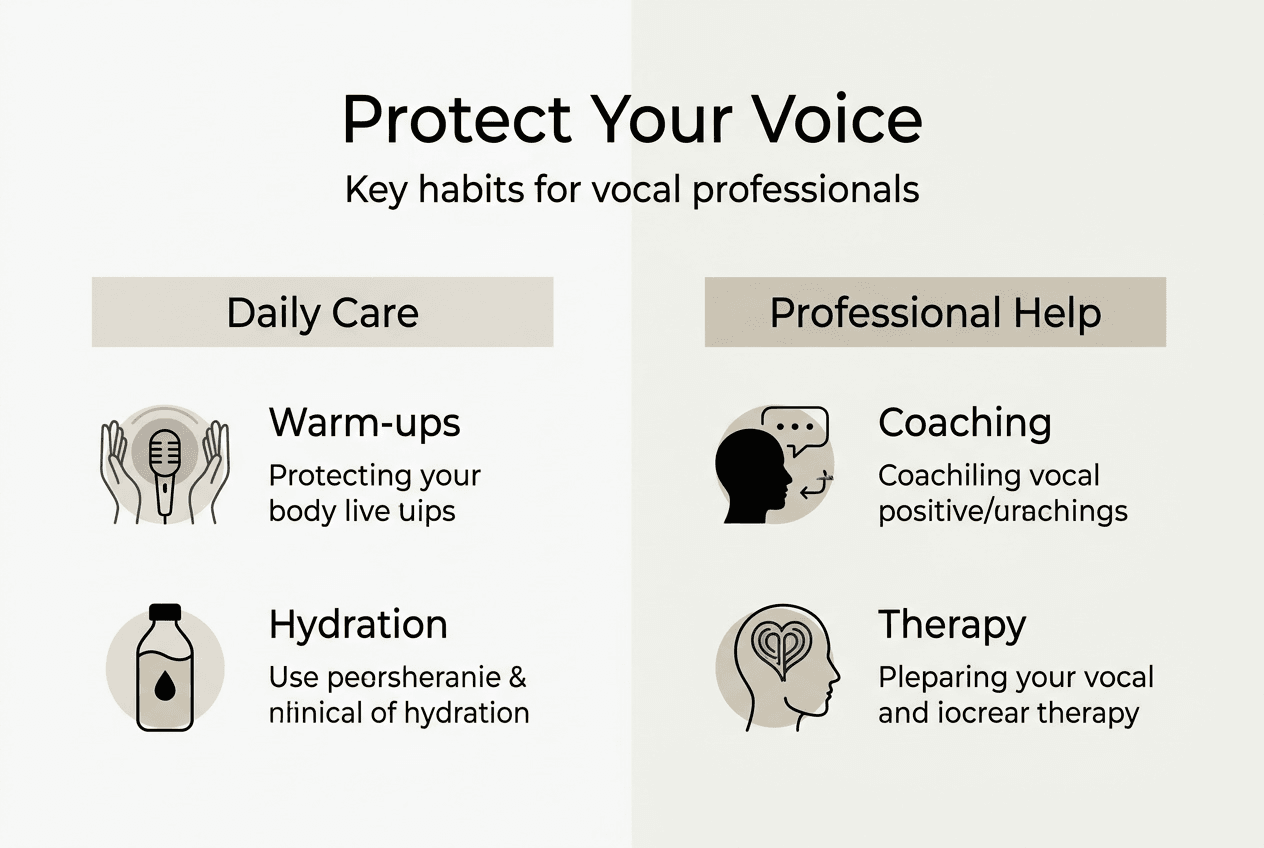
Structured vocal warm-ups prepare your voice for demanding use by gradually increasing tissue temperature and flexibility. A proper warm-up includes gentle humming, lip trills, and sirens that engage your vocal mechanism without strain. Cooldowns after intensive voice use help tissues return to baseline gradually, reducing post-performance inflammation. Despite clear benefits, exercise physiology concepts lack structured preventive voice training guidelines in many professional settings.
Implement these evidence-based practices:
Pro Tip: The “sip and swallow” method works better than gulping water. Take small, frequent sips that coat your throat rather than large amounts that pass straight to your stomach.
Vocal load management requires tracking both intensity and duration of voice use. High-intensity activities like belting or projection demand more recovery time than conversational speech. A performer doing eight shows weekly faces different demands than a voice coach teaching four private lessons daily. Understanding your personal vocal budget helps prevent exceeding your recovery capacity.
| Prevention Strategy | Implementation | Expected Benefit |
|---|---|---|
| Structured warm-ups | 10-15 minutes before voice use | Reduced injury risk, improved performance |
| Hydration protocol | 8-10 glasses water daily | Enhanced vocal fold lubrication |
| Scheduled vocal rest | 1-2 days weekly, post-performance | Tissue recovery, fatigue reduction |
| Environmental control | Humidifiers, air purifiers | Decreased irritation and inflammation |
| Regular voice assessment | Quarterly evaluations | Early problem detection |
Voice therapists and coaches provide essential guidance for technique improvement and injury prevention. These professionals identify subtle inefficiencies in your vocal production before they cause problems. Regular check-ins create accountability and ensure you’re implementing vocal fatigue prevention strategies correctly.
Long-term vocal care strategies extend beyond daily maintenance to include career planning that accounts for vocal aging and changing demands. Preparing for strained vocal effort involves both immediate pre-performance protocols and broader lifestyle choices that support vocal longevity.
Recognizing early warning signs of vocal strain allows intervention before temporary fatigue becomes permanent damage. Vocal fatigue can indicate emerging vocal problems requiring immediate attention. Your body communicates through symptoms that many performers dismiss as normal occupational hazards.
Common symptoms requiring professional evaluation include:
Ignoring these symptoms invites chronic disorders that prove far harder to treat than acute problems. A small vocal nodule caught early may resolve with voice rest and therapy. That same nodule left untreated can calcify, requiring surgical intervention and lengthy recovery. The professional and financial costs of delayed treatment far exceed the inconvenience of early evaluation.
Early intervention by voice therapists significantly improves outcomes through targeted exercises and behavioral modifications. Voice therapy addresses the root causes of vocal strain rather than just managing symptoms. A speech-language pathologist specializing in voice can assess your technique, identify problematic patterns, and design personalized rehabilitation programs.
Professional voice care encompasses multiple disciplines working together. Your care team might include:
Maintaining open communication with your voice care team supports vocal longevity throughout your career. Share concerns early rather than waiting until problems become severe. Discuss upcoming demanding performances or teaching schedules that might require adjusted care plans. Regular evaluations catch subtle changes before they impact your professional capabilities.
Understanding treating hoarseness requires distinguishing between technique-related issues and medical conditions. The hoarse voice prevention guide offers additional strategies for maintaining clarity and avoiding common pitfalls that lead to vocal problems.
Vocal professionals need specialized tools and resources to maintain peak performance while protecting against injury. TMRG Solutions offers voice therapy kits specifically designed for singers, actors, and voice coaches facing the unique demands of professional voice use. These comprehensive kits combine natural herbal formulations with proven therapeutic approaches developed over 25 years of vocal health expertise.

The premium voice therapy kit provides complete support for voice recovery, maintenance, and protection. It includes therapeutic sprays, oils, and dietary guides tailored to address hoarseness, vocal fatigue, and strain. For those seeking foundational vocal health support, the basic voice therapy kit offers essential remedies at an accessible price point. Both options come with detailed instructions and access to the voice therapy kit FAQ for guidance on maximizing benefits and addressing specific vocal concerns.
Vocal fatigue duration varies from a few hours to several days depending on severity and underlying causes. Mild fatigue from a single demanding performance typically resolves with 24 to 48 hours of modified voice use. If hoarseness or strain persists beyond your typical recovery time, implement complete vocal rest immediately. Extended fatigue lasting more than three days signals potential tissue damage requiring professional evaluation.
Early warning signs include persistent hoarseness, throat pain during speaking or singing, reduced vocal range, and increased effort for normal tasks. You might notice vocal breaks, pitch instability, or breathiness not present in your baseline voice. Throat tightness, the sensation of a lump, or discomfort when swallowing also indicate potential problems. Recognizing these symptoms early allows timely intervention that prevents permanent damage and shortens recovery time.
Yes, proper voice training significantly reduces vocal disorder risk by building efficient technique that minimizes unnecessary strain. Consistent training establishes healthy phonation patterns, optimal breath support, and appropriate resonance strategies. However, training alone isn’t sufficient without adequate recovery periods and load monitoring. Long-term vocal care strategies combine excellent technique with smart scheduling and preventive maintenance. Overtraining injuries occur even in well-trained voices when recovery doesn’t match demands.
Adequate hydration keeps vocal folds lubricated and pliable, essential for smooth vibration during phonation. Well-hydrated tissues resist injury better and recover faster from normal use. Dehydration thickens mucus secretions and reduces tissue flexibility, increasing friction between vocal folds during vibration. This friction causes microtrauma that accumulates into larger problems over time. Aim for consistent hydration throughout the day rather than drinking large amounts immediately before performances. The preventing vocal strain tips emphasize hydration as a foundational element of vocal health maintenance.
