Your Cart is Empty


If your voice cracks or drops out mid-rehearsal, stop pushing it immediately. Whisper or stay silent, hydrate systemically, inhale steam, and run 30 to 60 seconds of straw phonation before you speak or sing again. Pair that low-impact routine with a non-menthol protective drop and a structured therapy kit, and you may recover faster than resting alone.
TL;DR:
- Using a structured routine with straw phonation, steam inhalation, and non-menthol lozenges can speed up recovery and prevent further damage during hoarseness.
- SOVT exercises, such as straw phonation and lip trills, reduce vocal fold collision force and provide a gentle, physical therapy-like benefit for swollen or tired vocal cords.
- Maintaining consistent hydration, using humidifiers, avoiding risky foods, and limiting vocal strain are essential daily habits to prevent recurring hoarseness.
- If hoarseness persists beyond two weeks, noticeable voice loss, throat pain, or mucus buildup, seeking a voice therapist becomes necessary for tailored treatment.
- A backstage toolkit with specific, repeatable tools supports quick recovery, but it should complement, not replace, professional assessment during ongoing or severe voice issues.
Hoarseness in a working voice is a signal, not a nuisance to talk through. The NIDCD frames baseline care around three things: hydration, rest, and humidification, with a referral to a clinician if symptoms stick around. For performers, that translates into a very specific first move.
Step 1: Call a vocal nap. Go quiet for 30 to 60 minutes. Whisper only if you must communicate; true silence works better because whispering can strain the folds almost as much as talking.
Step 2: Hydrate on a schedule, not a whim. Systemic hydration takes time to reach the vocal fold mucosa, often described as a four-hour lag, so drinking water the moment you notice hoarseness helps tomorrow’s show more than tonight’s. Sip consistently rather than chugging before a set.
Step 3: Steam it. Five to ten minutes of steam inhalation adds direct moisture to the folds fast, which is why UT Southwestern lists it alongside water as a primary immediate measure. Use a clean, sterilized unit. A shared or grimy steamer defeats the purpose.
Step 4: Run one SOVT exercise, quietly. A short set of straw phonation exercises or gentle lip trills at low volume for 30 to 60 seconds reduces the pressure your folds need to vibrate, without adding collision force.
Step 5: Choose your lozenge carefully. Skip menthol. It numbs the throat and tempts you to keep performing through damage you can no longer feel. Glycerin or pectin-based lozenges, or a non-menthol protective drop, coat and lubricate without masking pain.
Pro Tip: Keep a small kit backstage with water, a straw, and non-menthol drops. The five minutes you spend on this routine between sets often determines whether you finish the night with a voice at all.
Semi-occluded vocal tract work, or SOVT, is the closest thing to physical therapy your vocal folds get. Narrowing the vocal tract, through a straw, pursed lips, or a resonance tube, backs up airflow and lowers the phonation threshold pressure your folds need to start vibrating. Practitioner literature on SOVT methods describes this as an internal massage effect: the folds oscillate with less collision force, which matters enormously when they’re already swollen.
Three SOVT options work well backstage:
When you’re hoarse, a full vocal function exercise (VFE) or resonant voice session isn’t realistic. ASHA’s voice disorders guidance treats both as physiologic therapy approaches meant to rebalance the muscles that drive phonation, and a shortened version still helps: pick one resonant “hum into speech” glide and skip the rest until your voice settles.
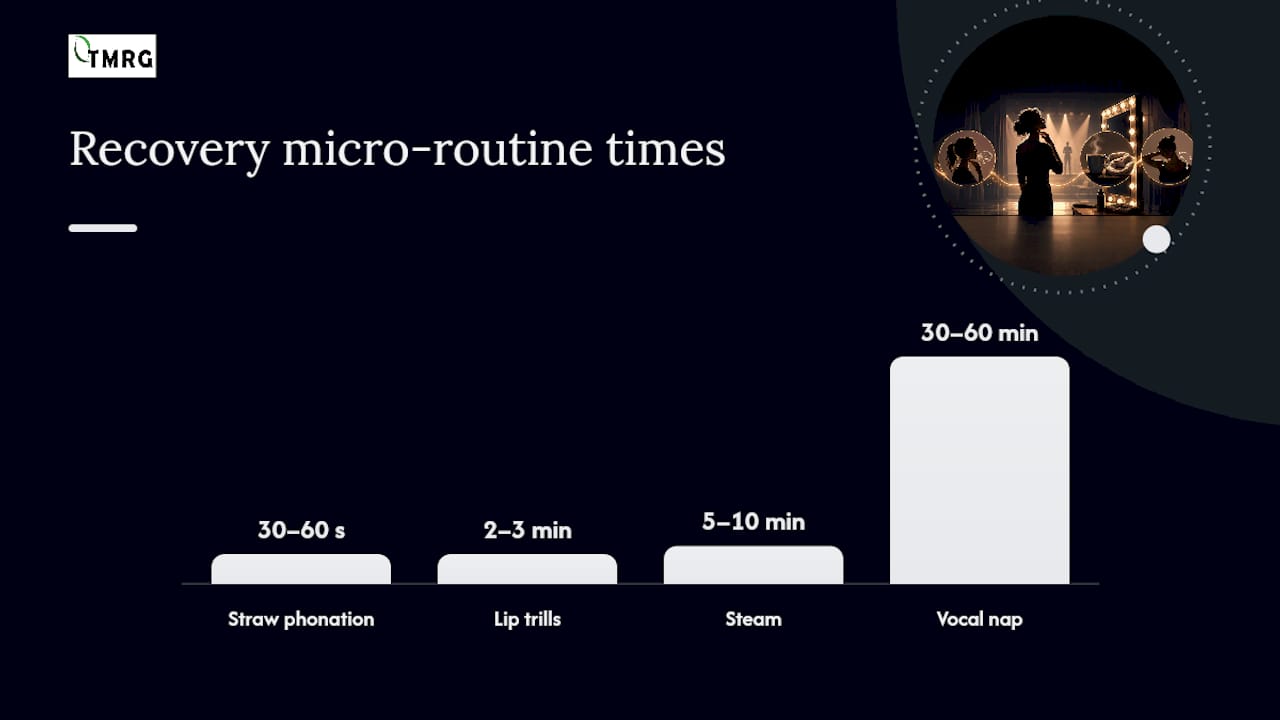
A practical recovery micro-routine, drawn from performer-focused guidance, looks like this across a rehearsal day: 30 to 60 seconds of straw phonation, two to three minutes of lip trills, five to ten minutes of steam, then a 30 to 60 minute vocal nap. Repeat as needed, and keep full-voice rehearsal to a minimum between cycles. A voice therapy kit built around these tools gives you a fixed sequence to follow instead of guessing at order and timing.
Pro Tip: Do straw phonation before drops, not after. The exercise softens tissue tension; the drop then has less swelling to coat through.
Recovery only sticks if your daily routine stops recreating the problem. Vocal hygiene isn’t a one-time fix. It’s a set of small, boring habits that compound over a touring season or a semester of lecturing.
None of this is glamorous, but a prevention routine built on these five habits is what separates performers who lose a night to hoarseness from ones who lose a week.
At-home care has a limit, and knowing where it sits protects your career. Hoarseness that lasts beyond two weeks, a noticeable loss of vocal range, throat pain, or persistent mucus that won’t clear with hydration are all signals to book a speech-language pathologist who specializes in voice.
A voice therapist doesn’t just tell you to rest. Cleveland Clinic’s overview of voice therapy describes an assessment followed by a tailored program combining SOVT, resonant voice work, and behavioral changes to how you use your voice day to day, sometimes including amplification strategies for teachers and lecturers who talk for hours.
Programs built for professional voice users typically run in a hierarchy, starting with the gentlest exercises and progressing as swelling resolves, according to research on unloading the laryngeal mechanism. Expect weekly sessions early on, with daily home practice in between. This is a different track from a medical hoarseness evaluation; an SLP focuses on retraining function, not diagnosing disease.

The biggest mistake performers make isn’t skipping water. It’s treating a rescue routine as a one-time fix instead of a repeatable cycle. A tenor I’ve watched recover from a rough matinee didn’t do anything exotic between shows: straw phonation, steam, a protective drop, and an actual nap with his phone off. He did it twice, on a timer, because he didn’t trust himself to notice when 45 minutes had passed.
Quick backstage checklist: silence over whispering, water on a schedule, one SOVT set, steam if you have it, and a non-menthol drop before you walk on. Build this into rehearsal breaks now, before a real emergency forces you to learn it the hard way.
— Golan
Most performers cobble together tea, lozenges, and hope. A structured toolkit works better because it removes the guesswork about order, timing, and dosage during the exact moment you have the least bandwidth to think it through.
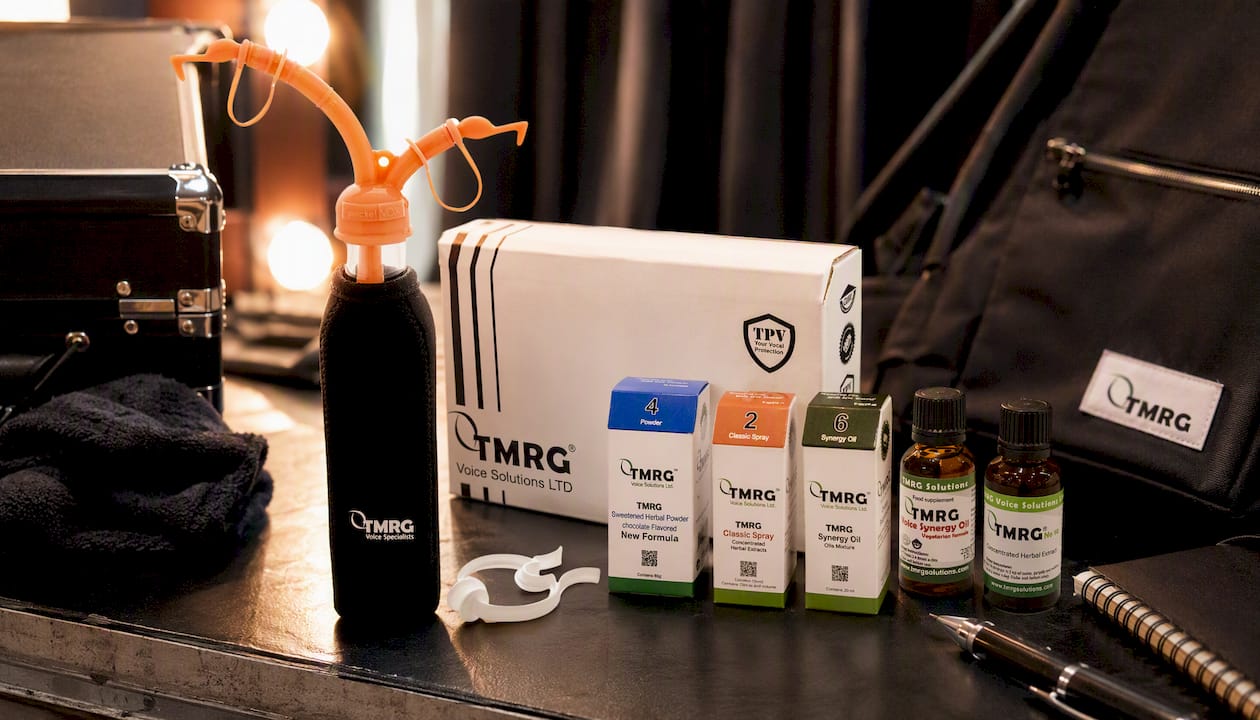
The TMRG Voice Therapy kit - Standard (TVT-S) is built around the SOVT and VFE sequence described above, giving you a fixed set of tools instead of a mental checklist you have to reconstruct under pressure. For protective coating between sets, TMRG Protection - Voice Synergy Oil Lost Vocal Drops (#6) offers non-menthol lubrication you can apply right after steam, while your throat tissue is still receptive. When you need extra support heading into a demanding performance, TMRG Impact - Voice Enhancement Drops (#10) is designed for that rehearsal-to-stage window rather than daily use.
A simple combined routine: straw phonation from the kit, steam, then Voice Synergy Oil drops, saving Voice Enhancement Drops for the night you actually need the extra edge. Start with the Standard kit if you’re building your first backstage routine from scratch.
Mild hoarseness from overuse often improves within a few days of vocal rest, hydration, and SOVT exercises; if it lasts beyond two weeks, book a voice therapist.
Menthol numbs throat pain and can encourage you to keep talking or singing through damage; glycerin or pectin lozenges lubricate without masking symptoms.
Straw phonation is a semi-occluded vocal tract exercise where you hum through a narrow straw, reducing the pressure your folds need to vibrate and easing strain during recovery.
Products like the TMRG Voice Therapy kit support day-to-day recovery and rehearsal readiness, but persistent hoarseness beyond two weeks still calls for a voice therapist’s assessment.
A short SOVT set of 30 to 60 seconds, two to three times a day, works well for maintenance; during active hoarseness, keep sessions gentle and quiet rather than skipping them entirely.
