Your Cart is Empty


TL;DR:
- Vocal fatigue results from overworking vocal folds, causing discomfort and voice quality changes.
- Prevention includes hydration, proper environment, scheduled rests, technique adjustments, and early symptom tracking.
- Seeking professional help is essential for persistent fatigue, pain, or sudden vocal changes.
Vocal fatigue can end a performance, derail a recording session, or quietly chip away at a career built over years of hard work. For singers, actors, and voice professionals, the voice is not just a tool. It is the livelihood. Yet many performers only think about vocal care after something goes wrong. Vocal fatigue symptoms include physical discomfort, restricted use, and recovery after rest, affecting both professional and non-professional vocal users. The good news is that most cases of vocal fatigue are preventable. This guide walks you through every layer of protection, from daily habits to technique refinements, so your voice stays strong and resilient through every performance.
| Point | Details |
|---|---|
| Early recognition matters | Spotting vocal fatigue early enables fast intervention and reduces risk of long-term damage. |
| Hydration and environment | Staying hydrated and maintaining optimal humidity create a safer foundation for your voice. |
| Smart use and rest | Structured breaks and avoiding whispering help the voice recover and stay resilient. |
| Modern techniques work | Evidence-based warm-ups and posture tweaks outperform older methods for preventing fatigue. |
| Know when to get help | Seek professional support for persistent symptoms to protect and strengthen your vocal health. |
Vocal fatigue is not simply feeling tired after a long day of singing. It is a specific condition where the vocal folds and surrounding muscles become overworked, leading to measurable changes in voice quality and function. Think of it like muscle fatigue after a hard workout, except the stakes of pushing through are much higher.
Common symptoms of vocal fatigue include discomfort, effortful speaking or singing, and improvement with rest. You might notice your voice feeling tight, your range narrowing, or your tone becoming thin and strained. These are signals worth taking seriously.
High-risk groups include:
Early recognition is critical because fatigue caught early responds quickly to rest and hydration. Left unaddressed, it can progress to more serious conditions like nodules or hemorrhage.
The Vocal Fatigue Index (VFI) is a validated self-assessment tool that helps you track symptoms over time. If you notice your VFI scores rising across a week, that is your cue to reduce vocal load before a crisis hits.
For a deeper look at managing this condition, expert strategies for vocal fatigue offer a structured framework that goes beyond basic advice.
Now that you can spot the signs, prevention starts well before you sing or perform. Your daily environment and habits either protect your vocal folds or quietly erode them.
Hydration is the foundation. Hydration and humidity are essential for vocal fold pliability and reducing friction. Aim for 8 to 10 glasses of water per day. Sipping consistently throughout the day is more effective than drinking large amounts at once.
| Daily habit | Target | Why it matters |
|---|---|---|
| Water intake | 8 to 10 glasses | Keeps vocal folds supple |
| Room humidity | Above 30% | Reduces mucosal dryness |
| Sleep | 7 to 9 hours | Allows tissue repair |
| Vocal warm-up | 10 to 15 minutes | Prepares folds for load |
| Vocal cool-down | 5 to 10 minutes | Reduces post-use inflammation |
Beyond water, your environment matters. Keep a humidifier in your rehearsal space and bedroom. Avoid common irritants that dry or inflame the vocal folds:
For performance days, stock voice-friendly snacks like room-temperature water, herbal teas without caffeine, and soft fruits. Cold drinks tighten the muscles around the larynx, so keep everything at room temperature.
Pro Tip: Use a vocal health diary app or a simple notebook to log your daily VFI symptoms, hydration, sleep, and performance load. Patterns emerge quickly, and you will catch problems before they become serious. Reviewing your log weekly is one of the simplest habits that separates professionals who last decades from those who burn out early. For more on protecting your voice during heavy use, tips for intense vocal effort are worth bookmarking.
Daily habits set the stage, but how you use your voice in real time matters just as much. Even with perfect hydration and a great environment, poor pacing during the day can push your vocal folds past their limit.
Here is a practical framework for managing vocal load:
Vocal rest and scheduled breaks are essential, and whispering should be avoided because it increases strain on the vocal folds.
This point about whispering surprises many performers. Whispering feels gentle, but it actually forces the vocal folds into an abnormal position that creates more tension, not less. If you need to communicate quietly, use a soft, breathy full voice instead.
Pro Tip: Keep a small whiteboard or use your phone’s notes app during vocal rest periods. It feels awkward at first, but your voice will thank you the next morning.
For structured plans on bouncing back after heavy use, vocal recovery strategies and advanced vocal recovery steps provide detailed protocols.
Once your routine is solid, upgrading your vocal technique is the next power move. The way you breathe, stand, and warm up directly affects how long your voice holds up under pressure.

Diaphragmatic breathing is the engine of healthy vocal production. When you breathe from the diaphragm rather than the chest, you generate steady, controlled airflow that reduces the effort your vocal folds need to produce sound. Less effort means less fatigue.
Posture is equally important. Slouching compresses the ribcage, restricts airflow, and forces the larynx into a strained position. Stand tall with your shoulders relaxed and your chin parallel to the floor. This single adjustment can noticeably extend how long your voice lasts.
| Warm-up type | Fatigue risk | Phonation time | Recommended |
|---|---|---|---|
| Open-vowel exercises | Higher | Shorter | No |
| SOVTE-based warm-ups | Lower | Longer | Yes |
Semi-occluded vocal tract exercises (SOVTEs), such as lip trills, straw phonation, and humming, are backed by strong evidence. SOVTE-based warm-ups reduce early fatigue compared to traditional open-vowel methods, with research showing a 21% increase in phonation time and a 0.442 odds ratio on fatigue risk reduction. That is a meaningful difference for a professional.
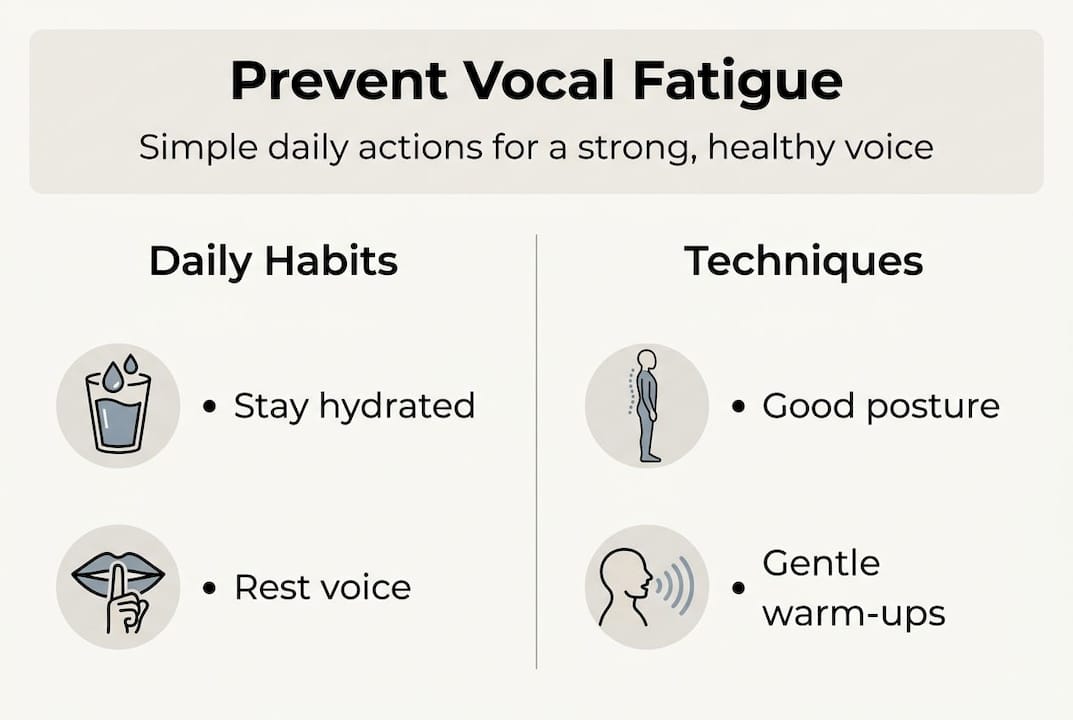
Pro Tip: Replace shouting across a room or competing with loud music during rehearsal with gesture signals or a simple hand-held amplifier. Protecting your voice in low-stakes moments preserves it for the moments that count.
For a full breakdown of evidence-based preparation, effective warm-up techniques walk you through the best options.
Even with perfect self-care, some situations require outside support. Knowing when to escalate is a sign of professional maturity, not weakness.
Seek evaluation from an ENT (ear, nose, and throat specialist) or a certified voice therapist if you experience:
Voice therapy is recommended for persistent or severe vocal fatigue in professionals, according to AAO-HNS consensus guidelines.
Voice therapy is not just for people with serious injuries. Many professionals use it proactively to build baseline vocal fitness, correct inefficient technique habits, and establish a measurable benchmark for their vocal health. Think of it the way elite athletes think about working with a physiotherapist: prevention and performance optimization, not just injury repair.
A skilled voice therapist will assess your vocal function, identify patterns of misuse or overuse, and design a program tailored to your performance demands. Regular check-ins, even just twice a year, can catch developing problems before they become career-threatening.
For guidance on finding the right support, medical experts for vocal health outlines what to look for in a qualified professional.
Here is an uncomfortable truth we see repeatedly in vocal health: most performers invest far more energy in recovery than in prevention. They push through fatigue, lose their voice, rest for a week, and repeat the cycle. It feels manageable until it is not.
Recovery is reactive. It costs you performances, income, and confidence. Prevention is proactive. It costs you 15 minutes of warm-up and a water bottle.
The myth that skilled professionals can always power through is genuinely dangerous. Technique does not make you immune to tissue damage. Even the most experienced singer can develop nodules if they consistently ignore fatigue signals.
Long-term prevention leads to more consistent performances, more bookings, and a career that extends well beyond the average. The performers who last decades are rarely the most talented. They are the most disciplined about protecting their instrument every single day.
The biggest barrier we hear is time. Prevention routines feel like an extra task when schedules are already full. But a 10-minute vocal nap and a humidifier in your room take almost no effort compared to two weeks of forced vocal rest and a cancelled tour. Understanding the keys to healing voices reinforces why building prevention habits now is always the smarter investment.
If you are dealing with ongoing vocal challenges or want to build a more structured approach to vocal health, you do not have to figure it out alone.

At TMRG Solutions, we have spent 25+ years developing natural, science-informed tools for singers, actors, and voice professionals who need reliable support. Whether you are managing early fatigue or recovering from a more serious vocal event, our resources are built for your specific demands. Explore our full range of vocal problems solutions to find targeted options for your situation. Our voice therapy kit brings professional-grade support into your daily routine, and our breath strengthener device helps build the respiratory foundation your voice depends on.
Common early signs include throat discomfort, loss of vocal range, and needing more effort to speak or sing than usual. Catching these early fatigue symptoms quickly gives you the best chance of a fast recovery.
No. Whispering increases vocal strain and should be avoided. Use a soft, low-volume full voice or opt for complete vocal rest instead.
Yes. Proper hydration keeps vocal folds flexible and less prone to friction-related damage, making it one of the simplest and most effective prevention strategies available.
If vocal fatigue persists despite adequate rest or is accompanied by pain, see an ENT or voice therapist promptly. Voice therapy is recommended for persistent or severe cases in voice professionals and should not be delayed.
