Your Cart is Empty


TL;DR:
- Your voice heals faster when you give it the right fuel. This guide focuses on the natural vocal repair formula — specific foods, herbal remedies, and hydration strategies that reduce inflammation and speed up recovery without medication.
A natural vocal repair formula is a structured combination of systemic hydration, vocal rest, and herbal remedies designed to soothe, protect, and restore vocal cord health without pharmaceuticals. Voice professionals, singers, teachers, and anyone dealing with hoarseness or vocal fatigue can benefit from this approach. The clinical term for this category of care is “conservative voice therapy,” and it sits alongside medical treatment as a first-line response to vocal strain. Systemic hydration and voice rest are recognized by the Mayo Clinic as primary non-pharmacological interventions. When you add the right herbal ingredients, you create a recovery environment that supports healing at the tissue level.
A natural vocal repair formula works through three interlocking pillars: hydration, rest, and targeted herbal support. Each pillar addresses a different layer of the problem. Hydration maintains the thin mucus film that keeps your vocal folds vibrating smoothly. Rest stops the mechanical trauma that prevents healing. Herbal ingredients coat, calm, and stimulate circulation in the irritated tissue.
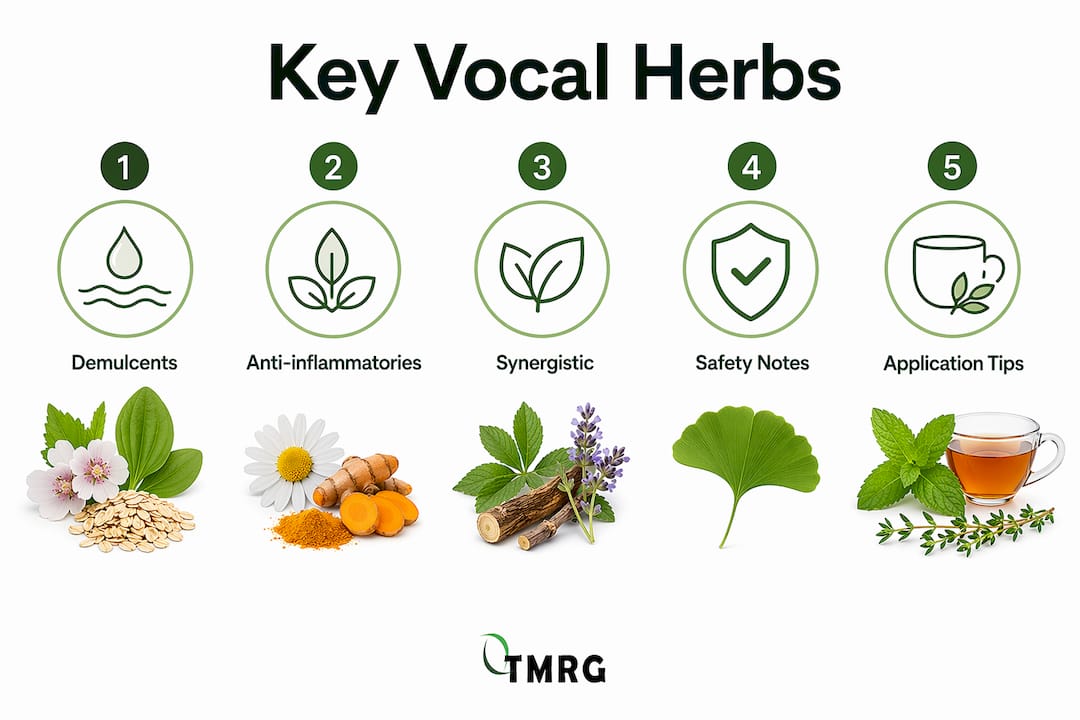
The herbal component divides into two functional groups:
Demulcent herbs coat and protect the mucous membranes lining your throat. Marshmallow and slippery elm are the most studied examples. They form a gel-like barrier that reduces friction and shields raw tissue from further irritation.
Anti-inflammatory herbs reduce swelling and improve blood flow to the vocal folds. Licorice, mullein, and cayenne work in this category. Cayenne in particular stimulates local circulation, which speeds tissue repair.
Antimicrobial botanicals address secondary infection and inflammation. Propolis, eucalyptus, thyme, and hedge mustard appear in many herbal throat sprays for this reason.
Voice rest protocols give the tissue time to respond to everything above. Without rest, even the best herbal formula fights an uphill battle.
Delivery format matters. Sprays and lozenges deliver ingredients directly to the throat surface, while tinctures and teas work more systemically. Using both formats together gives you local and whole-body coverage.
Pro Tip: Apply herbal sprays before speaking engagements, not just after. Pre-coating the throat reduces friction from the first word, not just after damage has accumulated.

Hydration is the single most important factor in vocal fold health. The vocal folds are covered by a thin mucus layer that allows them to vibrate up to 1,000 times per second without tearing. Dehydration thickens that mucus, increases friction, and forces the folds to work harder to produce sound. The result is faster fatigue and a higher risk of tissue injury.
The most effective hydration strategy follows these steps:
Drink water consistently throughout the day. Sipping steadily keeps the mucus layer thin and mobile. Large amounts consumed at once do not compensate for hours of dehydration.
Prioritize plain water over hot beverages. Hot teas and steam inhalation feel soothing but do not hydrate the vocal folds systemically. The steam never reaches the folds directly. Only water absorbed through your digestive system reaches the tissue.
Avoid alcohol and caffeine before heavy voice use. Both are diuretics. They pull water out of your system and dry the mucus layer faster than normal.
Use a humidifier in dry environments. Ambient humidity above 40% reduces the rate at which your vocal fold surface dries out during speaking or singing.
Schedule vocal rest intervals. Rest your voice 10 minutes for every 60 minutes of active use. This gives the tissue time to recover before fatigue compounds into injury.
Statistic callout: UT Southwestern Medical Center recommends resting the voice 10 minutes per hour of use to prevent tissue damage. That ratio is the same whether you are a professional singer or a classroom teacher.
Vocal rest does not mean whispering. Whispering actually strains the vocal folds more than normal speech because it requires them to hold a tense, partially open position. True vocal rest means silence or minimal, effortless speech.
The most effective herbal ingredients for vocal recovery fall into distinct functional roles. Understanding what each ingredient does helps you choose formulas that address your specific symptoms.
| Herb | Primary role | Key benefit |
|---|---|---|
| Marshmallow root | Demulcent | Coats and protects irritated mucous membranes |
| Slippery elm | Demulcent | Forms a soothing gel barrier on throat tissue |
| Licorice root | Anti-inflammatory | Reduces swelling and soothes vocal fold irritation |
| Mullein | Expectorant and anti-inflammatory | Clears mucus and calms airway inflammation |
| Cayenne | Circulatory stimulant | Increases blood flow to promote tissue repair |
| Propolis | Antimicrobial | Fights bacterial and viral irritation in the throat |
| Eucalyptus | Antimicrobial and decongestant | Opens airways and reduces surface inflammation |
| Thyme | Antimicrobial | Soothes throat irritation and supports immune response |
The synergy between demulcents and anti-inflammatories is what makes a formula effective rather than just temporarily soothing. Demulcents coat the surface, while anti-inflammatories work deeper in the tissue. Used together, they address both the symptom and the underlying cause.
One safety note on licorice: standard licorice root contains glycyrrhizin, which can raise blood pressure with prolonged use. Deglycyrrhizinated licorice (DGL) removes this compound and is the safer choice for daily use in vocal formulas. Look for DGL on the label if you plan to use a licorice-based product for more than two weeks.
Pro Tip: When evaluating any herbal vocal spray, check that it contains at least one demulcent and one anti-inflammatory ingredient. A formula with only soothing agents will not address the inflammation driving your hoarseness.
You can learn more about how these botanicals interact with the vocal system in Tmrgsolutions’ detailed guide on herbal medicine for vocal health.
Natural remedies work best when your daily habits stop adding new damage. Vocal hygiene is the set of behaviors that protect your voice from mechanical and chemical irritation. The two most impactful habits are avoiding throat clearing and managing acid reflux.
Throat clearing slams the vocal folds together with significant force. Doing it repeatedly throughout the day creates micro-trauma that accumulates faster than any herbal formula can repair. Replace throat clearing with a firm, silent swallow followed by a gentle hum. This clears mucus from the folds without the impact.
Reflux management is equally critical. Stomach acid that reaches the throat irritates the vocal folds directly, causing chronic inflammation that mimics vocal strain. Elevating the head of your bed, avoiding late meals, and limiting acidic foods reduces this exposure significantly.
Voice therapy with a speech-language pathologist takes vocal hygiene further by teaching you how to produce sound efficiently. Key benefits include:
Reduced vocal effort. Therapy teaches you to use airflow and resonance rather than muscular force to project your voice.
Stronger vocal muscles. Targeted exercises build the endurance of the muscles that control your vocal folds.
Better breath support. Diaphragmatic breathing reduces the strain placed on the folds during sustained speech or singing.
Habit correction. A therapist identifies specific behaviors, like speaking too loudly or at the wrong pitch, that are driving your vocal problems.
Standard voice therapy involves one 45-minute session per week for 4–6 weeks. That timeline produces measurable improvement in vocal production for most people. Combining therapy with a consistent herbal and hydration protocol shortens recovery time and reduces the chance of relapse. Tmrgsolutions offers voice therapy exercises specifically designed for people dealing with hoarseness.
Consistency separates people who recover from those who stay stuck in a cycle of strain and partial recovery. A daily routine does not need to be complicated. It needs to be repeatable.
Start the morning with water before coffee or tea. Your vocal folds dry out overnight. Rehydrating first thing sets the tone for the day and reduces morning hoarseness.
Apply a herbal throat spray or lozenge before and after voice-heavy activities. Natural herbal extracts used 4–6 times daily provide consistent relief and protection throughout the day.
Take a 10-minute voice break every hour. Set a timer if needed. This single habit prevents the cumulative fatigue that leads to vocal injury.
Practice one vocal hygiene habit each week until it becomes automatic. Start with eliminating throat clearing. Add reflux management the following week. Layering habits prevents overwhelm.
Track your voice quality each morning. Rate your hoarseness on a simple 1–10 scale. If your score does not improve within two weeks of consistent natural treatment, schedule an evaluation with an ear, nose, and throat specialist or a speech-language pathologist.
Knowing when to escalate care is part of responsible vocal self-management. Persistent hoarseness lasting more than two to three weeks, pain during speaking, or sudden voice loss all warrant professional evaluation. Natural voice recovery solutions work well for strain and fatigue. They are not a substitute for diagnosis when something more serious is present.
For a deeper look at building daily vocal habits that support long-term recovery, Tmrgsolutions has a practical guide written specifically for vocalists.
A natural vocal repair formula works only when hydration, rest, and herbal synergy operate together consistently, not as isolated remedies applied after damage has already peaked.
| Point | Details |
|---|---|
| Hydration is foundational | Drink water consistently throughout the day; hot teas and steam do not hydrate vocal folds systemically. |
| Rest prevents compounding damage | Rest your voice 10 minutes per hour of use to stop fatigue from becoming tissue injury. |
| Herbal synergy matters | Pair demulcent herbs like marshmallow with anti-inflammatory herbs like licorice for full-spectrum repair. |
| Vocal hygiene amplifies results | Eliminating throat clearing and managing reflux reduces irritation faster than any single remedy. |
| Therapy accelerates recovery | One 45-minute voice therapy session weekly for 4–6 weeks produces measurable vocal improvement. |
The most common mistake I see is treating a natural vocal repair formula as a rescue remedy rather than a daily practice. People reach for a herbal spray when their voice is already raw and expect it to work overnight. That is not how tissue repair works.
The vocal folds are delicate structures. They respond to consistent, gentle care over days and weeks, not to aggressive intervention in a single session. The singers and speakers who recover fastest are the ones who build hydration and herbal support into their routine before they need it, not after.
The hydration myth is the one I push back on most firmly. I have spoken with dozens of voice professionals who swear by hot honey lemon tea as their vocal repair secret. It feels good. It does not hydrate the vocal folds. Only water absorbed systemically does that. The tea is comfort, not medicine.
My honest recommendation is to treat your voice the way a physical therapist treats a recovering muscle. Consistent, low-intensity care beats sporadic high-intensity intervention every time. Add a quality herbal formula, respect your rest intervals, and get professional guidance if you are not improving. That combination works. Shortcuts do not.
— Golan
Tmrgsolutions has spent 25+ years developing natural vocal care products grounded in the same herbal and hydration principles covered here.

The TMRG Loud & Clear voice recovery drops and the Classic Voice Recovery Spray both use herbal formulations designed to soothe and restore vocal cords for singers, teachers, and speakers. For those who want a complete program, the TMRG Voice Therapy Kit Standard combines natural remedies with structured voice exercises in one package. Each product is built to fit into the kind of consistent daily routine that actually produces lasting results.
A natural vocal repair formula is a combination of systemic hydration, voice rest, and herbal ingredients like marshmallow, slippery elm, and licorice that work together to soothe and restore vocal cord health. It is the natural equivalent of conservative voice therapy.
Most people with vocal strain see improvement within one to two weeks of consistent hydration, rest, and herbal support. Persistent hoarseness beyond two to three weeks warrants evaluation by a specialist.
Yes, when they contain demulcent and anti-inflammatory ingredients. Herbal sprays used 4–6 times daily coat the throat surface and reduce inflammation, providing targeted relief that complements systemic hydration.
No. Whispering forces the vocal folds into a tense, partially closed position that creates more strain than normal, relaxed speech. True vocal rest means silence or minimal effortless talking.
See a doctor if hoarseness lasts more than two to three weeks, if you experience pain while speaking, or if you notice sudden or unexplained voice loss. Natural throat treatment supports recovery from strain but does not replace diagnosis for more serious conditions.
