Your Cart is Empty


TL;DR:
- Recognizing early signs of vocal cord injury and seeking prompt evaluation can prevent long-term damage. Protecting the voice through hydration, rest, and avoiding irritants is essential for voice health. Timely treatment, including voice therapy or surgery if needed, leads to better recovery outcomes.
Vocal cord injury awareness means recognizing when your voice is signaling damage to the vocal folds and knowing exactly what to do next. A vocal cord injury is any disruption to the structure or function of the vocal folds that changes how your voice sounds or feels. The two most important first steps are protecting your voice immediately and getting a proper evaluation before the problem compounds.
If you notice a voice change, act on these steps right away:
The term “vocal cord injury” covers a range of conditions affecting the vocal folds, the two bands of muscle and mucosa inside your larynx that vibrate to produce sound. Some are acute and reversible; others are structural and require intervention. Here are the most common types:
This guide focuses on common, noncancerous injuries. Malignant lesions (laryngeal cancer) are a separate and serious category; any progressive hoarseness in a smoker or heavy drinker warrants prompt ENT evaluation to rule them out.
Understanding the cause matters because it shapes both treatment and prevention. Most vocal cord injuries fall into one of several categories.
Behavioral and overuse causes are the most common. Prolonged talking, singing at the edge of your range, shouting at a game, or teaching six hours a day without amplification all create repetitive mechanical stress on the folds. Vocal lesions like nodules and polyps commonly form from this chronic misuse or from a single acute episode of voice abuse.
Iatrogenic (medically caused) injuries are underrecognized. Endotracheal intubation during surgery is a leading cause of acute vocal fold trauma, granulomas, and paresis. Neck and chest surgeries carry a risk of recurrent laryngeal nerve injury, which can cause paralysis. If your voice changed after a procedure, that timeline is the first thing to tell your clinician.
Medical and systemic causes include upper respiratory infections, chronic acid reflux (GERD), allergies, and neurological conditions such as stroke or Parkinson’s disease. GERD is particularly insidious because the acid reaches the larynx silently, without classic heartburn, and causes chronic inflammation.
Environmental and chemical irritants round out the picture: cigarette smoke, secondhand smoke, dry air, and medications that dehydrate the throat (antihistamines, diuretics, certain blood pressure drugs) all reduce the protective mucus layer that keeps the folds vibrating smoothly.
Pro Tip: When describing your symptoms to a clinician, note the exact onset: did the voice change appear the morning after a concert, or gradually over weeks, or immediately after waking up from surgery? That single detail often points directly to the cause and saves diagnostic time.
The most noticeable sign of a vocal fold problem is hoarseness or a raspy voice, but the full picture is broader. Common symptoms include:
Red flags that require urgent evaluation: Breathing difficulty or noisy, high-pitched breathing (stridor) at rest; sudden complete voice loss accompanied by difficulty swallowing; coughing or spitting blood; severe throat pain that worsens rapidly; or hoarseness that has been progressing steadily for more than two to three weeks. These symptoms can indicate hemorrhage, airway compromise, or a serious structural problem. Do not wait for a scheduled appointment — go to an emergency room or contact an ENT the same day.
Tracking your symptoms helps your clinician significantly. Note when the change started, what you were doing in the hours before (a long presentation, a flight, a night of singing), whether it improves with rest, and whether it is getting worse. A short voice recording on your phone, made when symptoms are at their worst, gives the SLP or ENT a baseline that no verbal description can fully replace.
Timing your care correctly can mean the difference between a conservative fix and a surgical one. Here is a clear framework:
Expect a structured evaluation that combines direct visualization with functional assessment. Knowing what is coming helps you prepare and get more from the visit.
The standard first step is in-office laryngoscopy, usually flexible nasolaryngoscopy: a thin, flexible scope passes through the nose to give the ENT a real-time view of the folds. Stroboscopy adds a strobe light that slows the apparent vibration of the folds, revealing subtle stiffness, asymmetry, or lesions invisible under steady light. These two tools together identify most structural problems.
A speech-language pathologist assesses voice quality through perceptual rating scales, acoustic measurements (pitch, loudness, voice quality), and aerodynamic tasks. The SLP also observes posture, breathing mechanics, and speaking habits that contribute to strain. This evaluation shapes the therapy plan and establishes a baseline for tracking progress.
CT or MRI scans are ordered when a neurological cause (nerve compression, tumor, stroke) is suspected or when the laryngoscopy suggests a lesion extending beyond the fold surface. Blood work may be added if infection, thyroid disease, or a systemic inflammatory condition is on the differential.
Come with a written symptom log (onset date, triggers, pattern), a list of recent surgeries or intubations with dates, your full medication list, and a note about your vocal demands (hours of teaching, performance schedule). A voice recording made when symptoms are worst is worth more than any verbal description.
Treatment follows the injury type and severity. The general principle is to start conservatively and escalate only when needed.

| Injury Type | First-Line Treatment | When to Escalate |
|---|---|---|
| Acute laryngitis | Voice rest, hydration, treat infection if present | Symptoms beyond two to three weeks |
| Vocal nodules | Voice therapy, behavioral change, reflux control | Surgery rarely needed; after two to six months of failed therapy |
| Vocal polyps | Voice therapy; many require microflap excision | Most polyps need surgery |
| Vocal cysts | Surgery (microflap excision) | First-line in most cases |
| Hemorrhage | Complete voice rest, urgent ENT follow-up | Surgical drainage if resorption fails |
| Paresis/paralysis | Voice therapy, observation up to one year | Injection medialization or thyroplasty if persistent |
Conservative care is first-line for most benign lesions. Voice therapy with an SLP addresses the behavioral patterns that caused the injury, teaches efficient phonation, and reduces compensatory muscle tension. Nodules usually improve within two to six months with voice therapy and vocal rest; most people do not require surgery. Treating underlying contributors such as reflux, allergies, and sinusitis is a standard part of non-surgical plans and reduces recurrence.
Medical and procedural options include steroid injections to reduce inflammation, viscous lidocaine for temporary relief, laser procedures for papillomas or small lesions, and phonosurgery (microflap excision) for polyps and cysts. Vocal fold paralysis that does not resolve spontaneously may be treated with injection medialization (a filler material to bulk the paralyzed fold) or a more permanent thyroplasty procedure.
Surgery is considered for large polyps, cysts, persistent lesions that have not responded to several months of therapy, or structural problems that prevent adequate vibration. After any procedure, voice therapy is still required to retrain patterns and minimize scar formation.
One important caution: untreated benign lesions can cause secondary damage because people unconsciously strain their voices to compensate for quality changes. Early therapy breaks that cycle before a minor lesion becomes a complex one.
Recovery timelines vary widely by injury type, and setting realistic expectations early prevents people from returning to full voice use too soon.
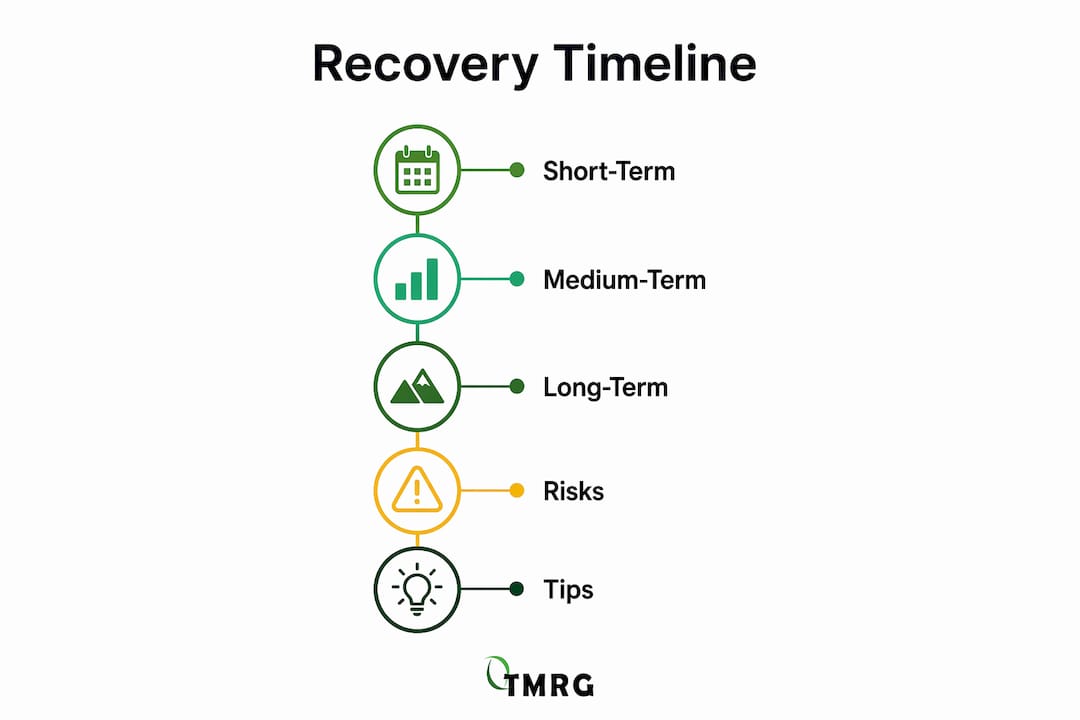
Short-term recovery (days to two to three weeks): Acute laryngitis and mild vocal strain typically resolve with rest, hydration, and removal of the irritant. Most people notice meaningful improvement within one to two weeks.
Medium-term recovery (two to six months): Nodules frequently improve over this window with consistent voice therapy and behavioral change. Polyps and cysts generally require surgery, after which the fold heals over several weeks before voice therapy resumes.
Long-term recovery (months to one year): Vocal cord paresis or paralysis may recover spontaneously within one year in some patients, particularly when caused by a viral illness or surgical stretch injury. Others require voice therapy or surgical intervention if the nerve does not regenerate adequately. Waiting up to a year before permanent surgical correction is standard practice when the cause is reversible.
Factors that worsen the outlook include ongoing acid reflux, continued voice overuse during recovery, smoking, delayed care, and poor hydration. Addressing these modifiable factors is not optional; they directly affect whether tissue heals cleanly or scars.
Prevention is far less disruptive than treatment. Most vocal cord injuries are avoidable with consistent daily habits and a few workplace adjustments.
Daily vocal hygiene habits:
Workplace and performance strategies:
Lifestyle measures:
Pro Tip: A simple warm-up for speakers and singers: start with five minutes of gentle humming at a comfortable pitch, then slide slowly from low to high and back. Pair it with two large glasses of water in the hour before any heavy voice demand. This combination reduces friction and primes the folds for sustained use.
For a step-by-step daily routine, the vocal hygiene guide at Tmrgsolutions walks through each habit in practical detail.

Evidence supports a clear set of home measures, and it also exposes a few popular habits that do more harm than good.
What helps:
What does not help or may cause harm:
The stop signal for self-care is clear: if you develop worsening breathlessness, cough up blood, experience severe pain, or see no improvement after two weeks of appropriate self-care, stop managing this at home and see an ENT. Voice therapy is highly effective for nodules and early lesions, but it works alongside clinical diagnosis, not instead of it.
Proper vocal cord hydration is one of the most consistently supported home measures across clinical guidance from institutions including the NIDCD and National Jewish Health.
Early recognition and timely clinical evaluation are the two actions most likely to prevent minor vocal cord injuries from becoming structural, long-term problems.
| Point | Details |
|---|---|
| Apply the two to three week rule | Hoarseness persisting beyond two to three weeks requires ENT evaluation and laryngoscopy, not just rest. |
| Voice therapy before surgery | Nodules typically improve with consistent voice therapy over time; surgery is rarely the first step. |
| Paresis recovery window | Some cases of paresis or paralysis resolve spontaneously within one year; early therapy improves outcomes. |
| Daily prevention habits | Hydration, vocal rest (10 minutes per hour of heavy use), and reflux control reduce injury risk significantly. |
| Tmrgsolutions support | TMRG voice recovery drops, sprays, and therapy kits offer evidence-aligned home support as adjuncts to clinical care. |
Most people treat their voice the way they treat their vision: they ignore it until something goes wrong. By then, a problem that would have responded quickly to a week of voice therapy has often become a lesion requiring surgery, or a paresis that has been compensated for so long that secondary muscle tension has layered on top of the original injury.
What strikes me most in reviewing the clinical literature and the patterns that emerge from voice professionals is how consistently early action changes the outcome. The two-week threshold for ENT evaluation is not arbitrary; it reflects the window in which most benign lesions are still functionally reversible. Waiting three or four months because the voice “comes and goes” is exactly how nodules become cysts and how paresis becomes a permanent functional deficit.
The multidisciplinary model, ENT plus SLP working together, is genuinely superior to either alone. The ENT identifies the structural problem; the SLP addresses the behavioral patterns that caused it and will cause it again if left unchanged. Neither role is optional for a lasting result. Voice professionals, in particular, benefit from building a relationship with both before an injury forces the issue.
The broader cultural shift worth advocating for is routine vocal hygiene, not just reactive care. Vocal health awareness is still treated as a niche concern for singers when it should be standard guidance for teachers, lawyers, clergy, and anyone whose livelihood depends on clear communication. Your voice is not a luxury feature. Treat it accordingly.
When your ENT or SLP has given you a care plan, the right home products can make daily adherence easier and more comfortable. Tmrgsolutions has spent 25+ years formulating vocal health products specifically for singers, teachers, actors, and voice professionals who need reliable daily support between clinical visits.

For short-term lubrication and soothing during recovery, the TMRG Loud & Clear Voice Recovery Drops and TMRG Shine Bright Voice Recovery Spray are designed to support surface hydration and temporary relief. The TMRG Defense Oils and Saline Spray adds a protective layer for those dealing with dryness from reflux, medications, or dry environments. For structured at-home rehabilitation, the TMRG Voice Therapy Kits (available in Basic, Standard, and Premium tiers) provide guided exercises and tools that complement SLP-directed therapy.
These products are supportive adjuncts to clinical care, not replacements for ENT evaluation or professional voice therapy. If you are managing an active injury, get the clinical diagnosis first. Then visit tmrgsolutions.com to find the kit or product that fits your recovery stage.
The following organizations and resources provide reliable, evidence-based information on vocal cord health and disorders:
This article is general health information, not medical advice. Confirm current clinical recommendations with a qualified ENT or speech-language pathologist for your specific situation.
Many vocal cord injuries, including acute laryngitis and mild strain, resolve within days to two weeks with voice rest and hydration. Structural lesions like nodules often improve over two to six months with voice therapy, while cysts and large polyps typically require surgery.
Mild strain usually clears within one to two weeks with rest and hydration. If hoarseness persists beyond two to three weeks, an ENT evaluation is needed to rule out a structural lesion or nerve injury.
The most evidence-supported home measures are short-term voice rest, consistent hydration, humidified air, and treating underlying reflux or allergies. Replace throat clearing with a sip of water, and use a soft conversational tone rather than whispering. Tmrgsolutions’s recovery drops and sprays can support surface hydration as part of this routine.
Most common injuries, including nodules, polyps, and paresis, are reversible or significantly improvable with appropriate treatment. Nodules frequently resolve with voice therapy alone. Some cases of paresis recover spontaneously within one year. Scarring and long-standing structural damage are harder to reverse, which is why early evaluation matters.
The most common sensations are a rough or breathy voice, throat tightness, vocal fatigue after short periods of speaking, and a persistent urge to clear the throat. Singers often notice loss of high notes or increased warm-up time before the speaking voice shows obvious changes.
