Your Cart is Empty


Many professional voice users believe voice therapy is reserved for severe cases or post-surgical recovery. This misconception prevents early intervention that could prevent long-term damage and sustain vocal careers. Voice therapy combines targeted exercises with behavioral changes to restore and enhance vocal function naturally, often delivering results within weeks. This article reveals the science, techniques, and natural remedies that make voice therapy an essential tool for singers, actors, and lecturers seeking sustainable vocal health.
| Point | Details |
| Voice therapy rehabilitates function | Targeted exercises and behavioral changes restore vocal health naturally without invasive procedures. |
| Results appear within weeks | Consistent therapy yields improvements in 4-8 weeks for most voice users. |
| Natural remedies enhance outcomes | Herbal supplements reduce recovery time by approximately 30% when combined with therapy. |
| Early intervention prevents damage | Up to 70% of voice disorders stem from improper use that therapy effectively corrects. |
Voice therapy encompasses structured behavioral interventions and exercises designed specifically to improve vocal health and function. Unlike surgical approaches that physically alter vocal structures, therapy retrains how you use your voice to eliminate strain and restore optimal performance.
The primary goals center on restoring vocal function, reducing physical strain during phonation, and enabling sustainable voice use for demanding professional contexts. For singers, actors, and lecturers who depend on precise vocal control and endurance, therapy provides systematic solutions that address the root causes of vocal fatigue and dysfunction.
Key components of effective voice therapy include:
Comprehensive vocal assessment identifying specific dysfunction patterns and contributing factors
Education about healthy voice production, vocal hygiene, and behaviors that damage vocal folds
Targeted exercises addressing breathing, phonation, resonance, and muscle coordination
Ongoing monitoring and adjustments tailored to individual recovery progress and professional demands
Behavioral retraining to eliminate harmful habits like excessive throat clearing, shouting, or speaking at inappropriate pitch levels
Voice therapy succeeds by correcting habitual misuse patterns that cause chronic vocal issues. Rather than masking symptoms, therapy rebuilds fundamental vocal skills and establishes sustainable practices that protect your voice throughout your career.
Voice therapy enhances vocal fold vibration and closure, leading to improved sound quality and reduced breathiness. These improvements occur through systematic retraining of the intricate muscle systems controlling phonation, allowing vocal folds to meet smoothly and vibrate efficiently with minimal effort.
Therapy directly reduces vocal fold strain and associated swelling that manifest as hoarseness, fatigue, and diminished range. By correcting hyperfunctional patterns where excessive muscle tension constricts the larynx, exercises restore balanced muscle activation and eliminate unnecessary force during voice production.
Muscle tension dysphonia, a common disorder among professional voice users, responds particularly well to behavioral retraining through voice therapy. The condition involves excessive laryngeal and extrinsic muscle contraction that disrupts normal phonation. Targeted relaxation exercises and phonation techniques realign muscle coordination, allowing natural, efficient sound production.
“Patients completing six weeks of structured voice therapy demonstrated an average 50% improvement in vocal clarity and a 40% reduction in perceived effort during sustained phonation tasks.”
These physiological changes translate directly to practical benefits. Improved vocal fold closure eliminates air wastage, extending breath support and vocal endurance. Reduced swelling and inflammation accelerate healing of existing damage while preventing future injury. Corrected muscle patterns eliminate the chronic fatigue that limits performance quality and duration.
Professional voice users gain specific advantages from understanding these mechanisms. Recognizing how voice therapy benefits vocalists through measurable physiological improvements empowers informed decisions about treatment approaches and realistic goal setting for recovery timelines.
The belief that voice therapy applies only to severe dysfunction or surgical recovery prevents countless professionals from accessing effective early intervention. In reality, therapy delivers optimal results when implemented at the first signs of vocal strain, before chronic damage develops and requires more aggressive treatment.
Many assume voice therapy demands months or years to produce noticeable changes. Evidence contradicts this misconception. Most patients report significant improvements within 4-8 weeks of consistent practice, with many experiencing relief from acute symptoms even sooner.
Several persistent myths prevent professionals from leveraging therapy effectively:
Therapy is a last resort before surgery, when it actually prevents surgical intervention in most cases
Results require extensive time commitments, though 15-20 minutes daily often suffices for substantial progress
Voice therapy cannot address performance enhancement, despite proven benefits for healthy voices seeking greater control
Professional guidance is optional, when self-directed approaches frequently reinforce harmful patterns
Confusion between voice therapy and surgical solutions creates unnecessary hesitation. Surgery physically alters vocal structures to address lesions, nodules, or structural abnormalities. Therapy retrains the behavioral patterns causing chronic strain and damage. Up to 70% of voice disorders stem from improper use that therapy effectively corrects without invasive procedures.
Adherence determines success rates more than any other factor. Sporadic practice yields minimal benefit, while consistent daily exercises produce reliable improvements within the documented timeframes.
Pro Tip: Schedule therapy exercises at the same time each day, treating them as non-negotiable appointments. This consistency builds habits that persist beyond initial recovery, protecting your voice long-term.
Effective voice therapy incorporates multiple evidence-based techniques addressing different aspects of vocal function. Gentle vocal warm-ups prepare the voice for professional use by gradually engaging vocal folds and surrounding muscles without strain. These typically include humming, lip trills, and sirens across comfortable pitch ranges.
Breathing control exercises establish the foundation for efficient phonation. Diaphragmatic breathing provides steady, controlled airflow that supports vocal fold vibration without excessive pressure. Exercises focus on extending breath capacity, controlling exhalation rate, and coordinating breath with phonation onset.
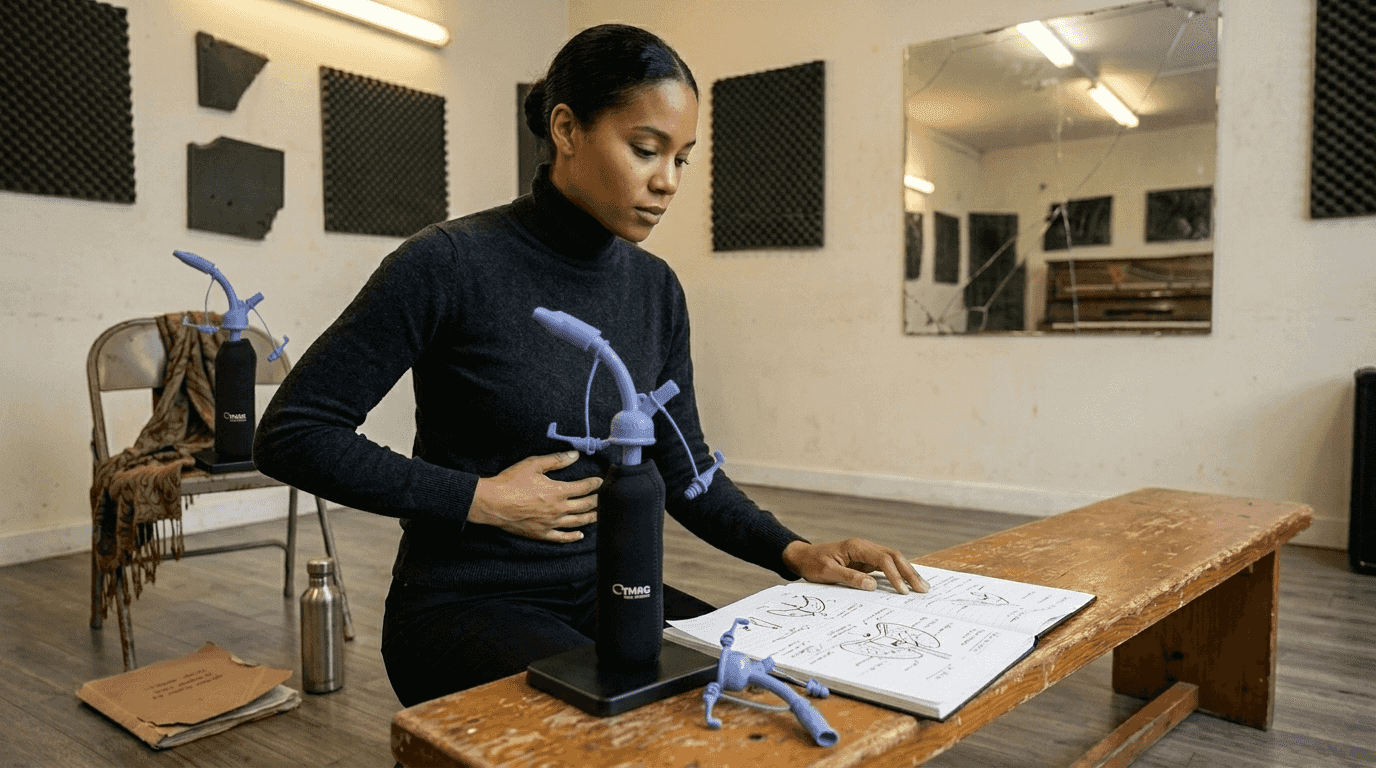
Phonation exercises target vocal fold closure and vibration patterns. Techniques like semi-occluded vocal tract exercises create back pressure that facilitates easier, more efficient sound production. Resonance work optimizes vocal tract shaping to amplify sound naturally without increased laryngeal effort.
Vocal hygiene education addresses lifestyle factors that impact voice health:
Maintaining consistent hydration to keep vocal fold tissue supple and reduce friction
Implementing strategic vocal rest periods during demanding performance schedules
Eliminating behaviors like throat clearing, excessive coughing, and speaking over noise
Managing environmental factors including air quality, humidity, and allergen exposure
A typical therapy progression follows these sequential steps:
Comprehensive assessment documenting vocal quality, range, endurance, and dysfunction patterns
Education session explaining vocal anatomy, healthy production, and identified problem areas
Introduction of foundational exercises targeting breathing, relaxation, and basic phonation
Gradual addition of advanced techniques addressing specific dysfunction and performance goals
Monitored return to professional voice use with ongoing assessment and exercise adjustment
Maintenance protocols establishing long-term practices preventing recurrence
Multidisciplinary approaches involving speech-language pathologists, vocal coaches, and medical professionals deliver comprehensive care addressing both therapeutic and artistic aspects of voice use. This collaboration ensures exercises support rather than conflict with performance technique.
Exploring essential vocal recovery exercises and understanding the complete vocal recovery process helps professionals implement therapy effectively. The advanced vocal recovery guide provides additional techniques for specific performance contexts.
Natural remedies complement voice therapy by addressing inflammation, tissue hydration, and healing processes that support vocal fold recovery. Herbal formulations containing anti-inflammatory compounds reduce swelling that impairs vocal fold vibration and closure, accelerating the physiological improvements therapy exercises target.
Combining structured therapy with evidence-based natural products reduces recovery time by approximately 30% compared to exercises alone. This enhancement occurs through multiple mechanisms: improved tissue hydration maintains vocal fold pliability during exercise, anti-inflammatory effects reduce exercise-induced irritation, and soothing compounds protect healing tissue from environmental stressors.
Professional voice users increasingly prefer non-invasive, holistic approaches that align with natural body processes. This preference reflects both philosophical orientation toward wellness and practical concerns about medication side effects that might affect performance or vocal quality.
| Approach | Invasiveness | Recovery Time | Risk Level | Cost Range | Long-term Outcome |
| Voice Therapy Alone | Non-invasive | 6-8 weeks | Minimal | Low | Excellent with adherence |
| Therapy + Natural Remedies | Non-invasive | 4-6 weeks | Minimal | Moderate | Superior healing quality |
| Surgical Intervention | Invasive | 3-6 months | Moderate to high | High | Variable, requires therapy |
The comparison reveals clear advantages of conservative approaches combining therapy with natural support. Even when surgery becomes necessary, post-operative recovery requires voice therapy, making behavioral retraining essential regardless of treatment path.
Key considerations when integrating natural remedies:
Select products with documented anti-inflammatory and moisturizing properties specific to vocal tissue
Use remedies as complementary support, never replacing core therapy exercises and behavioral changes
Consult with voice professionals to ensure compatibility with prescribed therapy protocols
Monitor individual responses, as natural products affect users differently
The herbal vocal recovery kit exemplifies integrated approaches combining pharmaceutical-grade herbal formulations with therapy support tools.
Pro Tip: Apply natural remedies consistently throughout your therapy program, not just when symptoms worsen. This steady support maintains optimal tissue conditions for healing and prevents setbacks that extend recovery timelines.
Over 80% of patients report significant voice improvements after 6 weeks of consistent therapy, with many noticing changes within the first 2-3 weeks. These statistics reflect outcomes from structured programs combining professional guidance with diligent home practice.
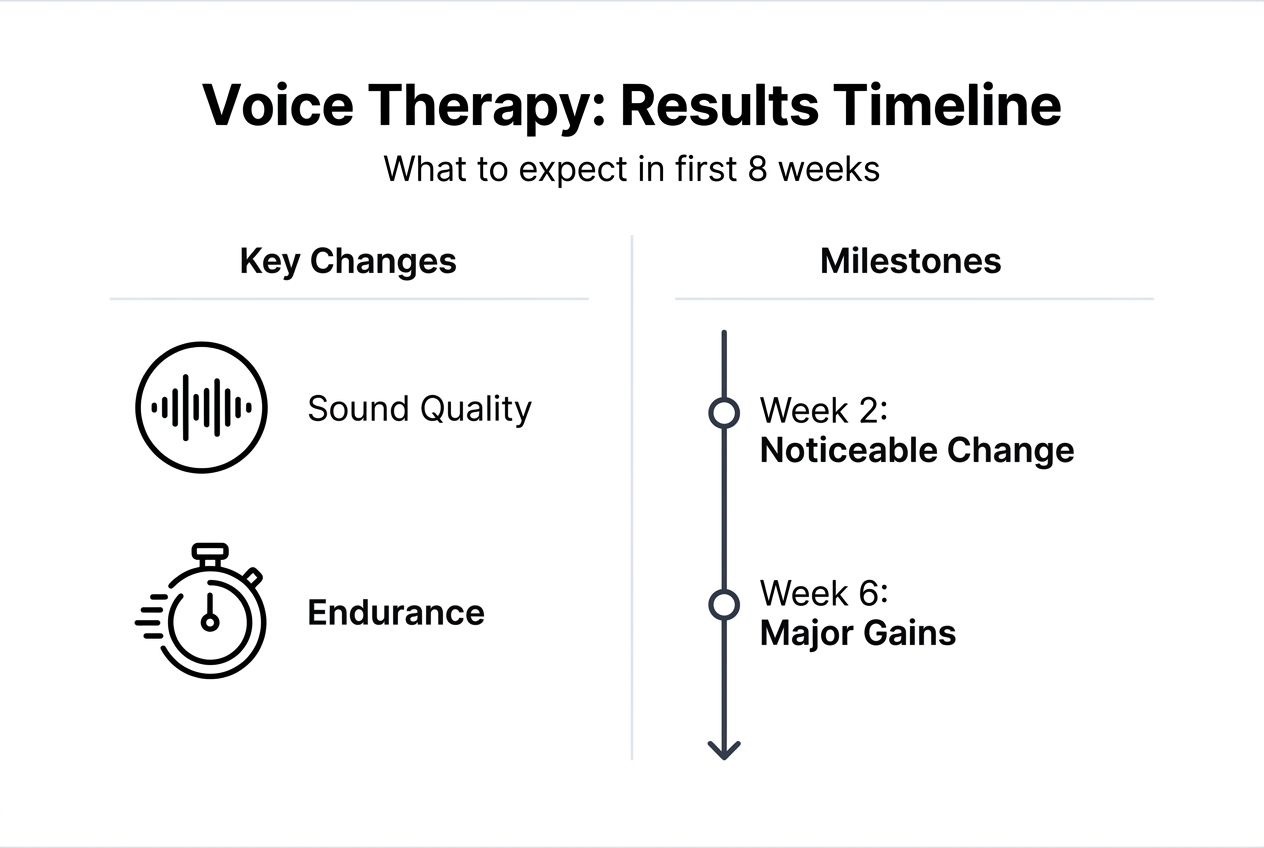
Typical improvement timelines vary based on condition severity and adherence quality. Acute vocal strain from temporary overuse often resolves within 2-4 weeks. Chronic conditions like muscle tension dysphonia require 6-8 weeks for substantial improvement. Complex disorders involving vocal fold lesions may need 8-12 weeks of therapy before and after surgical intervention.
| Condition Type | Average Therapy Duration | Expected Improvement | Key Success Factors |
| Acute Vocal Strain | 2-4 weeks | 70-80% symptom reduction | Rest, hydration, gentle exercises |
| Muscle Tension Dysphonia | 6-8 weeks | 60-75% function restoration | Consistent practice, relaxation focus |
| Vocal Nodules (conservative) | 8-12 weeks | 50-70% reduction | Strict adherence, behavioral change |
| Post-surgical Recovery | 6-10 weeks | 80-90% function return | Professional guidance, gradual progression |
Case studies document impressive recovery trajectories. A professional lecturer with chronic hoarseness achieved 65% improvement in vocal clarity and 80% reduction in fatigue after 7 weeks of therapy combining breathing exercises, resonance work, and vocal hygiene modifications. A musical theater performer eliminated nodules through 10 weeks of therapy, avoiding surgery entirely.
Several variables influence individual timelines. Severity at therapy initiation matters significantly, as early intervention prevents compensatory patterns that complicate recovery. Compliance with daily exercises and vocal hygiene recommendations directly correlates with outcome quality and speed. Integration of supportive measures like natural remedies, adequate sleep, and stress management accelerates healing processes.
Professional voice demands affect recovery pace. Users who can implement strategic rest periods progress faster than those maintaining heavy performance schedules. However, complete voice rest beyond initial acute phases often proves counterproductive, as controlled, therapeutic voice use promotes healthy healing patterns.
Realistic expectations based on these timelines help maintain motivation through the therapy process. Understanding that initial changes may feel subtle, with dramatic improvements accumulating over weeks, prevents premature discontinuation that undermines potential success.
Consistent adherence to prescribed therapy exercises and vocal hygiene practices determines success more than any other factor. Treat daily exercise sessions as essential professional development, equivalent to technical skill practice or repertoire preparation. This mindset shift transforms therapy from optional healthcare to core career maintenance.
Customized therapy plans tailored to individual vocal demands, dysfunction patterns, and performance contexts deliver superior outcomes compared to generic protocols. A classical singer requires different exercise emphasis than a trial attorney or radio broadcaster. Work with qualified voice professionals who understand your specific professional requirements and can adapt therapy accordingly.
Effective therapy integration follows this systematic approach:
Obtain comprehensive evaluation from a speech-language pathologist specializing in voice to identify specific dysfunction patterns and contributing factors
Participate in education sessions establishing clear understanding of healthy voice production and behaviors requiring modification
Implement daily exercise routines of 15-20 minutes, ideally divided into morning and evening sessions for optimal tissue conditioning
Maintain detailed practice logs tracking exercise completion, vocal quality changes, and symptom patterns to guide ongoing adjustments
Schedule regular follow-up assessments every 2-3 weeks to document progress and refine therapy protocols
Execute gradual return to full professional voice use, progressively increasing duration and intensity while monitoring for strain indicators
Establish long-term maintenance practices preventing recurrence once acute symptoms resolve
Combining therapy with education about harmful behaviors creates lasting change. Understanding why specific patterns damage your voice motivates consistent adherence more effectively than simple instruction to avoid them. Lifestyle adjustments addressing sleep quality, stress management, and overall health support vocal recovery by optimizing the body’s healing capacity.
Progress tracking provides tangible evidence of improvement that sustains motivation through challenging phases. Record weekly voice samples performing standardized tasks like reading passages or singing scales. Review these recordings monthly to hear changes that daily exposure might obscure.
Pro Tip: Schedule therapy exercises during your peak energy periods when concentration and motor control are optimal. Quality practice matters more than quantity, and fatigued execution often reinforces rather than corrects dysfunction patterns.
Exploring comprehensive guidance on vocal recovery for peak health provides additional frameworks for implementing these best practices effectively throughout your professional career.
Translating voice therapy knowledge into practice requires quality tools and resources designed specifically for professional voice users. TMRG Solutions offers tiered voice therapy kits combining targeted exercises with pharmaceutical-grade natural remedies that optimize vocal recovery and performance enhancement.

The voice therapy kit basic provides essential components for implementing foundational therapy protocols, while the voice therapy kit standard adds advanced formulations supporting intensive recovery programs. For professionals requiring comprehensive solutions, the premium voice therapy kit delivers complete integration of therapeutic exercises with natural remedies proven to accelerate healing and enhance outcomes. Each kit reflects 25+ years of expertise in vocal health, offering practical tools that complement the evidence-based principles explored throughout this article.
Voice therapy is a treatment approach using targeted exercises and behavioral modification to restore and enhance vocal function without invasive procedures. Professional voice users experiencing strain, hoarseness, diminished range, or vocal fatigue benefit most from structured therapy programs. The approach serves both preventive and rehabilitative purposes, making it valuable for early symptoms as well as chronic conditions that threaten vocal careers.
Most patients notice measurable voice improvements within 4-8 weeks of consistent therapy practice, with some experiencing relief from acute symptoms within 2-3 weeks. Adherence to prescribed exercise routines and vocal hygiene modifications critically determines progress speed. Chronic conditions may require 8-12 weeks for substantial restoration, while maintenance continues indefinitely to prevent recurrence.
Natural remedies support voice recovery through anti-inflammatory effects and tissue hydration but cannot replace the behavioral retraining foundation of voice therapy. They work most effectively as complementary components within integrated therapy plans prescribed by qualified voice professionals. Exercises address the root causes of dysfunction while remedies optimize tissue conditions for healing and exercise effectiveness.
Vocal warm-ups, diaphragmatic breathing techniques, phonation control exercises, and resonance work consistently demonstrate effectiveness across various voice disorders. Semi-occluded vocal tract exercises using straws or specialized devices create ideal conditions for efficient vocal fold vibration. Education about vocal hygiene accompanying these exercises prevents behaviors that undermine recovery progress. Exploring essential vocal recovery exercises provides detailed guidance on implementing these techniques correctly for optimal outcomes.
