Your Cart is Empty


If your voice goes hoarse every allergy season, you’re not alone. Allergies trigger inflammation and post-nasal drip that directly affects your vocal cords. This guide explains exactly how allergies cause hoarseness and what singers can do right away to protect and restore their voice.
Hydrate every hour, not just when you feel thirsty
Saline nasal rinse once or twice today
Humidify your bedroom overnight
Avoid first-generation antihistamines if you can help it; they dry the vocal folds further
Watch for this: a population-based study of 1,220 respondents found that people with diagnosed respiratory allergies reported hoarse or low voice and other vocal symptoms significantly more often than nonallergic people, with higher voice handicap scores overall.
Allergies cause hoarseness mainly through postnasal drip and direct laryngeal inflammation, and both respond well to nasal hygiene, hydration, and voice-protective habits within about two weeks.
| Point | Details |
|---|---|
| Allergies commonly cause hoarseness | Postnasal drip and direct laryngeal inflammation are the two leading mechanisms behind allergy voice. |
| Start with nasal hygiene | Saline rinses and humidification reduce the mucus load reaching your vocal folds before medication is needed. |
| Watch behavior, not just triggers | Throat clearing and whispering strain the vocal folds more than the allergy itself in many cases. |
| Know the two-week rule | Hoarseness lasting beyond two weeks, or paired with breathing or swallowing trouble, needs a clinician evaluation. |
| Consider adjunctive support | Tmrgsolutions offers drops and protection kits like Loud & Clear and the Defense and Protection Duo alongside clinical allergy care. |
This article is general information, not a substitute for advice from a qualified doctor. Consult a qualified healthcare professional about your own circumstances before acting on anything here.
Your larynx sits at the bottom of the same airway your nose and sinuses occupy, which is why ENT specialists talk about a “unified airway.” Inflammation that starts in your nasal passages doesn’t always stay there. A review on allergic laryngitis describes how allergic sensitization belongs in the differential diagnosis for chronic laryngitis, not just seasonal congestion.
Three mechanisms usually work together:
Postnasal drip sends thick mucus down the back of your throat and onto your vocal folds, where it dries and coats them unevenly, disrupting smooth vibration.
Direct allergic inflammation in the laryngeal tissue itself causes mild swelling, or edema, which thickens the vocal folds and lowers or roughens your pitch.
Medication side effects compound the problem. First-generation antihistamines and some decongestants dry the laryngeal surface, and a drier vocal fold vibrates less efficiently, which often makes hoarseness worse rather than better.
Behavior adds a fourth layer. Frequent throat clearing feels like it clears the mucus, but it actually slams your vocal folds together at high force, according to ENT guidance from Providence ENT, which worsens the very swelling you’re trying to relieve.
Pro Tip: Swallow instead of clearing your throat. It moves mucus along without the impact trauma, and it’s a habit you can build in a day.
Reflux (LPR) and viral laryngitis produce overlapping symptoms, which is exactly why tracking timing and triggers matters so much in the next section.
Your voice tells a story if you listen to the pattern, not just the symptom.
Your voice starts fine and degrades through the day, especially after time outdoors or in a dusty room, rather than waking up rough.
Other allergy signs ride along: sneezing, itchy or watery eyes, nasal congestion, and a seasonal or environmental trigger you can usually name.
You clear your throat constantly, feel a lump sensation (globus), or notice a low, mucus-driven cough that isn’t productive.
Your voice responds when allergy symptoms calm down, often within days of starting nasal treatment.
Red flags that push this beyond simple allergy: hoarseness lasting more than two weeks, pain when swallowing, breathing difficulty, unexplained weight loss, or a lump in the neck. Those warrant a clinician visit, not another week of home care, per Mayo Clinic’s guidance on laryngitis.
Hoarseness has several look-alike causes, and clinicians separate them using a handful of practical clues.
Timing: allergy symptoms track with pollen counts or specific exposures; reflux tends to worsen after meals or lying flat; infection comes with a sudden onset and often a fever.
Mucus character: allergic laryngitis usually presents with thin, watery, or thick postnasal drainage visible on laryngoscopy, while LPR shows redness and swelling concentrated near the vocal folds without the same drainage pattern.
Response to treatment: hoarseness that improves after a nasal steroid trial points toward allergy; hoarseness unaffected by allergy treatment but responsive to acid suppression points toward reflux.
An ENT typically performs laryngoscopy to see the vocal folds directly, while an allergist runs skin or IgE testing to confirm and characterize the allergic trigger. Many patients have more than one factor at once. A singer with seasonal allergies and mild reflux needs a plan that addresses both, not a single diagnosis that explains everything.
Sequence matters here more than any single remedy.
Start with nasal hygiene. Saline rinses flush allergens and reduce the mucus load reaching your larynx, a point echoed by the Center for Vocal Health. Pair it with steam inhalation and a humidifier running while you sleep.
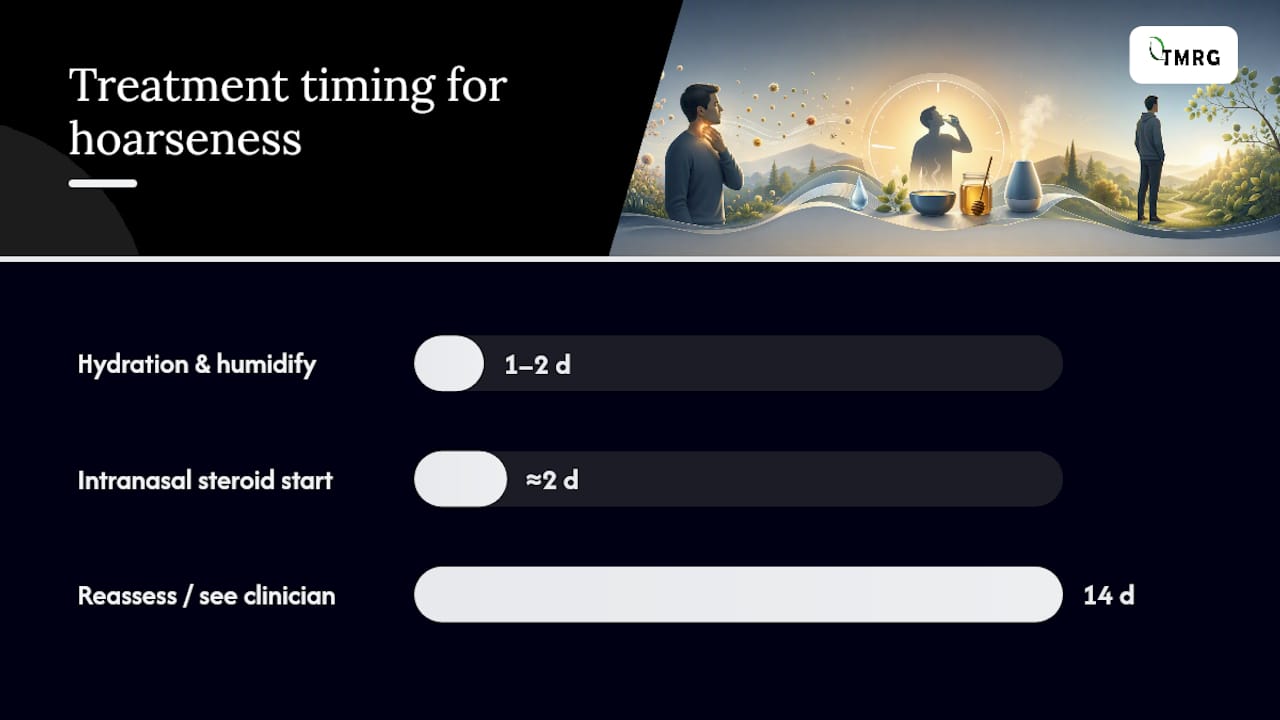
Hydrate consistently, not in one large dose. Thin, well-hydrated mucus moves more easily than thick, sticky mucus that clings to the vocal folds. Simple hydration habits make a measurable difference within a day or two.
Add an intranasal steroid spray if congestion and drip persist past a couple of days. It works at the source rather than drying the throat the way oral antihistamines can.
Choose oral antihistamines carefully. Non-drowsy, second-generation options control symptoms with less drying effect than first-generation formulas, though even these warrant caution for anyone using their voice heavily that week.
Protect your voice mechanically: skip whispering (it strains the cords more than normal speech), reduce total speaking time, and avoid smoke or strong fragrances.
Give it two weeks. If nasal hygiene and humidification plus a nasal steroid haven’t moved the needle by then, see a clinician rather than escalating home remedies further.
Oral corticosteroids belong to clinicians only, reserved for cases where inflammation is significant enough to need a short, supervised course.
Pro Tip: A step-by-step recovery routine built around rest and hydration works better than any single “quick fix,” because hoarseness from allergies rarely has one cause.
Small daily habits do more than dramatic interventions once symptoms have already started.
Check pollen counts each morning and limit outdoor exposure on high days.
Run a HEPA filter indoors, wash bedding weekly, and use pillow covers if dust mites are a known trigger.
Keep indoor humidity in a comfortable middle range. Too dry irritates the throat; too damp encourages mold, another allergen.
Build saline rinses and hydration into your daily routine, not just during flares, and use a microphone or amplification whenever you’re projecting to a group.
Performers and frequent speakers benefit from scheduling voice-heavy commitments around forecasted pollen spikes rather than reacting after the damage starts.
Treat your voice like an athlete treats a joint: plan around the forecast, don’t just react to pain. Voice professionals should track pollen forecasts against performance calendars, warm up thoroughly before speaking or singing, and lean on amplification during flares instead of pushing volume through inflamed cords.
Medication choice gets more delicate for performers. Clinicians sometimes time intranasal steroid initiation around performance schedules, balancing the drying effect of systemic antihistamines against the symptom control a performer needs before a show.
Recording short baseline voice samples, a sustained vowel, a familiar reading passage, before and during allergy season gives you and your clinician objective data. That’s often the difference between guessing at a diagnosis and confirming one.
Singers managing recurring seasonal flares may find dedicated guidance for vocalists useful alongside standard ENT and allergist care.
If your voice is hoarse for more than two weeks, or you notice breathing or swallowing trouble, see an ENT before trying anything else. Hydration, saline rinses, and rest come first; medication choices come second, always with a clinician’s input for anything beyond over-the-counter basics.
Nasal hygiene and clinician-guided allergy treatment do the heavy lifting, but a hoarse, dry throat still benefits from direct topical support while that treatment takes effect. Tmrgsolutions has built its 25 years of vocal health work around exactly that gap between medical treatment and day-to-day comfort.

For an acute flare, Voice Synergy Oil Lost Vocal Drops target surface hydration and soothing right where dryness from decongestants or antihistamines hits hardest. If you’re a frequent voice user managing recurring seasonal exposure, the Defense and Protection Duo pairs daily protection with recovery support in one routine. And for classic symptomatic relief during an active hoarse spell, Loud & Clear Voice Recovery Drops offer the straightforward drop-based support many performers already reach for. Use any of these alongside saline rinses and your clinician’s allergy plan, never as a replacement for it. If dryness from your allergy medication itself is a recurring problem, managing dry mouth and throat as its own issue can help too. Browse the full lineup at Tmrgsolutions and pick the option that matches where you are in a flare.
Start with saline nasal rinses, steady hydration, and a humidifier, then add an intranasal steroid spray if symptoms persist past a couple of days. Avoid throat clearing and whispering, both of which strain the vocal folds further.
Treatment centers on voice rest, humidification, hydration, and avoiding irritants like smoke, according to Mayo Clinic. Clinicians add antihistamines, nasal steroids, or short-course corticosteroids depending on the underlying cause.
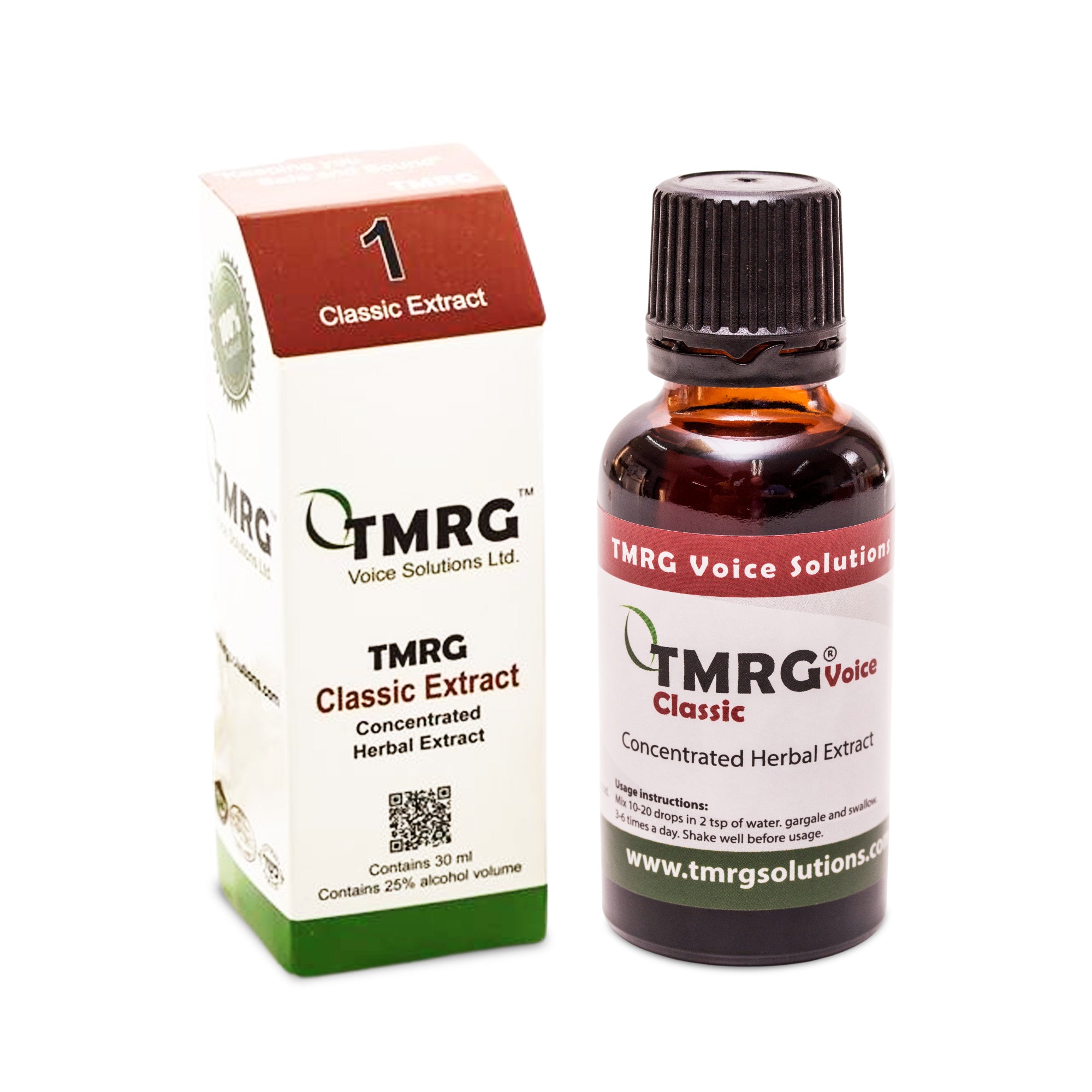
Saline nasal rinses, steam inhalation, consistent hydration, and complete voice rest are the core home measures. Topical support like Loud & Clear Voice Recovery Drops can supplement these while your voice recovers.
Yes. A population-based study found that people with diagnosed respiratory allergies reported hoarse or low voice and other vocal symptoms significantly more often than nonallergic people.
