Your Cart is Empty


Many singers, actors, and voice professionals believe that resting their voice is enough to recover from vocal strain or injury. However, voice rehabilitation involves therapy, exercises, and hygiene practices that actively restore vocal function. This guide explains what voice rehabilitation truly means, which methods research supports, and how you can apply proven techniques to strengthen your voice and protect your career.
| Point | Details |
|---|---|
| Active rehabilitation works | Therapy, exercises, and hygiene outperform rest alone for professional voice recovery. |
| Evidence-backed methods | VFEs, RVT, and tailored protocols show significant improvement for most voice disorders. |
| Prevention aids performance | Daily routines and vocal hygiene reduce injury risk and enhance long-term vocal power. |
| Some cases need advanced care | Hemorrhage or post-surgical voices require specialized protocols and guided therapy. |
| Resources can accelerate recovery | Professional kits and informed support speed up rehabilitation with natural, proven solutions. |
Voice rehabilitation is an active therapeutic process designed to restore and enhance vocal function after injury, disorder, or prolonged strain. Unlike passive rest, rehabilitation combines professional diagnosis, tailored vocal exercises, and strategic vocal hygiene to rebuild strength and coordination in your vocal mechanism.
The core elements include:
This approach specifically benefits singers, actors, lecturers, and anyone whose livelihood depends on consistent, reliable vocal performance. Vocal hygiene habits form the foundation of any successful rehabilitation program.
Voice rehabilitation means more than waiting for symptoms to disappear. It’s a systematic process that addresses the root causes of vocal dysfunction and builds resilience against future injury.
For voice professionals, vocal issues carry consequences that extend far beyond physical discomfort. A hoarse or fatigued voice can cancel performances, jeopardize contracts, and create significant emotional distress. The financial and psychological impact of prolonged vocal problems often requires multi-step intervention to resolve.
Vocal disorders significantly impact professional voice users’ careers, making structured rehabilitation essential for recovery. Without proper intervention, minor vocal strain can progress to chronic conditions that permanently limit your vocal range and endurance.
The benefits of rehabilitation include:
Research shows that 60% of voice professionals experience vocal disorders during their careers, yet many delay seeking help until symptoms become severe. Early intervention through hoarse voice prevention tips and medical support for vocal health dramatically improves outcomes.
Your voice is your instrument and your livelihood. Treating vocal problems with the same urgency you’d give any career-threatening injury ensures you can continue performing at your best.
Voice rehabilitation employs several evidence-based frameworks, each designed to address specific aspects of vocal dysfunction. Understanding these methods helps you choose the right approach for your situation.
Vocal Function Exercises (VFEs) use structured techniques to strengthen and coordinate the muscles involved in phonation. These exercises systematically improve vocal fold closure, breath support, and resonance through controlled pitch and volume patterns.

Resonant Voice Therapy (RVT) teaches you to produce voice with minimal effort while achieving maximum acoustic output. This method focuses on forward resonance and vibration sensations that indicate efficient vocal production.
Vocal hygiene and supportive routines reduce strain by addressing environmental factors, hydration, and behavioral patterns that contribute to vocal fatigue.
| Method | Primary Focus | Evidence Level | Typical Results |
|---|---|---|---|
| Vocal Function Exercises | Muscle strength and coordination | Strong (multiple RCTs) | Improved range, volume, endurance in 4 weeks |
| Resonant Voice Therapy | Efficient phonation with minimal effort | Strong (meta-analyses) | Reduced strain, lesion reduction, sustained improvement |
| Vocal Hygiene Protocols | Prevention and environmental support | Moderate (observational studies) | Reduced re-injury, faster healing |
| Semi-Occluded Vocal Tract Exercises | Balanced airflow and resonance | Strong (clinical trials) | Improved vocal fold vibration, reduced impact stress |
VFEs improve voice in four weeks according to controlled studies, while RVT demonstrates sustained improvement and even lesion reduction in meta-analyses. Combining these approaches with voice exercise examples and vocal strength tips creates a comprehensive rehabilitation program.
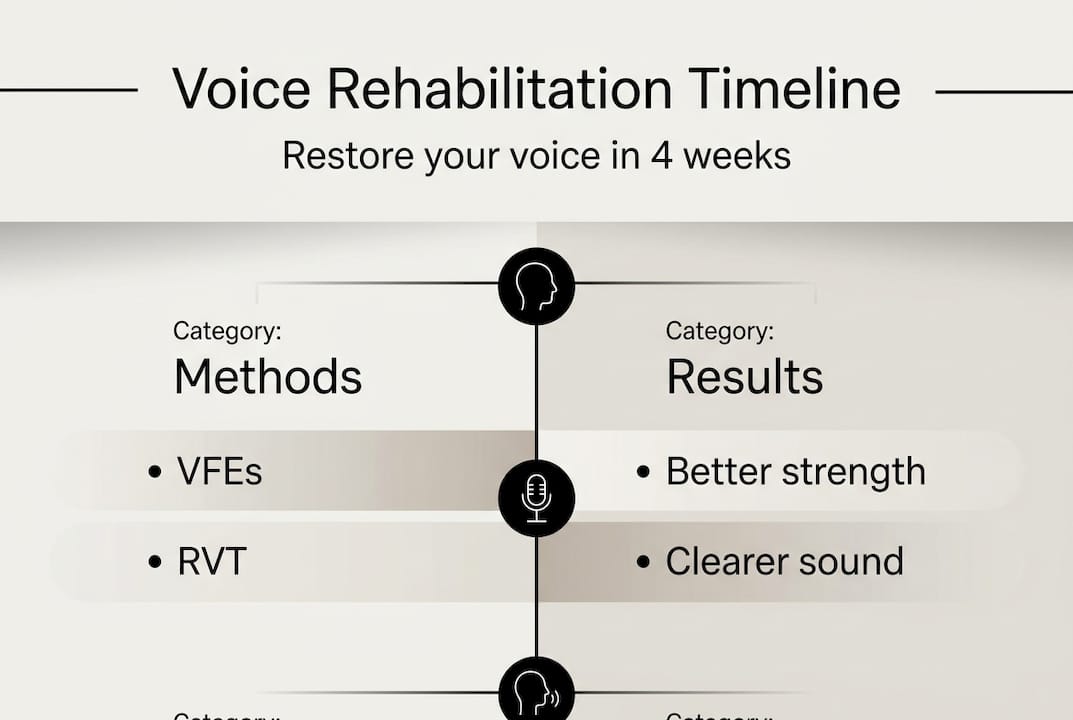
Your daily vocal care routine should incorporate elements from each method, adjusted to your specific vocal demands and recovery goals.
Clinical research provides clear guidance on which rehabilitation methods work best for specific vocal disorders. Understanding these findings helps you make informed decisions about your recovery approach.
| Disorder Type | Recommended Rehabilitation | Expected Outcome |
|---|---|---|
| Vocal Nodules | VFEs + vocal hygiene (first-line); surgery only if persistent | 70-80% resolution without surgery |
| Vocal Polyps | Non-surgical therapy first; surgery with post-op rehabilitation | Significant improvement; surgery reserved for non-responders |
| Muscle Tension Dysphonia | RVT + relaxation techniques | Marked reduction in strain and effort |
| Post-Surgical Recovery | Graduated exercises starting 1-2 weeks post-op | Full function restoration in 6-12 weeks |
| Vocal Fatigue | VFEs + pacing strategies | Increased endurance and reduced recovery time |
Empirical data shows VFEs improve phonation volume, airflow, maximum phonation time, and frequency range, while RVT demonstrates sustained improvements and lesion reduction. These results apply across different voice user categories, from classical singers to teachers.
Non-surgical rehab is first-line treatment for nodules and polyps among professionals. Surgery becomes necessary only when conservative treatment fails after 8-12 weeks of consistent therapy. Even then, post-surgical rehabilitation remains essential for complete recovery.
Pro Tip: Exercises using higher loudness can help activate vocal muscles more effectively, but you must carefully monitor for signs of strain. Increase volume gradually and only within comfortable ranges to avoid creating new injuries while building strength.
Exploring non-surgical recovery options and vocal recovery strategies gives you practical tools to implement these research-backed approaches.
The evidence is clear: active rehabilitation outperforms passive rest for nearly all vocal disorders. The key is matching the right method to your specific condition and following a structured progression.
Rest alone rarely resolves vocal problems effectively. While acute injuries may require short periods of complete voice rest, most conditions benefit more from strategic pacing and active rehabilitation.
Vocal pacing means balancing voice use with recovery periods throughout your day. This approach maintains vocal fitness while preventing overuse. Track your symptoms and adjust your schedule based on how your voice responds to different demands.
Complete rest is required only for specific acute injuries:
For most other conditions, vocal pacing balances use and rest more effectively than complete silence. Post-surgical therapy is essential for full restoration, and higher loudness increases muscle activation but also requires careful monitoring.
Post-surgical rehabilitation follows a graduated timeline:
Pro Tip: Higher loudness exercises increase muscle engagement and can accelerate strength gains, but they also increase the risk of dyspnea and strain. Use them strategically in short bursts, never when your voice feels tired or strained.
Incorporating vocal support exercises and breath control for singers ensures your rehabilitation addresses the full vocal mechanism, not just the vocal folds.
Integrating research-backed rehabilitation into your daily routine doesn’t require hours of practice. Consistency matters more than duration. Here’s how to build sustainable vocal health habits.
Your daily rehabilitation routine:
Avoid these common stressors:
Vocal hygiene practices and regular exercises are central to successful voice rehabilitation. Your healthy vocal care routine and vocal hygiene habits create the foundation for long-term vocal health.
Seek professional help when you experience:
Pro Tip: Keep a vocal journal tracking your daily voice use, symptoms, and environmental factors. Patterns emerge quickly, helping you identify specific triggers and measure your rehabilitation progress objectively.
Applying these rehabilitation principles becomes easier when you have professional-grade tools designed specifically for voice recovery and maintenance. Natural, evidence-based solutions can accelerate your progress and help sustain the improvements you’ve worked hard to achieve.

Our voice therapy kit basic provides the essential tools you need to implement structured rehabilitation at home, complementing the work you do with your voice therapist. Whether you’re recovering from injury or building vocal resilience, having targeted resources makes consistent practice more effective.
Explore our comprehensive help for vocal problems to find solutions matched to your specific needs. With over 25 years of expertise in vocal health, we’ve helped thousands of voice professionals restore and strengthen their instruments using natural, proven methods.
Most professionals notice measurable improvements within 4 weeks using structured vocal exercises according to research. Consistency matters more than intensity for achieving these results.
Non-surgical rehabilitation with structured therapy is recommended first, with surgery reserved for persistent cases. Most nodules resolve with 8-12 weeks of proper vocal function exercises and hygiene.
Complete rest is needed only for hemorrhage or laryngitis; rehabilitation is essential post-surgically and for most cases. Active therapy produces better outcomes than passive rest for the majority of vocal disorders.
Vocal hygiene practices and regular exercises are key components of rehabilitation. They prevent re-injury and optimize vocal fold recovery by addressing environmental and behavioral factors that contribute to vocal strain.
