Your Cart is Empty


TL;DR:
- Most singers experience hoarseness but often neglect routine vocal recovery. Adequate rest, hydration, and gentle exercises are essential to prevent long-term damage. Implementing daily recovery habits protects the voice and ensures long-term vocal health.
Over 80% of professional singers experience hoarseness at some point in their careers, yet most treat recovery as something reserved for injury rather than routine maintenance. Your vocal folds work harder than you think, vibrating hundreds of times per second through every rehearsal and performance. That constant motion creates real physical stress on delicate tissue. Ignoring recovery doesn’t just leave you sounding rough the next morning. It sets the stage for chronic problems that can sideline your voice for weeks or even permanently alter how you sing. This article explains the biology behind vocal fatigue, the real risks of skipping recovery, and exactly what you can do to protect your voice every single day.
| Point | Details |
|---|---|
| Recovery prevents injury | Recovery routines repair vocal microtrauma, reducing the risk of serious problems. |
| Most singers experience fatigue | Over 80 percent of singers deal with hoarseness or voice loss due to overuse. |
| Natural remedies boost healing | Hydration, humidifiers, gentle teas, and SOVT exercises speed recovery safely. |
| Daily habits are vital | Building recovery into your daily routine is more effective than only resting after damage occurs. |
To understand why recovery matters, you need to understand what singing actually does to your body. Your vocal folds are two small bands of layered tissue inside your larynx. When you sing, air pressure from your lungs pushes them apart, and the elastic recoil of the tissue snaps them back together. This cycle repeats at extraordinary speed.
True vocal folds vibrate hundreds to thousands of times per second, and that repetitive collision causes micro-tears and inflammation in the mucosal lining. This is not a sign of poor technique. It is simply what happens when you use your voice intensively. The myoelastic-aerodynamic theory explains the mechanism: subglottal pressure and the Bernoulli effect drive the mucosal wave that produces your sound. Every wave is a tiny mechanical event, and thousands of those events per second add up.
Hydration plays a direct role here. Well-hydrated tissue requires less air pressure to start vibrating, which reduces the physical load on your folds. Dehydrated folds need more force to initiate phonation, meaning you strain more to produce the same sound.
One of the trickiest aspects of vocal fatigue is that you don’t always feel it in real time. Individual variability means some singers can have significant tissue stress without sensing discomfort. You might feel fine after a long show and still have folds that need serious recovery time. Understanding the vocal recovery process helps you build habits that protect you even when your voice feels strong.
| Recovery phase | Time frame | What happens |
|---|---|---|
| Initial repair | 0 to 4 hours | Inflammation begins to reduce, mucosal fluid redistributes |
| Major recovery | 4 to 6 hours | 90% of mucosal tissue restoration occurs |
| Full recovery | 12 to 18 hours | Complete tissue healing under normal use conditions |
| Acute strain recovery | 24 to 48 hours | Required rest period for significant overuse or injury |
“Recovery is not a reward for hard work. It is the work itself. Without it, every rehearsal is building on a crumbling foundation.”
Understanding vocal fold tissue healing gives you a clearer picture of why even one night of poor recovery can compound over time into something much harder to fix.
Knowing the biology is one thing. Seeing the numbers makes the stakes much harder to ignore. Vocal overuse is not a rare edge case. It is the norm across professions that rely on the voice.
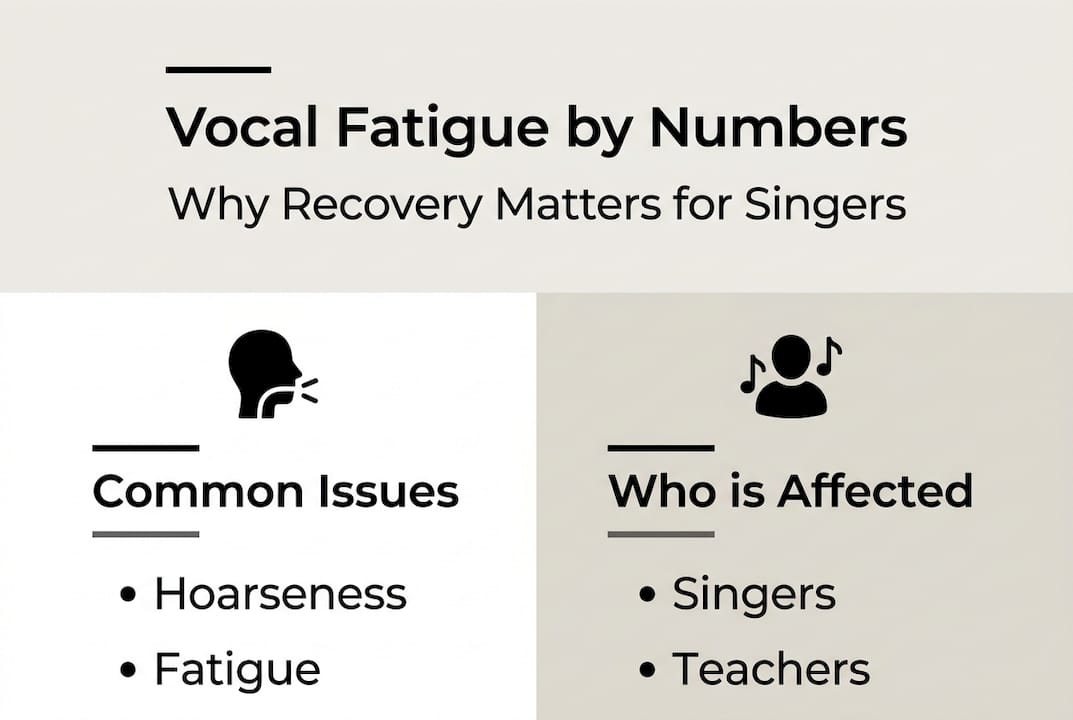
Over 80% of singers experience hoarseness, and vocal fatigue affects between 42% and 92% of teachers depending on the study. Performers, coaches, actors, and lecturers all share the same vulnerability: they use their voice as a tool and often push past the point where recovery can keep up.
The short-term consequences are familiar. Hoarseness, reduced range, a voice that feels thick or unreliable. But the long-term risks are far more serious. When micro-damage accumulates without adequate repair time, the tissue can develop structural changes.
Common overuse injuries include:
The gap between short-term and long-term risk is where most singers get into trouble. You feel fine, you perform, you feel fine again. Then one day the hoarseness doesn’t go away, or your high notes disappear. Preventing vocal fatigue before it becomes a structural problem is far easier than reversing damage that has already set in.
| Voice professional | Reported vocal fatigue rate |
|---|---|
| Professional singers | Over 80% |
| School teachers | 42% to 92% |
| Actors and performers | 60% to 75% |
| Call center workers | 50% to 65% |
If you are already noticing early warning signs, reviewing tips for hoarseness can help you catch problems before they escalate.
Now that the risks are clear, let’s look at exactly how strategic recovery protects your voice and allows healing. Recovery is not passive. It is an active process your body carries out when you give it the right conditions.
90% of vocal fold mucosal recovery happens within 4 to 6 hours of stopping voice use, with full recovery taking 12 to 18 hours under normal conditions. For acute strain, 24 to 48 hours of total voice rest may be necessary. This timeline should inform how you schedule rehearsals, shows, and rest days.
Here is a practical recovery routine you can follow:
Pro Tip: Your voice will often give you subtle signals before a major problem develops. A slight change in tone quality, a feeling of effort on notes that used to feel easy, or mild dryness after short use are all early warnings. Act on them early rather than waiting for obvious pain.
The advanced vocal recovery guide goes deeper into recovery timelines and how to structure your schedule around them. For singers who prefer natural approaches, natural recovery for hoarseness offers targeted strategies that complement rest.
“Powering through vocal fatigue is not resilience. It is borrowing against your future voice at a very high interest rate.”
Effective recovery isn’t guesswork. There are proven strategies and natural remedies that genuinely speed up the process and protect your voice over the long term.
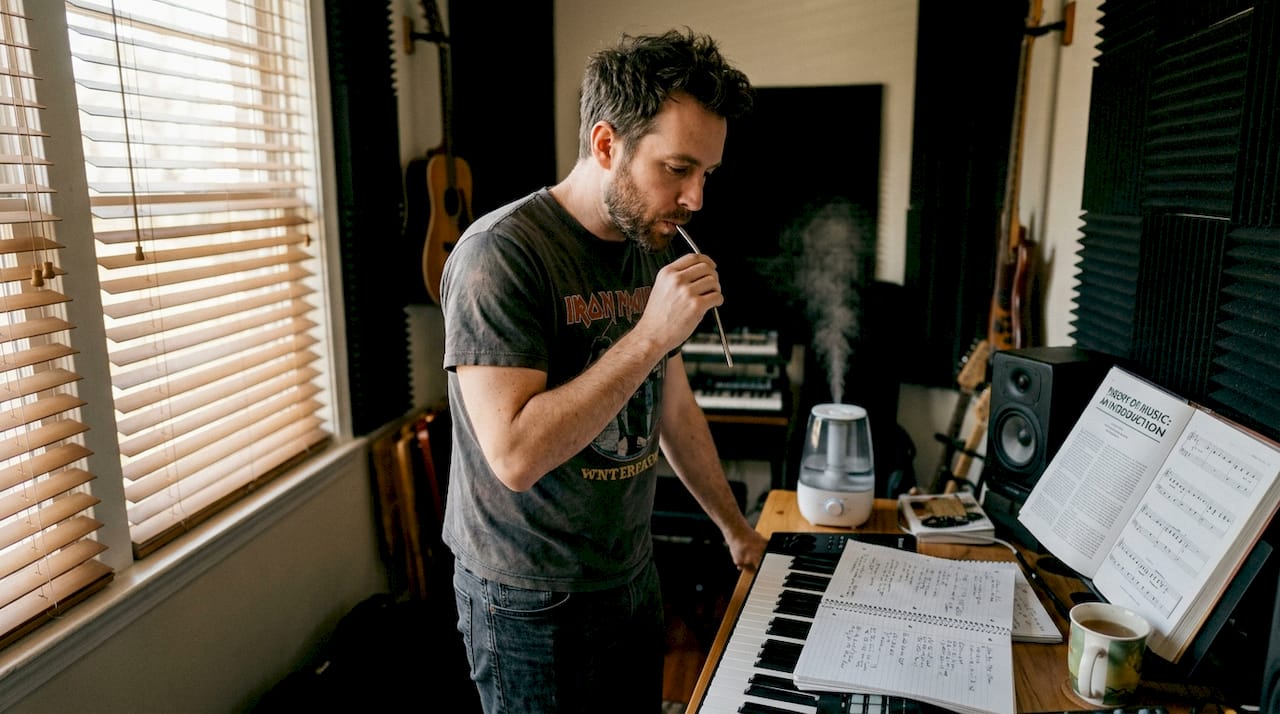
Hydration of 8 to 10 glasses per day, using humidifiers, herbal teas like slippery elm and licorice root, and SOVT exercises such as straw phonation are all backed by evidence for faster recovery. SOVT stands for semi-occluded vocal tract, a technique that reduces the collision force between your folds while still allowing gentle phonation. Think of it as physical therapy for your voice.
Here are the core habits to build into your routine:
Habits to avoid are just as important. Yelling, clearing your throat forcefully, and speaking loudly in noisy environments all create unnecessary trauma. These behaviors feel harmless in isolation but become damaging when your tissue is already stressed.
Pro Tip: Run a humidifier in your room every night during weeks when you have multiple performances or long rehearsals. Your folds recover faster when ambient moisture is consistent, and you will notice the difference in your morning voice.
For structured guidance on building these habits, vocal support exercises and essential vocal exercises are strong starting points. If you want targeted product support, proven throat drops and tips covers what actually works.
Here is the uncomfortable truth we have observed over 25 years of working with vocalists: most singers treat recovery like a fire extinguisher. They grab it only when something is already burning.
The singers who protect their voices for decades do something different. They treat recovery as a daily habit, not a crisis response. They don’t wait to feel strained before they hydrate, rest, or do gentle exercises. They build those behaviors into every single day, regardless of how their voice feels.
Silent tissue changes are the real danger. You can have measurable inflammation and early mucosal stress without any sensation of discomfort. By the time you feel the problem, the damage is already several sessions deep. Proven vocal recovery strategies work best when they are preventative, not reactive.
Voice coaches often focus heavily on technique, which is right. But technique without recovery is like training hard without sleeping. The adaptation never fully happens. The pros aren’t using secret methods. They are simply consistent about rest, hydration, and listening to their bodies before the warning signs become emergencies.
Rethink recovery not as something you earn after a hard performance, but as the foundation that makes every performance possible.
You now have the knowledge to protect your voice strategically. The next step is making sure you have the right support to put it into practice consistently.

At TMRG Solutions, we have spent over 25 years developing natural remedies and therapy tools specifically for singers and voice professionals. Whether you are dealing with hoarseness, fatigue, or simply want to stay ahead of problems, our voice problem resources offer targeted guidance for your specific situation. The basic voice therapy kit is a practical starting point for structured recovery, combining proven natural formulations in one convenient package. For quick answers to common questions, our singers’ recovery FAQs address the issues we hear most often from performers just like you.
Most singers need 4 to 6 hours for 90% mucosal recovery, with full healing taking 12 to 18 hours. Acute strain from overuse may require 24 to 48 hours of complete voice rest before returning to normal phonation.
Rest combined with hydration accelerates mucosal repair more effectively than either approach alone. If you can only do one thing, drink water and stay quiet.
Yes. Hydration, herbal teas, and steam inhalation are all evidence-supported remedies that reduce inflammation and rehydrate the vocal fold surface after heavy use.
Absolutely. Some tissue stress occurs without any perceived discomfort due to individual variability in sensation, so consistent recovery habits protect you even when your voice feels completely fine.
