Your Cart is Empty


TL;DR:
- Hoarseness often results from overuse, infections, reflux, or structural vocal issues requiring professional evaluation.
- Immediate vocal rest, hydration, humidification, and gentle voice exercises support recovery; persistent symptoms need medical assessment after four weeks.
- Relying solely on home remedies can prevent proper treatment; early intervention and structured voice therapy are essential for lasting healing.
Losing your voice the night before an audition, a sold-out show, or a keynote presentation is one of the most unsettling experiences a voice professional can face. Hoarseness is not just an inconvenience. For singers, actors, and lecturers, it signals a disruption to the very tool that defines your career. This guide walks you through the causes of hoarseness, when natural remedies are appropriate, and how to apply evidence-backed techniques safely. You will also learn exactly when to stop self-managing and get your vocal folds evaluated by a specialist.
| Point | Details |
|---|---|
| Early assessment matters | If hoarseness lasts more than four weeks, a specialist evaluation is needed to rule out serious conditions. |
| Natural remedies support recovery | Hydration, humidification, and gentle voice rest can ease symptoms but work best when paired with evidence-based therapy. |
| Voice therapy is superior | Clinical research supports voice therapy over medications for managing professional voice problems like nodules. |
| Know the warning signs | Sudden, severe, or persistent hoarseness, especially with pain or breathing issues, requires professional care. |
| Monitor your progress | Track symptoms and be ready to seek medical advice if improvement stalls — don’t delay beyond four weeks. |
Hoarseness, clinically called dysphonia, refers to any abnormal change in voice quality, pitch, or volume caused by a disruption in how the vocal folds vibrate. Before you reach for a remedy, it helps to know what you are dealing with.
Common causes in voice professionals include:
Understanding the losing your voice causes behind your specific situation is the first step toward choosing the right approach.
Some symptoms should never be self-managed. Seek urgent care if you experience:
Important: Laryngoscopy within about four weeks is recommended for persistent dysphonia before clinicians resort to any empiric drug treatment. This represents a significant update from the older 90-day window. If your hoarseness persists beyond that four-week mark, do not keep trying home remedies. Get your larynx visualized.
Ongoing education on persistent hoarseness prevention can help you recognize the difference between a manageable episode and a developing condition that needs professional attention.
| Cause | Typical onset | Usually self-limiting? |
|---|---|---|
| Viral laryngitis | Rapid (1 to 3 days) | Yes (7 to 14 days) |
| Vocal overuse | Gradual or post-performance | Yes with rest |
| Reflux laryngitis | Gradual, often morning-worse | Partially (needs treatment) |
| Vocal nodules | Gradual, worsening over weeks | No (requires therapy) |
| Laryngeal cancer | Gradual, persistent | No (requires urgent workup) |
You would not attempt a high-wire act without the right safety gear. Approaching hoarseness relief without the proper foundation is just as risky. Before you start any technique, gather your support toolkit.
Your at-home relief checklist:
It is worth being honest about what these tools can and cannot do. High-quality guidance consistently treats steam, herbal remedies, and honey as supportive at best, emphasizing diagnosis and voice-therapy mechanics as the real drivers of recovery. That does not mean you skip the honey. It means you do not rely on it exclusively.
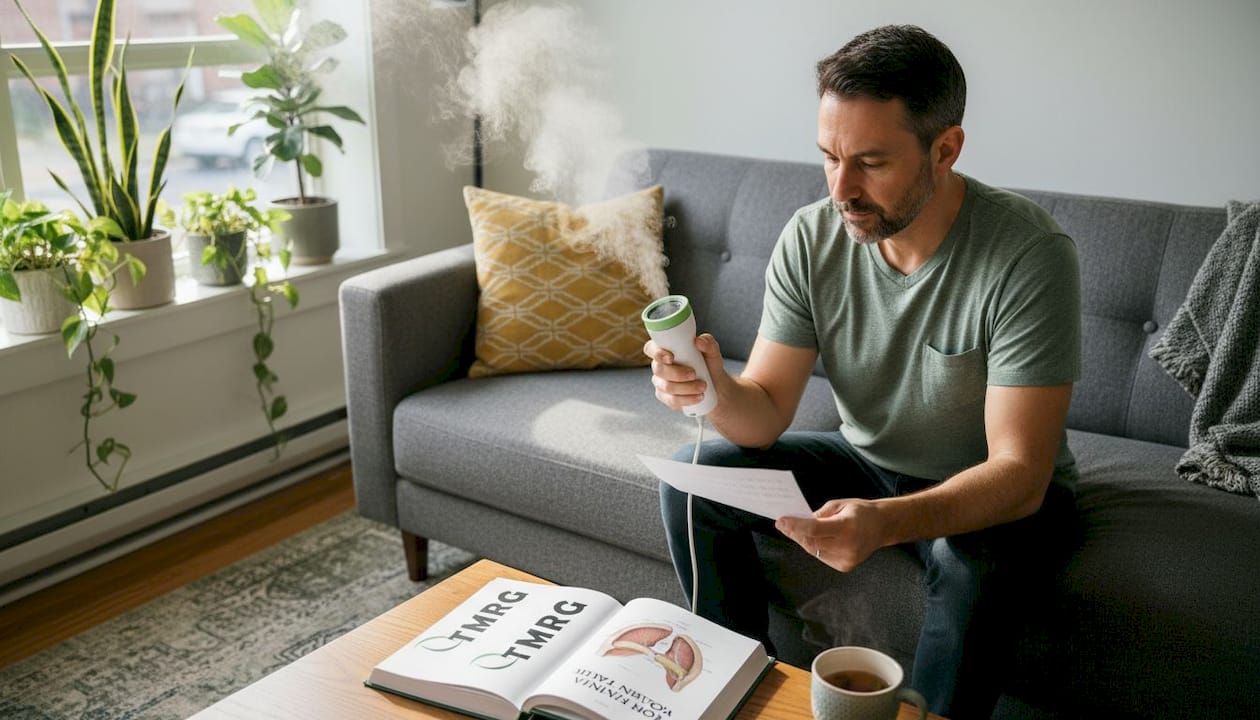
| Remedy | Mechanism | Evidence level | Best used for |
|---|---|---|---|
| Hydration (water) | Lubricates vocal fold mucosa | Strong | All hoarseness types |
| Steam inhalation | Adds moisture to upper airways | Moderate | Dry irritation, mild congestion |
| Honey in warm water | Coats mucous membranes | Low to moderate | Soothing irritation |
| Herbal throat sprays | Anti-inflammatory coating | Variable | Supportive comfort |
| Voice rest | Reduces mechanical trauma | Strong | Overuse and post-performance recovery |
When looking at rapid relief natural remedies, always prioritize approaches that support the body’s natural repair process rather than masking symptoms so you push through performance.
For more ideas on what professional-grade support looks like in practice, explore these vocal remedies examples that are specifically designed around performer needs.
Pro Tip: Avoid gargling with anything other than plain saline. Apple cider vinegar, hydrogen peroxide, and alcohol-based mouthwashes can strip the protective mucous lining from your laryngeal tissues, making inflammation worse rather than better.
This is where preparation meets action. Follow this sequence carefully and resist the urge to skip steps or rush the process.
Step 1: Institute vocal rest immediately. Complete silence is ideal for the first 24 hours of significant hoarseness. Whispering strains the vocal folds more than light, gentle phonation, so avoid it. Use a notes app or whiteboard to communicate if you need to.
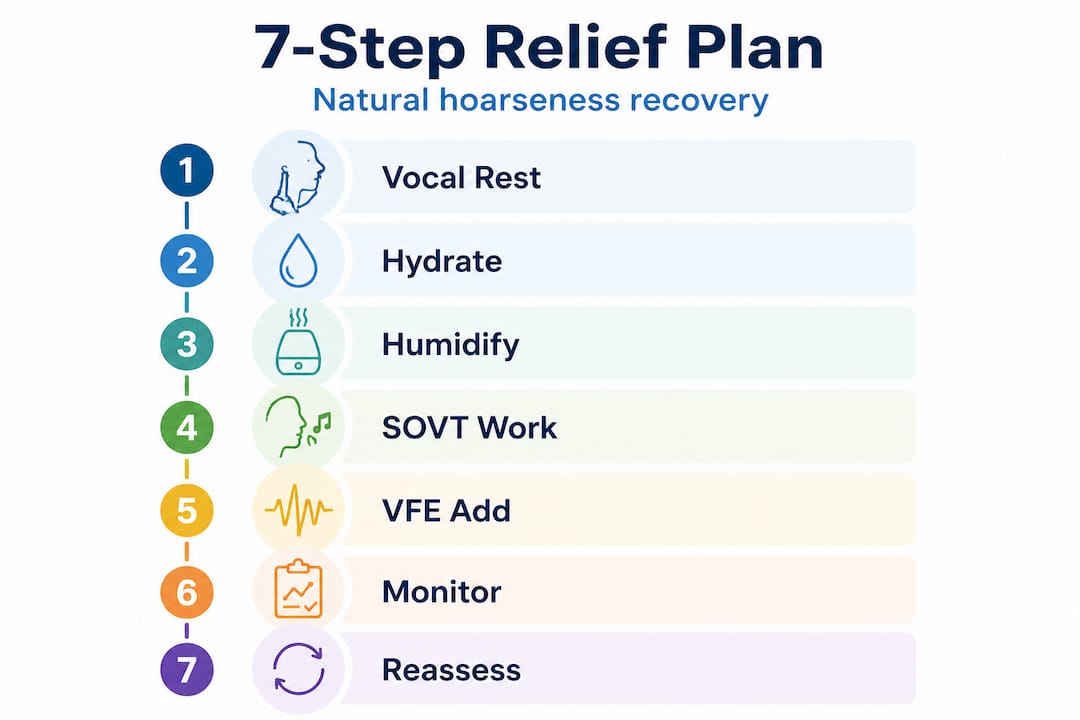
Step 2: Aggressively hydrate. Drink at least eight glasses of water spaced throughout the day. Avoid caffeine and alcohol, both of which act as diuretics and can dehydrate the vocal fold mucosa. Think of keeping your vocal folds “wet from the inside.”
Step 3: Optimize your breathing environment. Run a cool-mist humidifier to keep ambient humidity between 40% and 60%. Dry indoor air, especially in air-conditioned theaters or recording studios, accelerates mucosal dehydration and prolongs recovery.
Step 4: Begin gentle semi-occluded vocal tract (SOVT) exercises. SOVT exercises, meaning techniques that partially close the front of the vocal tract such as lip trills, straw phonation, or humming with lips loosely closed, reduce the collision force between the vocal folds while still allowing gentle vibration. These are among the most evidence-supported tools for early rehabilitation. To properly restore vocal strength, begin with five to ten minutes of straw phonation twice daily, gradually increasing duration as symptoms improve.
Step 5: Add Vocal Function Exercises (VFE) by day two or three. VFE, developed by Dr. Joseph Stemple, involve four specific tasks: a sustained “whee” on comfortable pitch, a glide from low to high pitch on “whee,” a glide from high to low, and a sustained note at the lowest comfortable pitch. Clinical research supports voice therapy approaches like VFE as outperforming or complementing steroid-based treatments for benign professional voice problems, including vocal nodules.
Step 6: Monitor symptoms after each session. Your voice should feel the same or better after gentle exercises, never worse. Increased pain, fatigue, or a further drop in voice quality means you need to stop and rest before trying again.
Step 7: Know when to stop the self-management protocol. If you see no measurable improvement after seven to ten days, or if symptoms worsen at any point, step out of home management entirely and schedule an ENT evaluation. You can also review strategies to recover from hoarseness and understand how to deal with vocal fold ailments that may require a more structured clinical approach.
Pro Tip: Keep a daily voice log scoring your vocal quality from 1 to 10 before and after each exercise session. Tracking data over even a week reveals patterns that help you and your clinician make smarter decisions faster.
Even experienced performers make errors when managing hoarseness at home. Recognizing the most common pitfalls can protect you from turning a minor episode into a career setback.
Common mistakes to avoid:
Clinical note: Guidelines caution against empiric anti-reflux, antibiotics, or steroids for isolated hoarseness before a diagnosis is confirmed through laryngeal visualization. Taking these medications without a clear diagnosis can delay correct treatment and may cause unnecessary side effects.
Widely promoted home remedies in performer communities, such as tea with lemon and ginger, honey, or essential oil throat sprays, may provide genuine comfort. But comfort is not the same as healing. These remedies do not rebuild strained tissue, reduce nodule formation, or correct faulty technique. They support the process. They do not lead it.
If you are experiencing symptoms that keep returning after apparent recovery, consider reviewing the 3-step treatment for hoarseness framework or evaluating whether your technique itself may be creating the problem, particularly through reviewing common vocal technique pitfalls that can paradoxically cause harm.
Signs that natural management is not enough:
Self-monitoring is not guesswork. It is a structured process that gives you meaningful data to act on.
Weekly self-check framework:
Use these tips for vocal issues alongside your weekly check-in to stay organized and informed. Pairing your monitoring with appropriate vocal cord recovery exercises creates a complete rehabilitation loop.
| Timeline | Expected progress | Red flag signals |
|---|---|---|
| Days 1 to 3 | Slight improvement with rest and hydration | Worsening pain or complete voice loss |
| Days 4 to 7 | Gradual return of voice quality and stamina | No change despite rest and hydration |
| Days 8 to 14 | Near or full baseline voice function | New symptoms such as pitch breaks or swallowing difficulty |
| Week 3 to 4 | Full return with consistent exercise | Any remaining significant hoarseness |
| Beyond 4 weeks | Laryngeal evaluation recommended | All persistent cases warrant ENT referral |
Knowing your performance limits is part of long-term vocal health. A voice that is pushed back into full performance too soon after an episode is more vulnerable to relapse. Build in a buffer of at least three to five days of partial voice use between recovery and return to full load.
Here is something we have learned from over 25 years working with singers, actors, and voice educators: most performers treat hoarseness like a mechanical problem with a mechanical fix. They want a spray, a tea, a warm-up trick that makes the discomfort go away so they can get back on stage. And that mindset, understandable as it is, keeps them stuck in a cycle of repeated episodes.
The real issue is rarely what happened to the voice last night. It is what the voice has been tolerating for months. Vocal fatigue accumulates silently. Tension in the external laryngeal muscles builds. Compensatory habits develop. By the time hoarseness appears, the body has already been signaling discomfort through tiredness, tightness, and small pitch inconsistencies that performers learn to ignore.
Steam and honey feel good. We are not dismissing that. But they work on the surface of a problem that usually runs deeper. Structuring your relief around examples of vocal remedies is smart. Stopping there is not. The professionals who recover fastest and stay healthy longest are the ones who use natural support as a bridge to structured voice therapy, not as a replacement for it.
Early assessment is not a sign that something is seriously wrong. It is a sign that you take your instrument seriously enough to protect it. That shift in perspective changes everything.
If this guide has helped you understand that hoarseness needs more than a home remedy, you are ready for the next step.

At TMRG, we have designed targeted kits specifically for voice professionals who need both natural support and structured recovery tools. The TMRG Voice Therapy Kit Basic is ideal for mild to moderate episodes, giving you a reliable starting point. The TMRG Voice Therapy Kit Standard steps up the support for performers with recurring or more significant vocal fatigue. For day-to-day vocal maintenance and pre-performance readiness, our TMRG Impact Voice Enhancement Drops deliver fast-acting natural support formulated with your professional demands in mind. Pair any of these with the techniques in this guide for consistent, dependable vocal wellness.
If your hoarseness lasts more than four weeks with no improvement, you should see an ENT specialist for evaluation. Updated guidelines shortened the recommended waiting window from 90 days to four weeks before laryngeal assessment.
Hydration, voice rest, humidification, and evidence-based voice exercises are the most effective initial methods for most performers. Steam and honey provide comfort but are considered supportive only and should not replace structured therapy.
Guidelines advise against starting steroids, antibiotics, or anti-reflux drugs for hoarseness without a confirmed diagnosis. Treating without visualizing the larynx risks masking an underlying condition that requires specific care.
Clinical research shows voice therapy may outperform steroid injections in reducing vocal nodules and improving voice quality in professionals. A 2025 randomized controlled trial found voice therapy produced superior outcomes compared to steroid injection at the three to six month mark.
They may offer temporary comfort but are considered supportive measures only. Steam and honey do not address underlying mechanical or structural causes and should not be the sole strategy for a professional voice.
