Your Cart is Empty


Rest your voice completely for the first one to two days, hydrate from the inside and out, and run a humidifier while you sleep. Whispering strains your voice more than talking softly, so skip it. If your voice disappears suddenly mid-shout, or you cough up blood, stop reading and get to an ENT. Once the acute period passes, gentle straw phonation often speeds healing faster than silence alone.
TL;DR:
- Full voice rest during the first 24 hours reduces swelling and prevents further tissue damage, especially if the voice is rough or crackly.
- Using saline nebulizers, humidifiers, and steam inhalation supports hydration and mucus thinning, which aid faster recovery.
- Controlled, gentle straw phonation exercises starting after the acute phase can actively promote healthy vocal fold vibration and reduce fatigue.
- Urgent evaluation is necessary if symptoms include sudden voice loss, coughing blood, severe pain, or breathing difficulties, indicating possible hemorrhage.
- Recovery involves staged vocal rebuilding over weeks, gradually increasing speaking and singing efforts while monitoring for signs of strain or relapse.
The window right after you scream yourself hoarse at a concert, a game, or a heated argument determines how fast you bounce back. Your vocal folds have likely swollen from the impact of forceful airflow slamming them together repeatedly. That swelling needs calm, not more work.
Here’s the priority order for the first three days:
Pro Tip: Keep a water bottle within arm’s reach and set a phone reminder every hour. Most people underestimate how much hydration this stage actually requires because thirst isn’t a reliable signal for vocal fold moisture.
Watch for red flags that override all of the above. Sudden, total voice loss during or right after yelling, coughing up blood, real difficulty breathing, or severe throat pain are not “wait and see” symptoms. They can point to a vocal fold hemorrhage, a burst blood vessel in the vocal fold that demands immediate evaluation and total voice rest until an ENT clears you.

Not every soothing remedy on the internet is backed by anything real. Some help. Some do the opposite of what you think.
What actually supports healing:
What to skip:
On medication, NSAIDs like ibuprofen can take the edge off throat pain and reduce inflammation modestly. Antihistamines are trickier: they dry mucous membranes throughout your body, including your vocal folds, so they can make hoarseness worse even as they calm other symptoms. Steroids are sometimes prescribed for severe swelling, but only after a clinician has actually looked at your vocal folds. Cleveland Clinic’s guidance on hoarseness is clear that conservative care, not medication, is the first line of treatment for most people.
Most cases of straightforward hoarseness from overuse improve over several days to a few weeks with conservative care.
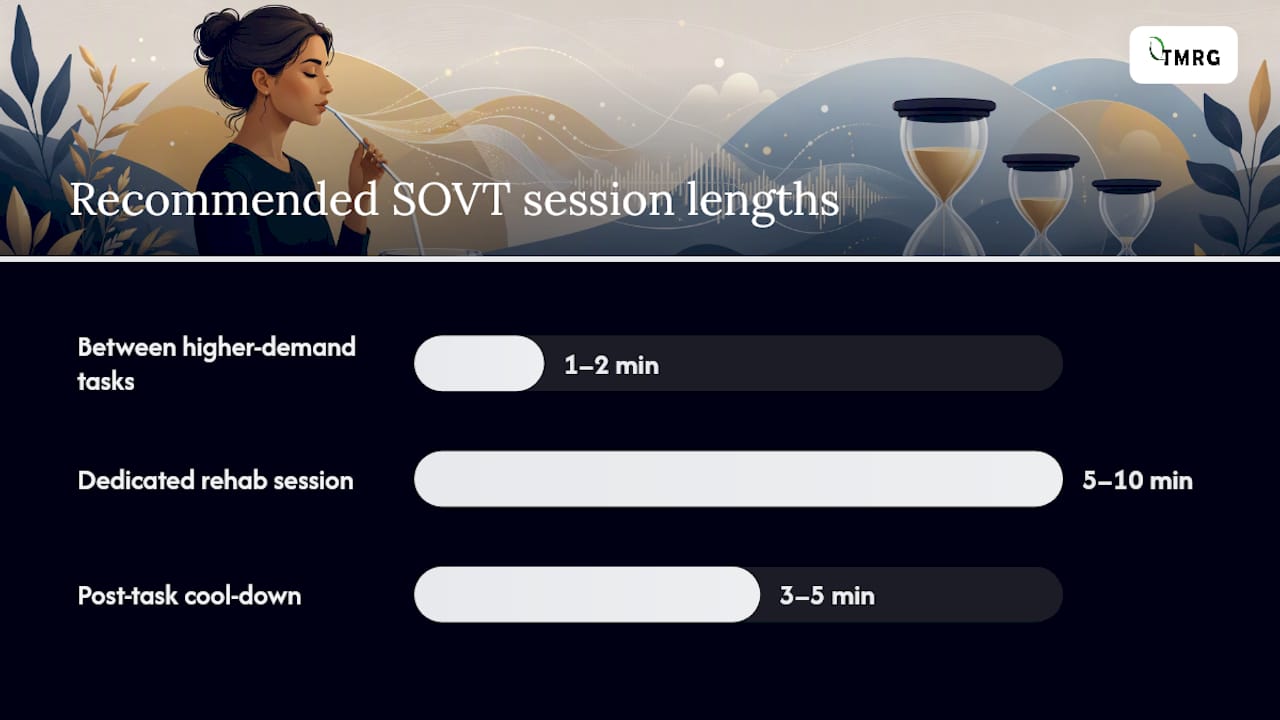
Total silence feels like the safest choice, and for the first day or so after heavy yelling, it usually is. But research on vocal recovery complicates the “just rest it” advice past that initial window. Controlled phonation techniques, specifically straw phonation, part of a broader category called semi-occluded vocal tract exercises (SOVT), can actively lower the pressure your vocal folds need to start vibrating. A PMC review of vocal restoration strategies found that brief SOVT practice produces measurable drops in phonation threshold pressure and reduces vocal fatigue faster than doing nothing at all.
That distinction matters for how you plan your recovery. Passive rest protects your voice from further damage, but it doesn’t actively rehabilitate it. Straw phonation gives your folds a low-effort workout that encourages healthy vibration patterns without the strain of full-volume speech.
A basic straw phonation routine once acute swelling has calmed (typically after day one or two):
Our straw phonation warm-up guide walks through the full five-minute version step by step if you want a routine to follow rather than build from scratch.
Pro Tip: If humming through the straw feels harder than talking normally, you’re not ready for it yet. Go back to silence for another day and try again.
Rest is non-negotiable, not optional, when you notice sharp pain, a sudden pitch drop, or any sign that suggests bleeding inside the vocal fold. Straw phonation is for fatigue and mild hoarseness recovery, not for a fold that may be injured. When in doubt, silence costs you nothing. Pushing through the wrong kind of damage can cost you weeks.
Most yelling-related hoarseness clears up on its own. However, professional evaluation is advised if significant concerning symptoms occur.
Seek urgent medical care if you experience:
Schedule a prompt medical appointment if:
An ENT evaluating persistent hoarseness will usually start with a laryngoscopy, a quick scope exam that lets them see your vocal folds directly. NIDCD guidance on hoarseness recommends this kind of visual exam before any steroid is prescribed, since treating swelling blindly can mask a more serious issue like a hemorrhage or a developing nodule. Depending on what the scope shows, treatment might mean a short steroid course, a referral to voice therapy, or in rarer cases, a surgical consult.
Recovering full vocal function after a hard yelling episode isn’t a light switch. It’s a staged rebuild, and skipping stages is exactly how people end up back at square one.
Stage 1, days 1 through 7, focuses on minimal demand:
Stage 2, weeks 2 through 3, builds breath support:
Stage 3, week 3 and beyond, rebuilds stamina and range:
Step back a stage anytime you notice pain, a voice that suddenly requires more effort than it did the day before, or pitch that keeps cracking unpredictably. Those are signs your tissue isn’t ready for the load you just gave it, and pushing forward anyway tends to set recovery back further than the stage you skipped. Our voice exercises for hoarseness resource has additional drills if you need to fill out stage two or three.
The best yelling voice recovery is the one you never need because you protected your voice at the source.
Pro Tip: Before any event where you know you’ll be yelling, like a concert or a big game, load up on water for the 24 hours prior, not just the morning of. Hydration works cumulatively, not instantly.
For more daily habits that protect your voice long term, our vocal hygiene tips cover the basics worth building into a routine.
Most advice about a strained voice treats rest as the only safe option, and that caution makes sense on the surface. But the evidence on controlled phonation tells a more nuanced story: a folded, effortless “ah” through a straw, done correctly and early enough, often restores function faster than silence stretched too long. Complete rest still wins in the first day, and it always wins the moment red flags appear. Past that narrow window, doing nothing isn’t automatically the safer choice.
The gap most self-help articles miss is timing. Knowing when to shift from silence to gentle, structured phonation work is the real skill, not the exercises themselves, which are simple. That’s where a staged approach, paired with the right soothing support during the rough early days, makes the difference between a voice that bounces back in a week and one that lingers hoarse for a month. Products alone won’t rebuild vocal function, and neither will exercises alone if you start them at the wrong stage. When symptoms outpace home care, professional evaluation isn’t a backup plan. It’s the plan.
— Golan
Recovering a voice you’ve pushed too hard rarely calls for one product doing everything. It calls for the right support at the right stage, which is how the featured lineup is designed to assist vocalists, teachers, and anyone whose voice takes a hit.
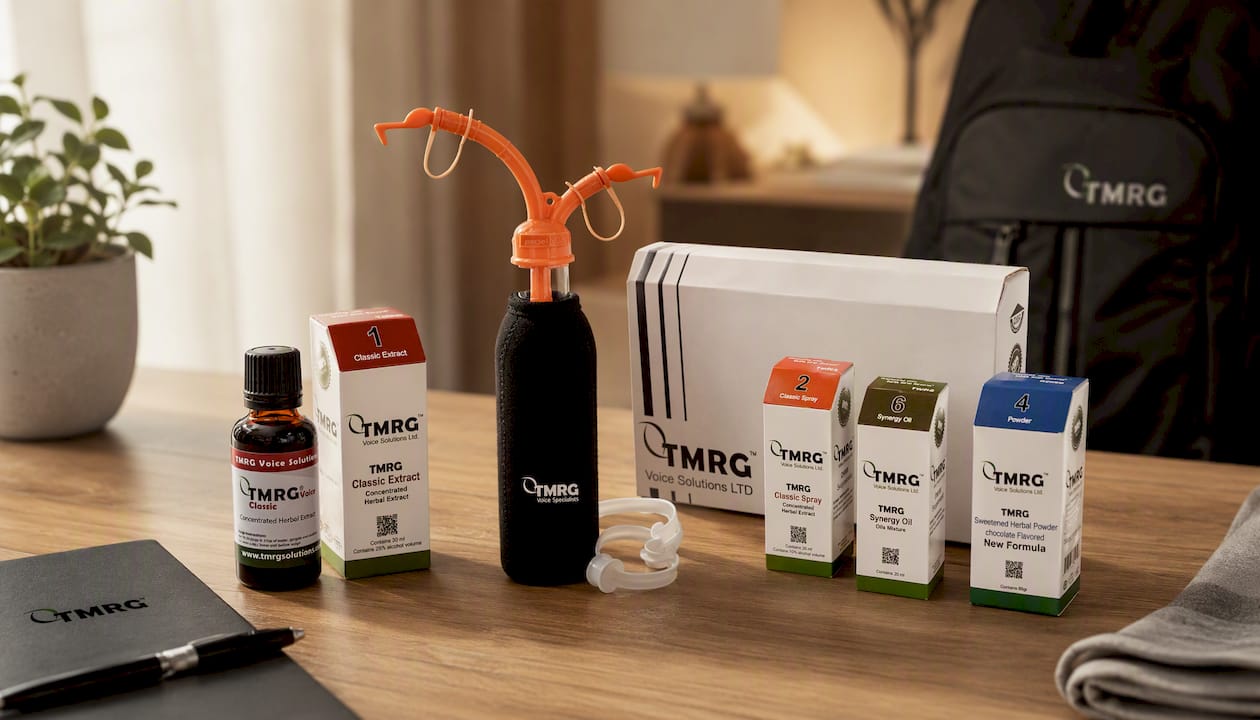
If you’re still in that first rough day or two, TMRG Loud & Clear Classic Voice Recovery Drops target immediate surface soothing, the kind of relief you want while you’re still avoiding real conversation. Once you’re ready to move into structured rehab, the TMRG Voice Therapy Kit Standard is built around a guided, staged approach that mirrors the rest, rebuild, and reinforce progression covered above. If your strain was milder, or you’re the type who yells at every game and wants something for recurring, lighter use, the TMRG Voice Therapy Kit Basic offers a lower-commitment entry point. None of these replace an ENT visit when red flags show up. They’re built to support you through the recovery window this guide describes. Browse the full TMRG Voice Therapy Kits collection to compare kits and pick the one that matches your stage today.
This article is general information, not a substitute for advice from a qualified doctor. Consult a qualified healthcare professional about your own circumstances before acting on anything here.
Mild hoarseness from screaming often improves within a few days with rest and hydration, while more significant strain can take up to two to three weeks. If it lasts beyond two to three weeks, see an ENT for evaluation.
Start with voice rest, steady hydration, and humidified air, then reintroduce gentle straw phonation once acute swelling eases. This staged approach, from silence to controlled phonation to gradual normal speech, follows the same progression outlined in this guide’s rehab section.
Laryngitis from voice overuse usually responds to conservative care: rest, fluids, humidified air, and avoiding smoke, alcohol, and caffeine. Cleveland Clinic notes that most hoarseness resolves with these steps, though persistent or recurrent cases need specialist evaluation.
Mild muscle tension in the voice sometimes responds to relaxed breathing work and gentle SOVT exercises like straw phonation, but a true diagnosis of muscle tension dysphonia should come from a speech-language pathologist or ENT first. Self-treating without that diagnosis risks masking an underlying issue that needs targeted therapy.
Sip warm water, run a humidifier or take a steamy shower, and use a demulcent lozenge with honey or pectin. Avoid whispering and throat-clearing, both of which add strain rather than relief, and consider TMRG Loud & Clear drops for added surface soothing during that first rough day.
