Your Cart is Empty


TL;DR:
- Vocal recovery involves biochemical repair processes that rest alone cannot address.
- Antioxidants neutralize reactive oxygen species to reduce inflammation and speed tissue healing.
- Consistent intake of antioxidant-rich foods supports long-term vocal health and faster recovery.
Rest is essential after a demanding performance, but if rest alone were enough, singers wouldn’t spend weeks nursing a hoarse, fatigued voice before their next show. The reality is that vocal recovery is a biochemical process, not just a mechanical one. When your vocal folds are overworked, microscopic damage and inflammation accumulate at the cellular level, and rest alone doesn’t clear that damage. Antioxidants, found in everyday foods and targeted supplements, directly address this cellular stress. This guide explains exactly how antioxidants work for your voice, which foods matter most, and how to build a practical recovery plan that gets you back to full strength faster.
| Point | Details |
|---|---|
| Antioxidants speed healing | Nutrients like vitamins C and E reduce inflammation and aid faster vocal recovery beyond rest alone. |
| Choose food over supplements | Natural foods such as berries and leafy greens are safer and more effective than high-dose pills. |
| Use a holistic approach | Combine antioxidants, hydration, and reflux control for the best vocal recovery plan. |
| Mind the scientific limits | Most evidence for antioxidants comes from small or animal studies, so manage expectations. |
Your vocal folds are two small bands of muscle and tissue that vibrate at extraordinary speeds. When you sing, they can collide hundreds of times per second, generating friction, heat, and microscopic trauma with every note. Over a long rehearsal or a back-to-back performance schedule, that repeated impact adds up fast.
Rest relieves the mechanical strain. It stops the collision cycle and gives swollen tissue a chance to settle. But here’s what most singers don’t realize: rest doesn’t address the biochemical damage left behind. That damage is driven largely by reactive oxygen species (ROS), unstable molecules produced when tissue is stressed or inflamed. Think of ROS as a byproduct of your vocal folds working hard, similar to exhaust from an engine running at full throttle.
“Oxidative stress is driven by repeated vibration and inflammation in the vocal folds.”
When ROS accumulate faster than your body can neutralize them, oxidative stress sets in. This state actively slows tissue repair, prolongs inflammation, and can make a recovering voice feel raw and unreliable far longer than it should. For a professional singer, that delay is not just uncomfortable; it’s a career problem.
A complete recovery plan needs to work on multiple fronts at once. Consider these core pillars:
This is where antioxidants earn their place. They are not a replacement for rest or hydration. They are the missing piece that addresses what rest cannot. Learning about preventing vocal fatigue before it becomes a serious problem is equally important, because recovery is always harder than prevention.
“Antioxidant strategies form one part of a comprehensive recovery plan along with hydration and reflux prevention.”
If you’ve been relying solely on silence and tea, you’re leaving a significant part of the recovery equation untouched. Addressing relieving vocal strain naturally means going beyond surface-level solutions.
Antioxidants are molecules that neutralize ROS and free radicals before they can damage healthy cells. Picture them as a cleanup crew that moves through inflamed tissue, stabilizing unstable molecules and stopping the chain reaction of cellular damage. For your vocal folds, this means less prolonged inflammation, faster tissue repair, and a shorter recovery window.
Different antioxidants target different aspects of this process. Here’s how the key players compare:
| Antioxidant | Primary role | Best source |
|---|---|---|
| Vitamin C | Collagen synthesis, immune support | Citrus, bell peppers, kiwi |
| Vitamin E | Cell membrane protection | Almonds, sunflower seeds, spinach |
| Astaxanthin | Reduces oxidative buildup in tissue | Salmon, microalgae supplements |
| Twendee X | Multi-antioxidant combination | Specialized supplement |
Vitamin E and C reduce oxidative stress and support collagen repair in vocal tissue. Collagen is a structural protein that gives your vocal folds their elasticity and resilience. When oxidative stress degrades collagen, the folds lose their ability to vibrate smoothly, which is why a damaged voice sounds rough and uneven.

Research into more specialized antioxidants is particularly promising. Astaxanthin and Twendee X show reduced oxidative buildup and faster vocal healing in both animal models and early clinical studies. These findings are early-stage, but they point in a clear direction: targeted antioxidant support can meaningfully accelerate the biological repair process.
Understanding the mechanisms of antioxidants at a molecular level reveals why timing matters too. Antioxidants are most effective when they’re present before and during periods of high vocal demand, not just after the damage is done. This is why building consistent dietary habits matters far more than reaching for a supplement bottle the morning after a rough show.
Pro Tip: Aim to eat a wide variety of colorful fruits and vegetables daily rather than relying on one “superfood.” Different pigments represent different antioxidant families, and variety gives your vocal tissue broader protection.
For singers looking to build a complete system, exploring proven vocal recovery strategies and the advanced vocal recovery guide will give you a fuller picture of how antioxidants fit into a broader plan.
Knowing which foods to eat is only half the equation. The other half is knowing how to use them strategically around your performance schedule.
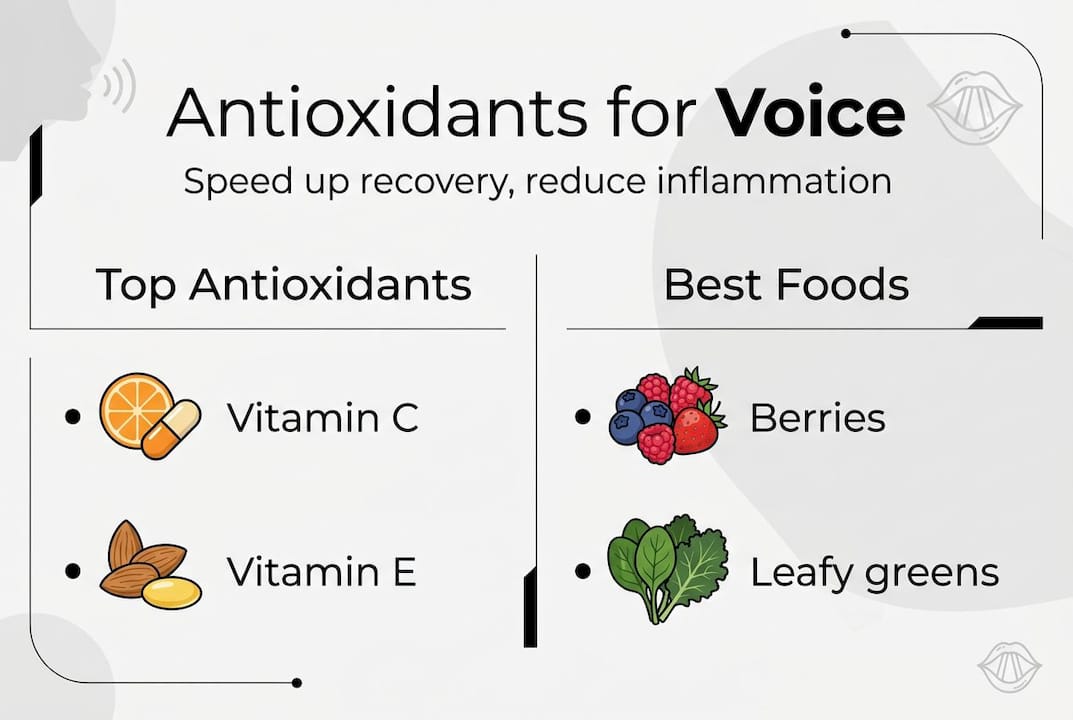
Berries, leafy greens, nuts, and seeds offer antioxidants that protect and restore vocal tissue. Here’s a practical breakdown of the top sources and what they bring to your recovery:
| Food | Key antioxidant | Serving suggestion |
|---|---|---|
| Blueberries | Anthocyanins | 1 cup daily |
| Oranges/kiwi | Vitamin C | 1-2 pieces daily |
| Spinach/kale | Vitamins C and E | 2 cups raw or 1 cup cooked |
| Almonds | Vitamin E | Small handful (about 23 nuts) |
| Dark honey | Polyphenols, enzymes | 1-2 teaspoons in warm water |
Dark honey is a superior anti-inflammatory, antioxidant-rich food for singers. It also coats the throat, providing immediate soothing relief while its antioxidant compounds work at the tissue level. Manuka honey, in particular, has a high concentration of bioactive compounds that go beyond simple sweetness.
Here’s a simple daily plan to structure your antioxidant intake around performance days:
For Vitamin C, aim for 500 to 1000mg daily from food sources. One cup of raw red bell pepper delivers about 190mg alone. Combine that with citrus and berries and you’ll hit your target without a single supplement.
Pro Tip: Avoid cold or iced foods immediately before or after singing. Serve antioxidant-rich smoothies at room temperature on performance days to keep your vocal folds warm and responsive.
For more ideas on building your recovery toolkit, check out our guide to natural remedies for singers and the guide to restoring lost voice naturally.
Antioxidants are genuinely useful for vocal recovery, but it’s important to be honest about what the current science does and doesn’t support.
The honest picture looks like this:
Human RCTs are limited; most evidence is preclinical or associative. This doesn’t mean antioxidants don’t work. It means we should apply them thoughtfully, not recklessly.
The supplement question deserves particular attention. Fat-soluble antioxidants like Vitamins A and E can accumulate in body fat and reach toxic levels if taken in excess. At high doses, some antioxidants actually flip into a pro-oxidant state, meaning they start causing the very damage they’re supposed to prevent.
“Excess fat-soluble antioxidants can worsen inflammation or recovery.”
There is also evidence linking Vitamin C and E deficiency to vocal pathology risk, including increased susceptibility to vocal cord lesions. This supports the case for maintaining adequate levels through diet, but it is not an argument for megadosing.
If you choose to use supplements, keep these cautions in mind:
Most importantly, if your hoarseness or voice loss persists beyond two to three weeks despite rest, hydration, and dietary changes, that is a signal to see a professional. Understanding when to seek medical advice is a critical part of responsible vocal health. You can also explore how to recover from hoarseness naturally as a starting point, but never let natural remedies delay necessary medical evaluation.
After 25 years of working with singers and voice professionals, we’ve seen the same pattern repeat: someone discovers antioxidants, loads up on supplements, and expects a transformation in 48 hours. When it doesn’t happen, they dismiss the whole approach.
Here’s the truth. Supplements are not a shortcut. The singers who recover fastest and maintain their voice longest are not the ones taking the most pills. They’re the ones who eat well consistently, hydrate daily, and treat rest as a non-negotiable. Antioxidants from food work gradually, building a protective environment in your tissue over weeks, not days.
The real “triple pillar” of vocal recovery is consistency with antioxidants, hydration, and rest working together, not any one of them alone. Professionals weigh the evidence, avoid quick fixes, and take a holistic view of their vocal health. If you want a framework for staying ahead of fatigue before it derails your schedule, our expert fatigue prevention tips offer exactly that kind of structured, long-term thinking.
You now understand the science behind antioxidants and vocal recovery. The next step is applying it with the right tools in your corner.
At TMRG Solutions, we’ve spent over 25 years developing natural, professional-grade solutions for singers and voice professionals. Our TMRG Voice Therapy Kit Basic combines targeted herbal formulations designed to support tissue recovery and reduce vocal fatigue. For daily maintenance and performance support, our Voice Enhancement Drops offer a fast-acting, natural option that complements everything you’ve learned here. If you’re dealing with ongoing vocal problems and need broader support, visit our dedicated support for vocal problems page to find the right solution for your situation.
Berries, citrus fruits, leafy greens, nuts, seeds, and dark honey are the top dietary sources to aid vocal recovery. Prioritize variety and color across your meals for the broadest antioxidant coverage.
High-dose supplements may increase inflammation and are not generally recommended for most singers. Excess fat-soluble vitamins can cause harm, so natural food sources remain the safer and more effective approach.
Most research comes from animal studies or small human trials; large-scale human data with singers specifically is still limited. The existing evidence is promising but not yet definitive.
Some singers notice reduced hoarseness and quicker recovery within a few days, but results vary. Antioxidants support faster tissue healing best when combined consistently with rest and hydration.
Yes. If hoarseness or voice loss lasts more than 2 to 3 weeks, see a professional, as this may signal a more serious underlying condition that requires medical evaluation.
