Your Cart is Empty


TL;DR:
- Vocal strain involves excessive tension in muscles around the vocal folds, caused by repeated overuse and poor technique.
- Key prevention includes diaphragmatic breathing, posture alignment, and SOVT exercises to support healthy voice use.
- Consistent monitoring, proper self-care, and targeted exercises are vital for long-term vocal recovery and avoiding chronic issues.
Vocal strain is one of the most misunderstood challenges in performance. Many singers and actors assume that a few days of silence will fix everything. But 25 to 65% of voice professionals experience recurring vocal fatigue, which means rest alone is rarely the complete answer. Real recovery requires understanding what is happening inside your larynx, applying targeted techniques, and building habits that protect your voice long term. This article walks you through exactly that: from the physiology of vocal strain to natural remedies, monitoring tools, and the one thing most performers overlook entirely.
| Point | Details |
|---|---|
| Active recovery is vital | Simple rest isn’t enough for persistent vocal strain—active strategies are essential for full recovery. |
| Use proven exercises | Techniques like semi-occluded vocal tract exercises and breath support are research-backed for healing and prevention. |
| Monitor and adjust | Tracking symptoms and progressing carefully prevents setbacks and long-term damage. |
| Natural care matters | Hydration, steam, and sleep support healing alongside structured vocal exercise. |
Vocal strain is not simply a tired voice. It is a state of excessive tension and overuse in the muscles and tissues surrounding your vocal folds, the two small bands of mucous membrane inside your larynx that vibrate to produce sound. When these folds are pushed beyond their capacity, the result is inflammation, reduced flexibility, and a voice that feels thick, rough, or unreliable.
The laryngeal tension common in 25 to 65% of professionals does not develop overnight. It builds through repeated high-demand use without adequate recovery. Understanding the root causes helps you address the right problems.
Common risk factors for vocal strain include:
It is also important to distinguish between acute and chronic vocal fatigue. Acute strain appears after a single demanding session and typically resolves with rest and hydration within 24 to 48 hours. Chronic fatigue is different. It persists across multiple days or weeks, often because the underlying technique or workload has not changed. Performers dealing with vocal disorders in performers frequently fall into the chronic category without realizing it.
| Type | Duration | Main cause | Recovery approach |
|---|---|---|---|
| Acute vocal fatigue | Hours to 2 days | Single overuse event | Rest, hydration, gentle warm-up |
| Chronic vocal fatigue | Weeks or longer | Repeated strain, poor technique | Technique correction, therapy, monitoring |
Your diaphragm and posture play a larger role than most performers realize. When the diaphragm does not provide consistent breath pressure, the muscles around the larynx tighten to fill the gap. Over time, this creates a pattern of tension that makes your voice feel “locked” or strained even before you have sung a single note.
Now that we know what causes vocal strain, let us explore exactly how you can prevent and recover from it using research-backed techniques.
Diaphragmatic support, SOVT exercises, and posture are the three pillars of a healthy recovery plan. Each one addresses a different layer of the problem.
How to practice diaphragmatic breathing:
This pattern trains your body to use the diaphragm as the primary driver of airflow, reducing the compensatory tension that strains your larynx.
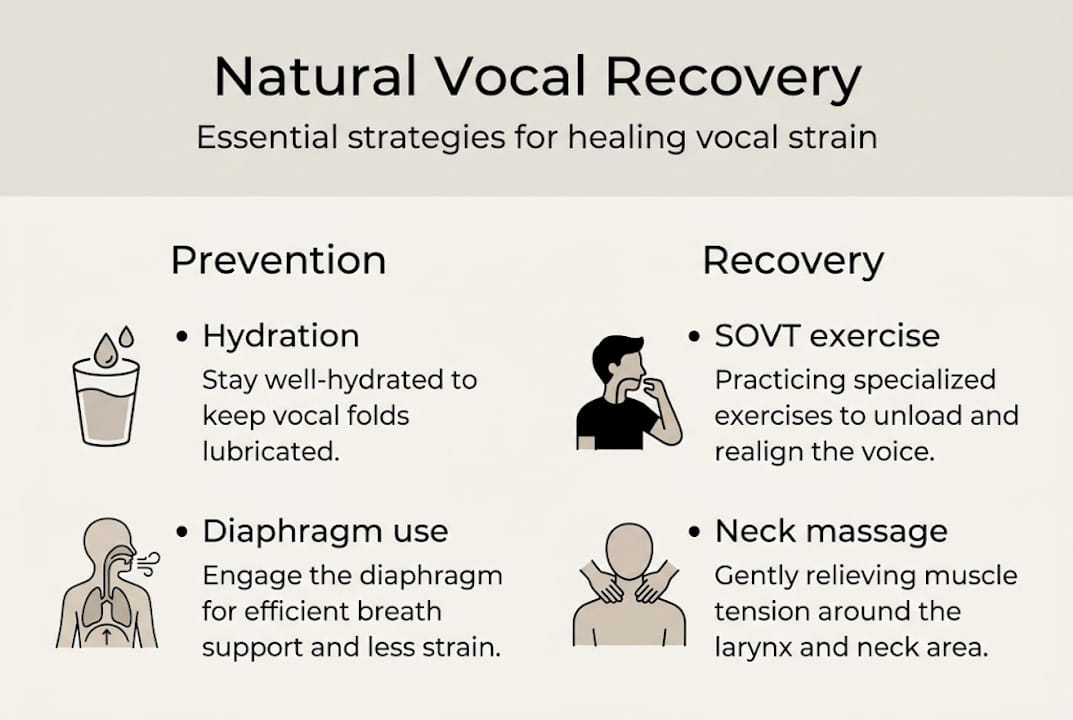
Semi-occluded vocal tract (SOVT) exercises are another essential tool. SOVT exercises involve narrowing the opening of your vocal tract, such as humming through a straw or producing a lip trill, which creates back pressure that gently massages the vocal folds and reduces swelling. These exercises are low-impact and safe even on days when your voice feels fragile. You can explore specific vocal cord exercises to build a structured routine.
| Technique | Best for | Effort level | Frequency |
|---|---|---|---|
| Diaphragmatic breathing | Foundation, daily use | Low | Every session |
| SOVT (straw phonation) | Recovery, warm-up | Very low | Daily, especially post-strain |
| Posture alignment | Prevention | Low | Ongoing |
For your warm-up, start with 5 minutes of silent breathing, then 5 minutes of SOVT work, then gentle pitch glides across a comfortable range. For your cool-down, reverse the order and end with slow, quiet humming. These prevent vocal strain tips are especially important before and after high-demand performances.
Pro Tip: If you are unsure whether your posture is affecting your voice, record yourself speaking while sitting slouched versus standing tall. The difference in resonance and ease is usually immediate and striking. Good alignment lets your voice “open up” naturally.
Building these habits into your daily routine, not just on performance days, is what separates performers who recover quickly from those who cycle through repeated strain. Review vocal care strategies for a fuller picture of sustainable daily practice.
Once foundational techniques are in place, many performers look for additional natural or at-home remedies to support vocal recovery. The good news is that several simple strategies have real physiological backing.
Hydration is non-negotiable. Your vocal folds need a thin, slippery mucus layer to vibrate efficiently. Drink water consistently throughout the day rather than gulping large amounts right before performing. Warm water with a small amount of honey and lemon can soothe mild irritation, though the benefit is primarily at the throat level rather than directly at the folds.
Anti-inflammatory foods such as ginger, turmeric, and leafy greens support tissue recovery from the inside. Avoid dairy before performances if you notice it thickens your mucus. Alcohol and caffeine both dehydrate the vocal tract and should be limited during recovery periods.
Steam inhalation and humidification are underused tools. Breathing steam for 10 minutes moisturizes the larynx directly, which is something drinking water cannot do as efficiently. A cool-mist humidifier in your bedroom overnight keeps the mucous membranes from drying out while you sleep.
Research shows that inspiratory muscle warm-ups increased maximum phonation time and pitch range while reducing perceived exertion. This means targeted warm-up work, not just passive rest, actively rebuilds vocal strength.
Gentle neck and jaw massage releases tension in the muscles that indirectly affect laryngeal positioning. Use slow, circular movements along the sides of your neck and under your jaw for 2 to 3 minutes before warming up.

Sleep is one of the most powerful recovery tools available. During deep sleep, your body repairs inflamed tissue and restores muscle function. Aim for 7 to 9 hours, and if possible, sleep on your side to reduce any acid reflux that might irritate your larynx overnight.
Pro Tip: Keep a small notebook by your bed and rate your voice quality each morning on a scale of 1 to 10. Tracking this over two weeks reveals patterns you would never notice otherwise, such as how a late night or a dry room affects your next-day performance.
Know when to stop self-treating. If symptoms persist beyond two weeks, consult a speech-language pathologist (SLP). Explore proactive vocal health practices and learn more about avoiding vocal damage before problems escalate.
After starting your recovery strategies, regular self-monitoring is essential to avoid long-term damage and identify when more help is needed.
The Voice Fatigue Index (VFI) is a validated self-report tool that measures three dimensions of vocal fatigue: tiredness in the voice, physical discomfort, and the urge to rest. Using the VFI to flag early fatigue allows you to catch problems before they become chronic. You can complete it in under two minutes and track your scores weekly.
Signs that your recovery is on track:
Warning signs that require professional evaluation:
For high-load performers such as touring singers or stage actors, recovery plans need to be tailored to your specific schedule. A performer doing eight shows a week cannot follow the same protocol as someone who performs once a month. Work with an SLP or a vocal coach trained in voice science to build a plan that fits your actual workload.
Several smartphone apps now offer acoustic analysis, measuring your fundamental frequency, vocal intensity, and phonation regularity over time. These tools are not a replacement for professional evaluation, but they give you real data to bring to an appointment. Check out expert vocal fatigue strategies for current recommendations, and read about protecting your speaking voice as a foundational priority alongside your singing or acting voice.
After working with vocalists across 25 years, we have noticed a consistent pattern: performers who struggle with recurring strain are usually not doing the wrong things. They are doing the right things inconsistently, and they are skipping the micro-adjustments that prevent setbacks.
Rest is valuable. But rest without technique refinement is like putting a bandage on a wound you keep reopening. The real work happens in the quiet moments between performances, in the daily breathing exercises, the posture checks, and the honest self-assessment of whether your technique is actually serving your voice.
Many performers also treat recovery as a binary state. Either they are “fine” and performing at full capacity, or they are “injured” and resting completely. The truth lives in the middle. Consistent vocal maintenance during intense effort is what keeps you out of the injury cycle altogether. Small, daily investments in technique and monitoring prevent the kind of breakdown that forces you offstage entirely.
With practical knowledge in hand, the right tools can make all the difference on your vocal recovery journey. Understanding the techniques is the first step, but having targeted support accelerates the process significantly.

At TMRG Solutions, we have spent over 25 years developing natural, evidence-informed products for exactly the challenges described in this article. Our basic voice therapy kit combines herbal formulations and guided recovery tools designed for performers at every level. If you are dealing with a specific issue, our common vocal problems resource page helps you identify the right solution. For performers focused on building breath strength and endurance, the breathing mask for vocal strength is a specialized tool worth exploring. Your voice deserves more than rest alone.
Hydration, gentle SOVT exercises such as straw phonation, and inspiratory muscle warm-ups are among the fastest and most effective ways to reduce vocal strain without risking further damage.
If hoarseness or pain lasts more than two weeks or worsens even with rest, consult a speech-language pathologist. Persistent or worsening symptoms always warrant professional evaluation rather than continued self-treatment.
Full recovery is possible for most performers, particularly with targeted exercise and structured rest. Muscle strength and phonation time both improve measurably with consistent warm-up protocols, though severe cases may require guided therapy.
Daily gentle exercises are most effective for sustained recovery. Regular vocal exercise routines reduce fatigue and enhance performance, but always adjust the intensity based on how your voice feels each day.
